
London (Parliament Politics Magazine) – Downing Street says £100bn of frozen Russian assets may be released to aid Ukraine after UK Prime Minister Sir Keir Starmer meets European leaders in London.
As reported by The Independent, Downing Street expects a deal soon to release £100bn in frozen Russian assets for Ukraine, following Labour leader Keir Starmer’s London talks on Monday, 8 December.
The British Prime Minister said Ukraine talks are now at a “critical stage,” with European leaders pushing for increased pressure on Russian President Vladimir Putin.
How did Keir Starmer and European leaders plan to boost Ukraine?
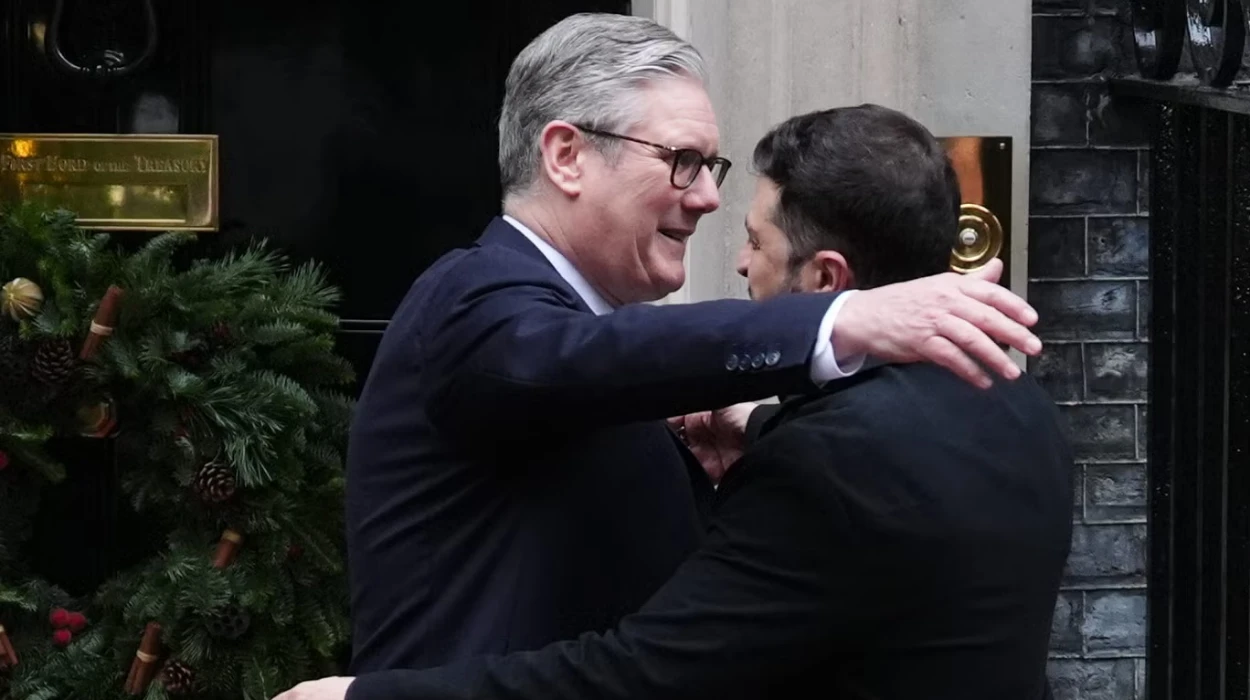
Sir Keir Starmer held talks with French President Emmanuel Macron, Ukrainian President Volodymyr Zelensky, and German Chancellor Friedrich Merz at Downing Street, as Mr Zelensky stressed that Kyiv needs European and US support.
British officials said a deal to release frozen Russian assets could be agreed soon, with The Times reporting the total value at £100bn, including £8bn in UK banks.
A Number 10 readout said the leaders discussed the importance of US-led peace talks for
“European security and supported the progress made.”
“The leaders agreed that, while diplomatic efforts continue, Europe must stand with Ukraine, strengthening its ability to defend against relentless attacks that have left thousands without heat or light,”
a Downing Street spokesperson said.
They added,
“They also discussed positive progress made to use immobilised Russian sovereign assets to support Ukraine’s reconstruction.”
Following the meetings, the Labour leader convened European allies to discuss next steps, with leaders supporting that,
“Now is a critical moment, and we must continue to ramp up support to Ukraine and economic pressure on Putin to bring an end to this barbaric war,”
Number 10 added.
The Ukrainian president’s trip follows US President Donald Trump’s claim that he failed to read the latest peace plan, while insisting President Putin was “fine with it.”
Mr Starmer stated that Britain is “ready” to cooperate with the EU on the proposals, while Belgium has raised concerns about using the assets for Ukraine’s reparations, highlighting financial and legal risks.
The Labour leader said any peace deal in Ukraine must be “just” and “lasting,” saying,
“We are at a critical stage in the push for peace.
He added,
“The principles remain the same: we stand with Ukraine, and if there is to be a ceasefire, it needs to be a just and lasting ceasefire.”
Mr Starmer has insisted Ukraine must determine its own future, with a senior minister warning it should not be left “toothless” against Russian aggression.
What did Volodymyr Zelensky and Emmanuel Macron say about Ukraine’s security, aid, and European-American support?
Commenting on the London meeting, Volodymyr Zelensky said Monday’s talks had been
“a detailed discussion on our joint diplomatic work with the American side, aligned a shared position on the importance of security guarantees and reconstruction, and agreed on the next steps.”
He said,
“We also held a separate discussion on further defence support for Ukraine. I am grateful to the leaders for their willingness to stand with our people and help us on the path toward bringing peace closer.”
Before the meeting, the Ukrainian president said the discussions were
“very important for unity between Europe and Ukraine.”
Mr Zelensky added,
“We can’t manage without Americans, we can’t manage without Europe, and that is why we need to make some important decisions.”
Emmanuel Macron said Ukraine’s allies have “a lot of cards,” pointing to military aid, the resilience of Ukrainian forces, and the economic impact of US and EU sanctions on Russia.
The Ukrainian president’s visit to London follows three days of US-Ukraine talks, with the White House pushing Kyiv to accept the US-drafted peace plan.
Mr Zelensky said he had discussed “next steps” with President Trump’s advisers and is determined to continue working in good faith.
Ukraine and its European allies are likely to insist that any ceasefire comes with security guarantees from the US and the UK-France-led coalition, while opposing territorial transfers to Russia.
Moscow opposes the idea of allied forces in Ukraine and insists on large territorial concessions in exchange for a ceasefire.
What are the key points of the US-proposed peace plan for Ukraine?
- The plan would require Ukraine to give up additional territory in the east, limit the size of its military, and agree never to join NATO.
- A comprehensive non-aggression deal would be concluded between Russia, Ukraine, and Europe, with all security ambiguities over the past 30 years considered settled.
- Ukraine would receive reliable security guarantees from the US and its allies, with coordinated military responses if Russia violates the ceasefire.
- Frozen Russian assets, totaling around $100 billion, would be invested in rebuilding Ukraine.
- Russia would be reintegrated into the global economy, including discussions on lifting sanctions, long-term cooperation with the US, and rejoining the G8.
- All parties would receive full amnesty for actions during the war, and Ukraine would hold elections within 100 days of a deal.
