
OpenAI unveils a sweeping infrastructure expansion plan in 2026 from San Francisco, United States.
The OpenAI AI investment will accelerate global compute capacity and semiconductor partnerships.
Industry analysts say the move signals long term dominance in artificial intelligence infrastructure.
San Francisco, United States – February 21, 2026 — Parliament News confirms that executives formally detailed a sweeping expansion of the AI investment during a high level technology briefing in California. The announcement outlines long term capital commitments to computing infrastructure, advanced semiconductor procurement, and large scale data center deployment through the end of the decade.
The OpenAI AI investment reflects the rapidly escalating demand for artificial intelligence systems across enterprise, consumer, healthcare, financial, and governmental sectors. As AI models grow increasingly complex, the hardware required to train and deploy them has become both strategic and capital intensive.
Technology analysts in attendance described the OpenAI AI investment as one of the largest infrastructure commitments in the history of artificial intelligence development.
Capital Allocation Signals Long Term Ambition
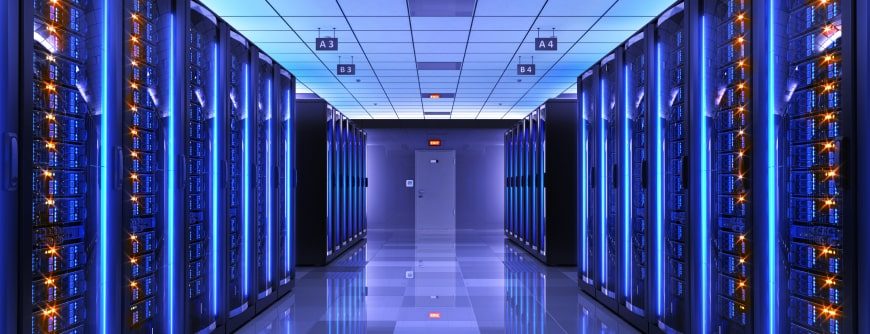
Executives emphasized that scaling artificial intelligence responsibly requires consistent infrastructure growth. The OpenAI AI investment includes procurement agreements for high performance computing chips, expansion of energy efficient data centers, and partnerships with cloud providers to strengthen global deployment.
The size of the OpenAI AI investment demonstrates confidence in sustained AI adoption. Rather than incremental upgrades, the strategy centers on structural compute expansion capable of supporting next generation multimodal systems.
One industry strategist attending the event stated,
“Infrastructure scale will define who leads the AI economy over the next decade.”
This perspective reflects the understanding that computational capacity now functions as the backbone of digital innovation.

Why Compute Power Defines AI Leadership
Artificial intelligence has evolved from research laboratories into mainstream economic infrastructure. Modern AI models require thousands of specialized processors operating simultaneously for training and inference.
The OpenAI AI investment directly addresses these scaling challenges. Larger datasets and more advanced architectures increase computational demand exponentially.
Cloud providers and semiconductor manufacturers are expected to benefit significantly from this expansion. As compute clusters grow, so does reliance on reliable power grids, advanced cooling technologies, and optimized network routing.
Experts argue that without sustained capital allocation, AI innovation could stall under hardware constraints.
Market Reaction and Investor Outlook
Financial markets responded cautiously but positively to the announcement. Investors recognize that the OpenAI AI investment represents long term strategic positioning rather than speculative spending.
Recurring revenue streams from enterprise partnerships and subscription services provide financial stability to support such expansion.
Analysts highlighted that infrastructure commitments of this scale are comparable to investments in telecommunications and energy sectors.
The OpenAI AI investment also strengthens supplier ecosystems across hardware manufacturing, construction, and energy production industries.
Semiconductor Partnerships and Supply Chain Security
Advanced artificial intelligence systems depend heavily on cutting edge chips optimized for parallel processing. Securing long term access to these components is critical.
The OpenAI AI investment includes multi year agreements with semiconductor manufacturers to reduce supply chain volatility. Global chip shortages in recent years underscored the importance of proactive procurement strategies.
Governments worldwide increasingly prioritize domestic chip production, recognizing its strategic importance. The OpenAI AI investment aligns with this broader geopolitical emphasis on technological sovereignty.
By stabilizing chip access, OpenAI mitigates operational risks associated with hardware scarcity.
Energy Consumption and Sustainability Planning
AI infrastructure expansion inevitably increases electricity consumption. Data centers must operate continuously at high capacity, requiring robust energy strategies.
Executives confirmed that renewable energy sourcing forms part of the OpenAI AI investment roadmap. Efficiency improvements in cooling systems and power management aim to reduce environmental impact.
Environmental groups and regulators continue scrutinizing the sustainability of AI growth. Balancing expansion with ecological responsibility remains a key consideration.
The OpenAI AI investment incorporates long term environmental metrics to ensure compliance with evolving regulatory standards.
Global Data Center Expansion and Sovereignty Compliance
Artificial intelligence services increasingly operate across borders. Regional regulations require localized data storage and processing to protect user privacy.
The OpenAI AI investment extends beyond the United States to support international infrastructure development. Establishing regional data centers reduces latency and ensures compliance with data sovereignty laws.
European and Asian markets represent significant growth opportunities. Infrastructure diversification also reduces reliance on single geographic locations.
Industry analysts suggest that global expansion strengthens resilience against regulatory or geopolitical disruptions.
Competitive Dynamics in the AI Sector
Technology firms worldwide are racing to scale compute capacity. Cloud providers, enterprise software companies, and emerging startups all compete for AI dominance.
The OpenAI AI investment differentiates itself through magnitude and integration. Rather than incremental scaling, the strategy signals sustained commitment to infrastructure leadership.
Competition is expected to intensify as rivals pursue similar expansion initiatives.
One senior technology analyst noted,
“Companies that secure compute leadership today will influence the direction of digital economies tomorrow.”
This competitive context underscores the strategic weight of infrastructure investment.
Enterprise Demand Fuels Infrastructure Growth
Businesses across industries are rapidly integrating artificial intelligence tools. Healthcare institutions deploy predictive diagnostics, financial institutions use machine learning for fraud detection, and retailers implement AI driven personalization systems.
The OpenAI AI investment ensures that enterprise demand can be met without capacity constraints. Scalable compute clusters provide reliable support for large scale deployment.
Corporate adoption continues expanding into logistics, manufacturing, and education sectors.
Sustained enterprise demand reinforces the financial rationale behind infrastructure commitments.
Workforce Development and Research Expansion
Infrastructure growth requires a skilled workforce. Engineers, data scientists, and operations specialists must manage increasingly complex computing systems.
The OpenAI AI investment includes initiatives to expand research capacity and technical training programs. Collaboration with universities strengthens the talent pipeline.
San Francisco’s technology ecosystem supports recruitment and innovation.
Maintaining alignment between hardware expansion and human expertise ensures sustained innovation cycles.
Regulatory Oversight and Governance Alignment
Artificial intelligence governance remains a global policy priority. Governments are establishing frameworks addressing transparency, privacy, and accountability.
The OpenAI AI investment incorporates proactive compliance planning. Engagement with policymakers reduces uncertainty and strengthens regulatory alignment.
Regional oversight bodies continue evaluating AI deployment standards.
Strategic governance integration enhances operational stability across jurisdictions.
History of OpenAI Infrastructure Evolution
OpenAI began as a research focused organization exploring safe AI development. Early models operated on modest compute clusters compared to today’s infrastructure.
As models expanded in scale and complexity, hardware requirements multiplied. Partnerships with cloud providers enabled accelerated experimentation.
The OpenAI AI investment represents the culmination of this evolutionary process. From experimental labs to global data center networks, infrastructure has become central to strategic identity.
Historical lessons regarding scalability and collaboration inform present decisions.
Financial Sustainability and Long Term Vision
Large scale infrastructure requires disciplined financial management. Executives emphasized that phased capital allocation ensures sustainable growth.
The OpenAI AI investment aligns with long term revenue forecasts driven by enterprise subscriptions and API integrations.
Analysts project continued AI adoption across sectors, supporting stable demand.
Maintaining operational efficiency remains critical as infrastructure expands.
Cultural and Economic Impact of AI Expansion
Artificial intelligence increasingly influences daily life. Digital assistants, automated systems, and generative content tools shape communication and commerce.
The OpenAI AI investment supports continued innovation that may redefine productivity and creativity worldwide.
Economic impact extends beyond technology firms. Construction, energy, and manufacturing sectors benefit from infrastructure projects.
As AI becomes foundational to digital economies, infrastructure expansion plays a transformative role.

A Defining Decade for Artificial Intelligence Infrastructure
The 2026 announcement in San Francisco signals more than capital ambition. It reflects a strategic commitment to shaping the next era of artificial intelligence development.
The OpenAI AI investment underscores belief in sustained demand for advanced compute capabilities.
With global markets observing closely, infrastructure leadership may determine competitive outcomes over the next decade.
San Francisco remains at the center of this expansion, symbolizing both technological innovation and economic transformation.
As AI systems continue evolving, infrastructure scale will define the boundaries of possibility.