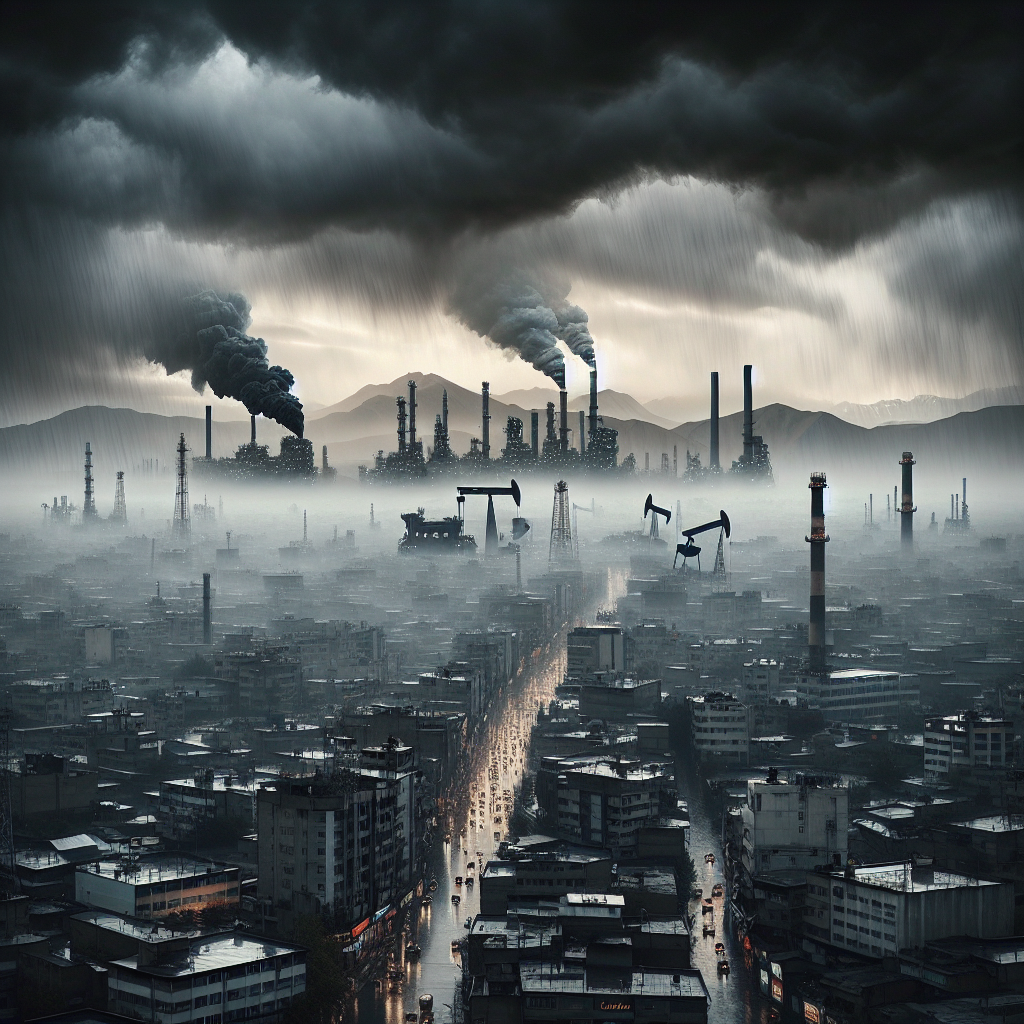
Headline: Black Rain in Iran: Oil Strikes Lead to Alarming Fallout
Article:
In a surprising and worrisome turn of events, black rain has begun to fall in Iran following airstrikes on oil facilities in the Khuzestan province this past weekend. Local authorities are investigating the phenomenon, which is causing concern among scientists who warn of potential long-term environmental and health consequences.
The recent attacks, reportedly carried out by unidentified military forces, targeted key oil production sites in a region heavily reliant on the petroleum industry. The fallout is not only affecting the immediate area, but also raising alarms about the ecological and human impact of these strikes, especially after witness accounts described an ominous dark rain coating the landscape.
Meteorological experts and environmental scientists have described the black rain as a dangerous combination of soot, chemicals, and potentially toxic residues from the damaged oil facilities. While black rain is not unprecedented in regions with high pollution, its occurrence linked to military actions raises serious questions about both environmental safety and international relations.
Understanding Black Rain
The term "black rain" typically refers to precipitation that has taken on a darker hue due to the presence of particulate matter—often from industrial pollution or, in this case, the remnants of combusted fossil fuels. As oil facilities burned, the smoke that ascended into the atmosphere likely mixed with moisture, contributing to this unusual meteorological phenomenon.
According to Dr. Leila Ahmadi, an environmental scientist from Tehran University, the implications of such rainfall can be significant. "Black rain can carry pollutants and carcinogens directly to soil and water sources," she explained. "This means that the health of the local agricultural sector and water supply are now at risk."
Immediate Health Concerns
The immediate effects of exposure to black rain are concerning for residents in the affected areas. Symptoms may include respiratory issues, skin rashes, and gastrointestinal discomfort, especially if contaminated water is ingested or crops exposed to the rain are consumed. Health officials are advising citizens to refrain from drinking tap water until further tests can be conducted.
"We are issuing warnings to avoid direct contact with the rain and to ensure that water sources are tested for contamination," stated Alireza Mohammadi, a local health department official. The government has also launched an investigation into the environmental aftermath, setting up emergency response teams to analyze air and soil quality.
Long-term Environmental Implications
Beyond immediate health risks, scientists are particularly concerned about the long-term consequences of such environmental disturbances. The initial impacts could pose severe risks to local ecosystems, wildlife, and agricultural practices. Contaminants from black rain can lead to soil degradation, altering nutrient levels essential for farming.
Dr. Manouchehr Rahimi, a leading ecologist, commented, "The accumulation of toxins in the soil could render large agricultural areas unfit for cultivation. This could lead not only to food shortages in the region but also to economic ramifications as farmers struggle to adapt or recover."
The devastating effects may cascade beyond Iran’s borders, potentially influencing neighboring regions dependent on the same water sources or agricultural practices.
Geopolitical Ramifications
Such military actions and their environmental repercussions could also exacerbate existing tensions between Iran and other nations involved in the regional conflict dynamics. As the consequences of these airstrikes unfold, calls for international scrutiny and accountability grow louder. Analysts argue that nations must reconsider their roles in Middle Eastern geopolitics, particularly in light of environmental ethics.
"The intersection of military action and environmental degradation is a topic that needs significant international dialogue," noted political analyst Sara Behnam. "Countries engaging in strikes, knowingly or unknowingly, might influence not only the immediate conflict but broader environmental stability."
Calls for Clear Accountability
Environmental groups and human rights organizations are advocating for a thorough investigation into the strikes and their fallout, urging that those responsible for the military actions face consequences not only for the loss of life and property but also for the environmental destruction. This incident reflects the need for a more robust international framework governing military actions and their implications on global ecosystems.
In a statement, the Green Iran Collective emphasized that accountability is crucial. They expressed a commitment to working with scientists, legal experts, and international bodies to ensure this calamity does not go unaddressed. "We cannot allow the environment to be a mere collateral casualty in military conflicts. It is everyone’s responsibility to advocate for a sustainable future," they stated.
Looking Ahead
As investigations continue, local authorities are mobilizing to monitor air and water quality, implement health advisories, and provide public education on the risks associated with black rain. Simultaneously, global awareness of the situation is rising, with various environmental organizations and humanitarian agencies gearing up to respond.
With experts closely monitoring the situation, it remains to be seen how the Iranian government will manage the aftermath. The incident has rekindled discussions about military engagement, environmental responsibility, and the pressing need for peace in a region often characterized by conflict.
The unfolding story serves as a stark reminder of how intertwined our geopolitical actions are with environmental health—a dual responsibility that demands sustained attention and collective action.
As clock ticks and reactions unfold, the world watches closely, eager for a resolution that protects the environment and addresses the pressing humanitarian needs of the people affected in Iran.