

Washington (Parliament Politics Magazine) January 11, 2026 – Iranian protests have intensified across major cities for a third consecutive night, with a reported death toll reaching at least 116 amid a regime crackdown involving internet blackouts and mass arrests.
President Donald Trump is evaluating options to support demonstrators and weaken the regime, including military strikes, though most remain non-kinetic, according to US officials. Amid warnings from military leaders against direct action, Tehran has threatened retaliation against US bases and Israel, heightening regional tensions following June 2025 US airstrikes on Iranian nuclear sites.
Protests erupted in late December over economic woes, including a currency crisis, but have evolved into demands for regime change, drawing hundreds of thousands to the streets in Tehran and other cities.
As reported by Barak Ravid of Axios, security forces have ramped up violence, leading to an escalating death toll. Iranian Supreme Leader Ayatollah Ali Khamenei stated the government would not back down, while President Masoud Pezeshkian accused the US and Israel of inciting “rioters.”
How is President Donald Trump considering US support amid the Iranian protests?
Demonstrators clashed with security forces in Tehran, Mashhad, and elsewhere, sharing footage despite an internet blackout imposed by authorities. Human rights groups report numerous fatalities, with hospitals overwhelmed and flights cancelled nationwide.
Reza Wilson of BBC News noted on January 10 that medics described chaotic scenes, paralleling earlier coverage by Helen Sullivan of the same outlet on protester defiance.
Iranian authorities labelled demonstrators “enemies of God,” prompting fears of a mass-casualty event. Amid reports of 62 killed by January 9, the regime cut phone lines and warned of further isolation. Anadolu Agency reported on January 8 that the Trump administration monitors these signs for potential government collapse.
Barak Ravid, Axios correspondent, highlighted internal US deliberations on protest support. Barak Ravid said in X post,
“💥🇺🇸🇮🇷President Trump is considering several options for supporting the protests in Iran & weakening the regime. A U.S. official said the discussions had included military strikes but most of the options at this stage are “not kinetic”.
💥🇺🇸🇮🇷President Trump is considering several options for supporting the protests in Iran & weakening the regime. A U.S. official said the discussions had included military strikes but most of the options at this stage are "not kinetic". My story on @axioshttps://t.co/PP4cCBkVih
— Barak Ravid (@BarakRavid) January 11, 2026
What did the Trump administration brief him on regarding Iran?
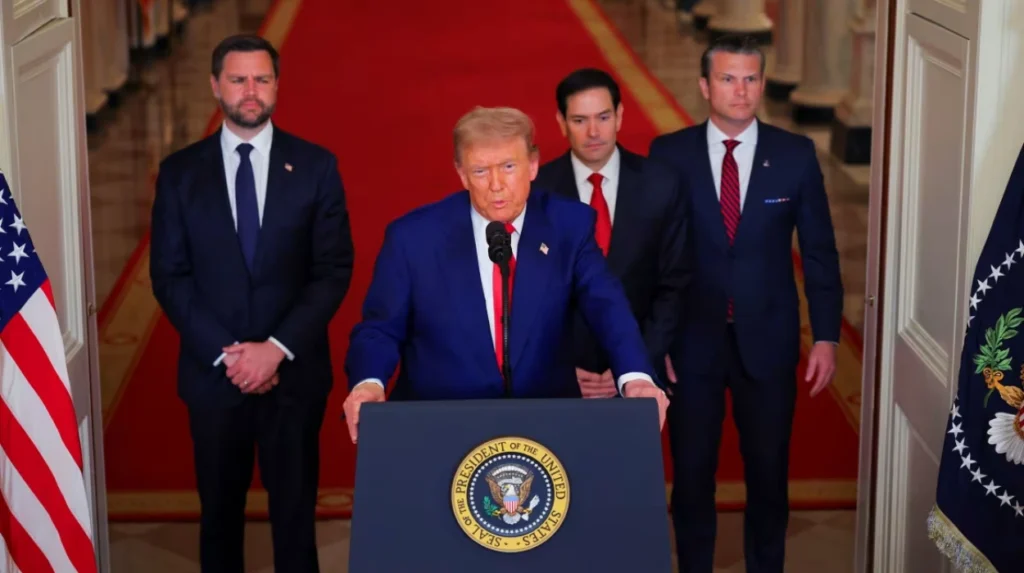
President Trump, briefed on strike options targeting regime elements and nonmilitary sites in Tehran, has reiterated readiness to intervene if peaceful protesters face violence.
In a Truth Social post, he stated Iran is
“looking at FREEDOM, perhaps like never before. The USA stands ready to help!!!”
as covered by CBS News and The New York Times.
During a meeting with oil executives, Trump warned,
“If they kill people like they have in the past, we’ll get involved,”
adding the US is “locked and loaded.”
US officials told Axios that while strikes feature in discussions, alternatives like cyber operations, information campaigns, and deploying an aircraft carrier group aim to deter without escalation. The Washington Post reported late Saturday that military options response to unrest, with some fearing strikes could rally Iranians around the regime.
A defence analyst provided further context on the standoff. 0x0fff said in X post,
“President Trump has been briefed on targeted military options against Iran as nationwide protests enter a critical phase. With the death toll reportedly reaching at least 116 and the Iranian regime labeling demonstrators as enemies of God, Washington has signaled that its red line for intervention—a mass-casualty crackdown—is dangerously close to being crossed.
President Trump warned that the United States is locked and loaded and ready to start shooting if the killing of peaceful protesters continues, while emphasizing that any action would focus on hitting the regime where it hurts without deploying ground troops.
The potential for a joint response is high as Iran recently declared both United States military bases and Israeli territory to be legitimate targets for preemptive or retaliatory strikes. Israeli forces remain on high alert following high-level coordination between Prime Minister Netanyahu and Secretary of State Marco Rubio.
This standoff follows the June 2025 Operation Midnight Hammer airstrikes on Iranian nuclear facilities, creating a volatile environment where any sign of an Iranian missile launch or intensified domestic violence could trigger a major aerial campaign in the next few hours. #Iran #Israel #USA #MiddleEast #Military #Trump #BreakingNews #Geopolitics.”
President Trump has been briefed on targeted military options against Iran as nationwide protests enter a critical phase.
— 0x0fff (@ox0ffff) January 11, 2026
With the death toll reportedly reaching at least 116 and the Iranian regime labeling demonstrators as enemies of God, Washington has signaled that its red…
What are US military leaders urging Trump on Iran strikes?
Senior US military figures have warned the Trump administration against strikes that risk broader conflict or backlash. Reuters and DW reported Tehran’s threats to hit US bases and Israel, with President Pezeshkian vowing retaliation. BBC coverage on January 9 detailed Trump’s radio interview threat that Iran would “get hit very hard,” yet officials urge non-kinetic paths.
The June 2025 Operation Midnight Hammer airstrikes on nuclear facilities linger as a precedent, with Israeli officials noting regime surprise at protest speed. Axios sources indicated preliminary meetings favour bolstering protests over immediate action.
What did US and Israeli leaders discuss as Iran protests grow?
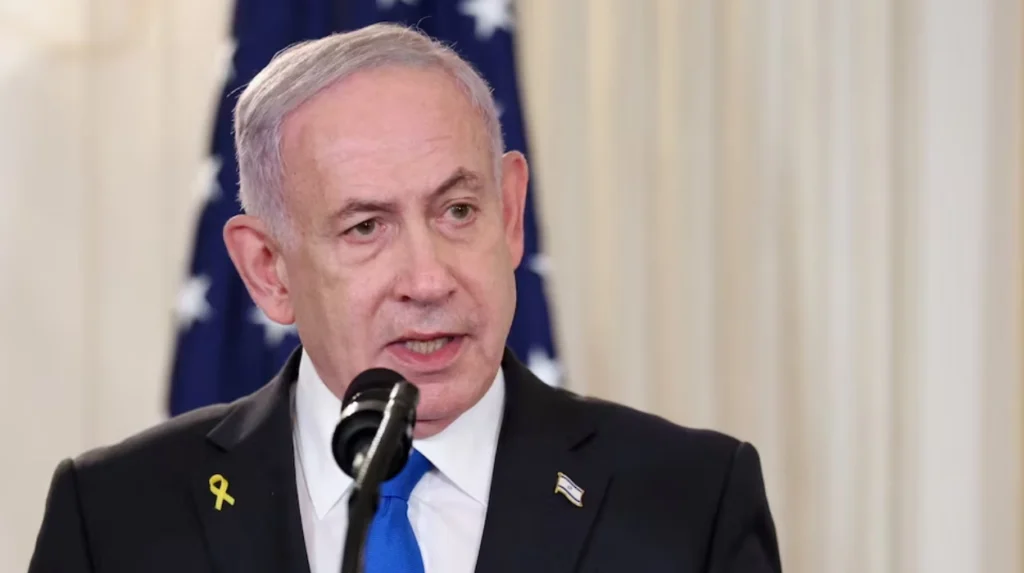
Secretary of State Marco Rubio discussed protests with Israeli Prime Minister Benjamin Netanyahu in a “routine” call, also covering Gaza and Syria. Israeli defence officials, per Axios, observed Iranian intelligence reevaluating after Thursday’s surge. CNN’s live updates on January 10 confirmed Trump’s support pledge without specifics.
Forbes’ analysis on January 10 noted historical limits of foreign aid to protests, succeeding only with internal fractures. Trump’s January 2 Truth Social warning of intervention if protesters die aligns with ongoing monitoring.
How is Iran’s leadership responding to protests and US warnings?
Protests stem from economic despair, with Khamenei asserting resolve on January 10. Trump attributed some deaths to crowd control issues but drew red lines. Deutsche Welle reported persistent demonstrations as regime warnings escalated.
US Central Command’s recent ISIS strikes in Syria, involving RAF jets, underscore regional US activity but differ from Iran’s focus. No ground troops feature in the options
On Sunday, Iran’s parliamentary speaker Mohammad Baqer Qalibaf warned the White House against what he described as a “miscalculation,” saying any attack on Iran would prompt retaliation against Israel and U.S. military assets in the region.
Qalibaf, a former commander in the Islamic Revolutionary Guard Corps, said U.S. bases, ships, and what he termed the “occupied territories” would be considered legitimate targets in the event of military action.
What is the UK’s stance on the Iranian protests and regime change?
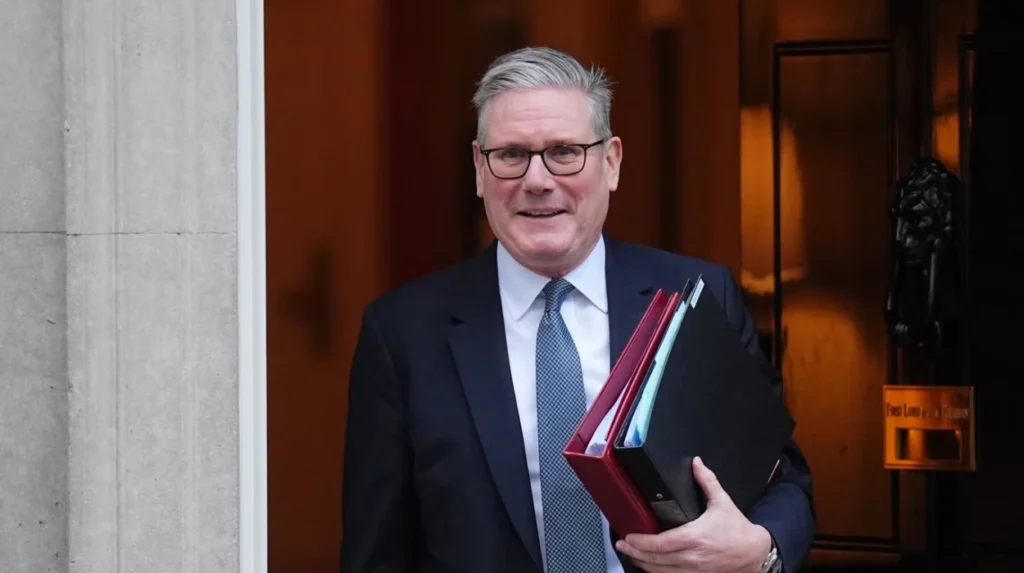
Prime Minister Keir Starmer has urged Iranian authorities to exercise restraint, uphold civil liberties, and refrain from using force, as stated in a joint declaration with France and Germany on 9 January 2026.
Starmer reiterated firm backing for peaceful demonstrations as a fundamental democratic principle during discussions, stressing international coordination. On 9 January, he expressed deep concern over reported violence and killings, calling on Tehran to protect its population and allow freedom of expression without reprisal. Foreign Secretary Yvette Cooper praised protesters’ courage amid crackdowns and internet blackouts on 10 January.
A UK government spokesperson said,
“We are deeply concerned by reports of violence against protesters in Iran who are exercising their legitimate right to peaceful protest and are monitoring the situation closely.”
Kemi Badenoch, the Conservative leader, said she would have no objection to the removal of Iran’s ruling regime and suggested it could be appropriate for the United States and its allies to play a role in such an outcome.
She told the BBC One’s Sunday With Laura Kuenssberg programme,
“Iran would very happily wipe out the UK if it felt it could get away with it. It has tried to kill people on our soil. It is an enemy, it calls us the little Satan.”
Badenoch added,
“So, no, I don’t have an issue with removing a regime that is trying to harm us. It has its terrorist outposts with Hezbollah all across the world. But what I want us to do is try and find a way to make sure as a country we are strong, we protect ourselves from threats and reduce the escalation of what I see around the world, an increasing escalation of conflict everywhere.”
Why is Iran holding protests?
Protests in Iran erupted on 28 December 2025, triggered by a severe economic crisis marked by record inflation, soaring food prices, and a collapsing rial. Demonstrators, starting with bazaar merchants in Tehran, quickly expanded actions nationwide over unaffordable essentials like cooking oil, chicken, and gasoline amid subsidy cuts and US sanctions.
Grievances rapidly evolved into anti-regime demands, with chants rejecting foreign policy priorities,
”Neither Gaza nor Lebanon, My Life for Iran”
, and accusing authorities of corruption, authoritarianism, and neglecting domestic needs for proxies like Hezbollah.
The movement spread to over 100 cities, fueled by ethnic tensions in Kurdish and other provinces, despite internet blackouts and live ammunition, drawing calls from exiled Reza Pahlavi for regime change.