

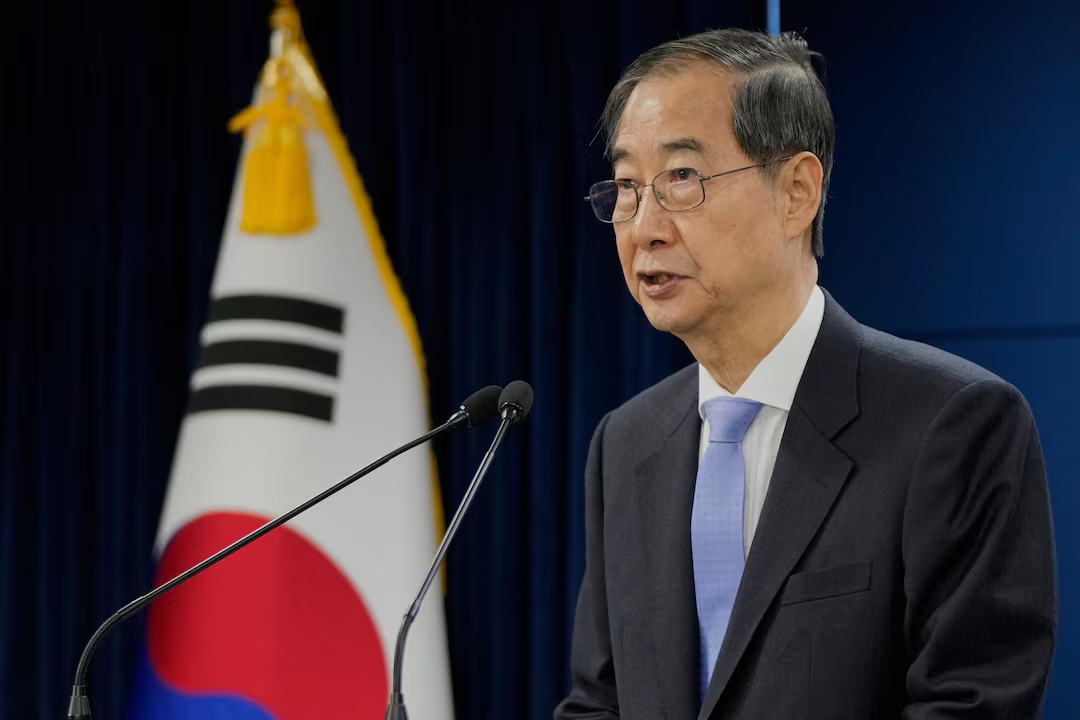
Seoul, January, 2026 — The South Korean government moved swiftly on Tuesday to reassure domestic industries and global investors after renewed tariff warnings from the United States unsettled markets, bringing South Korea US trade back into sharp international focus. Officials emphasized that established agreements, institutional dialogue, and long standing economic cooperation remain firmly in place despite heightened political rhetoric abroad.
The announcement followed a cautious start to trading across Asian markets, where investors assessed whether renewed protectionist language from Washington could translate into concrete policy action. In Seoul, senior policymakers framed the situation as one of communication rather than confrontation, stressing that the foundations of the bilateral economic relationship remain strong.
Tariff Signals Revive Uncertainty in Global Commerce
The renewed attention on trade relations followed comments from Donald Trump, who warned that higher tariffs could be considered if trade imbalances persisted. While no formal measures were announced, the remarks were enough to revive concerns among export driven economies and multinational firms with exposure to trans Pacific supply chains.
For South Korea, whose economic model relies heavily on open markets, such signals carry out sized importance. Government officials responded by underlining that South Korea US trade is governed by structured frameworks and mutual economic incentives that limit the scope for abrupt disruption.
Policy Continuity at the Core of Seoul’s Message
At the heart of the government’s response was a commitment to predictability. The Ministry of Trade, Industry and Energy confirmed that there were no plans to alter existing trade policies, while the finance ministry highlighted measures already in place to support exporters and maintain financial stability.
This emphasis on continuity reflects lessons learned from earlier episodes of trade tension. Rather than escalating rhetoric, Seoul presented South Korea US trade as a mature and resilient partnership capable of absorbing political volatility without undermining economic fundamentals.
The Economic Weight of a Strategic Partnership
The United States remains one of South Korea’s most significant economic partners, accounting for a substantial share of exports and foreign direct investment. Key areas of cooperation include semiconductors, automobiles, defense technology, clean energy, and advanced manufacturing.
Economists caution that prolonged uncertainty affecting South Korea US trade would have far reaching consequences. Supply chains linking factories in Asia to consumers in North America are deeply interconnected, meaning even modest disruptions can ripple through global markets, raising costs and delaying production across multiple sectors.
Market Reaction Reflects Measured Confidence
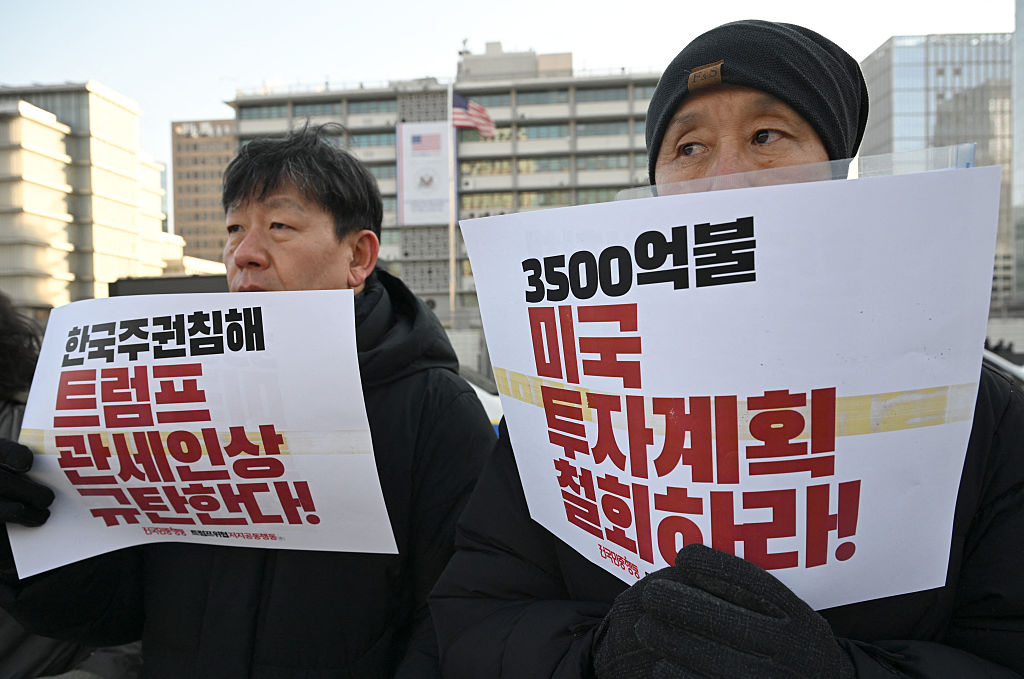
Despite the sharp headlines, financial markets in Seoul showed restraint. The won traded within a relatively narrow range, and major equity indices avoided the steep declines seen during earlier trade disputes. Analysts attributed this stability to the government’s rapid communication and its credibility earned through years of disciplined economic management.
Investment strategists noted that reassurance surrounding South Korea US trade helped anchor expectations, discouraging speculative behavior and reinforcing confidence among long term investors who prioritize policy stability over short term political noise.
Separating Campaign Rhetoric From Policy Reality
Trade analysts have long warned against conflating political rhetoric with enacted policy. While tariff threats can influence sentiment, their implementation often faces legal, economic, and diplomatic constraints that limit sudden shifts.
One senior economist said,
“Deeply integrated trade relationships are not easily undone, even when political language becomes sharper.”
The observation reflects a broader consensus that South Korea US trade rests on structural incentives favoring cooperation rather than confrontation.
Regional Stakes Across the Asia Pacific
South Korea’s role as a manufacturing and technology hub gives its economic stability regional importance. Neighboring economies depend on Korean components for electronics, automotive production, and shipbuilding, while global firms rely on Korean technology for consumer and industrial products.
By reaffirming its commitment to open commerce, Seoul positioned itself as a stabilizing force amid global uncertainty. Maintaining South Korea US trade continuity also sends a signal to other partners that South Korea remains committed to predictable, rules based economic engagement.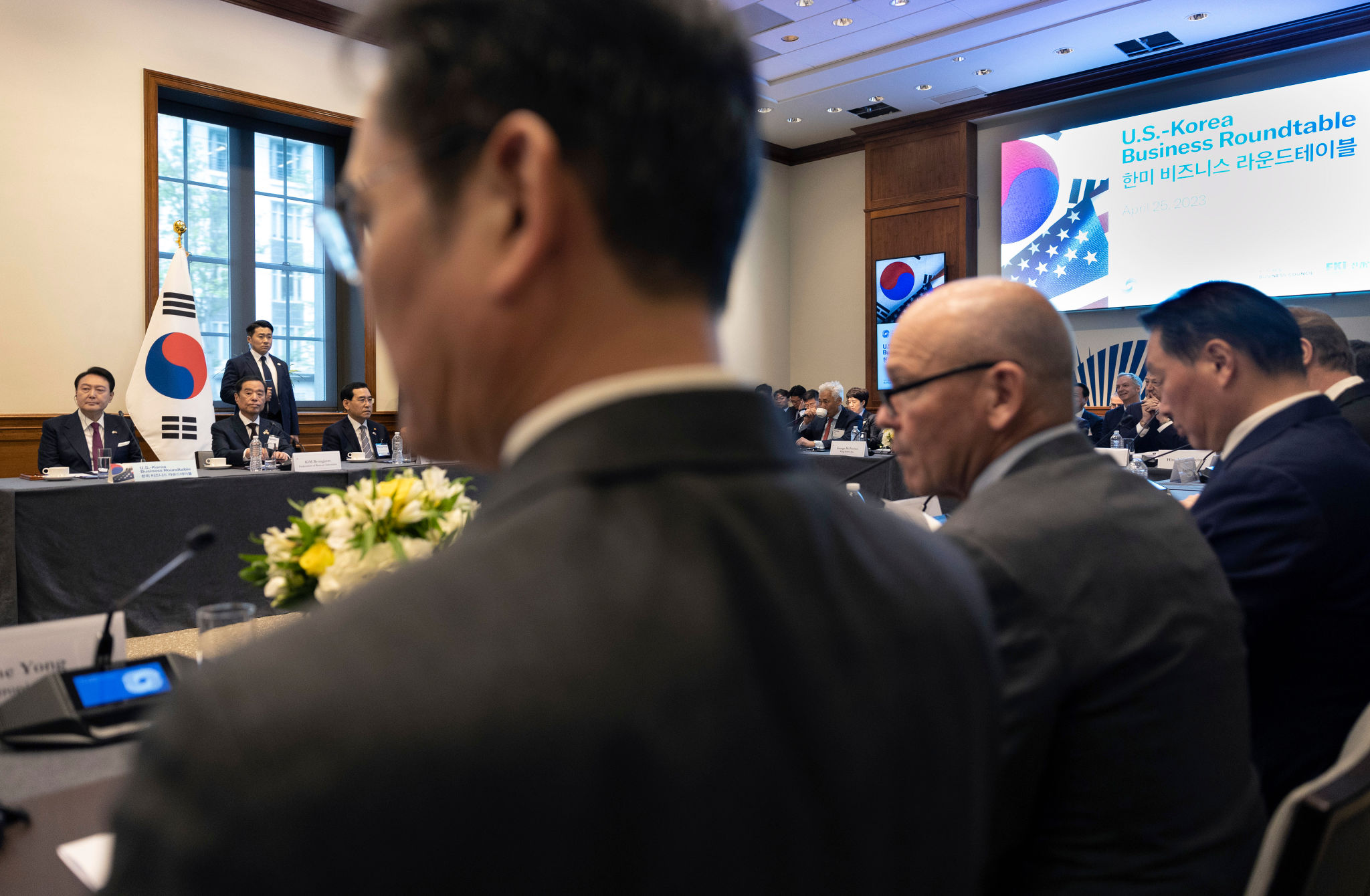
Strategic Industries Drive Long Term Cooperation
The bilateral relationship increasingly centers on strategic industries critical to future competitiveness. Semiconductor fabrication, battery technology, artificial intelligence, and clean energy investment feature prominently in joint initiatives between Korean and American firms.
Officials emphasized that these sectors depend on long term planning and stable trade conditions. Any prolonged uncertainty surrounding South Korea US trade could slow innovation, raise costs, and weaken competitiveness in industries central to both economies.
Diplomacy Continues Beyond Public Statements
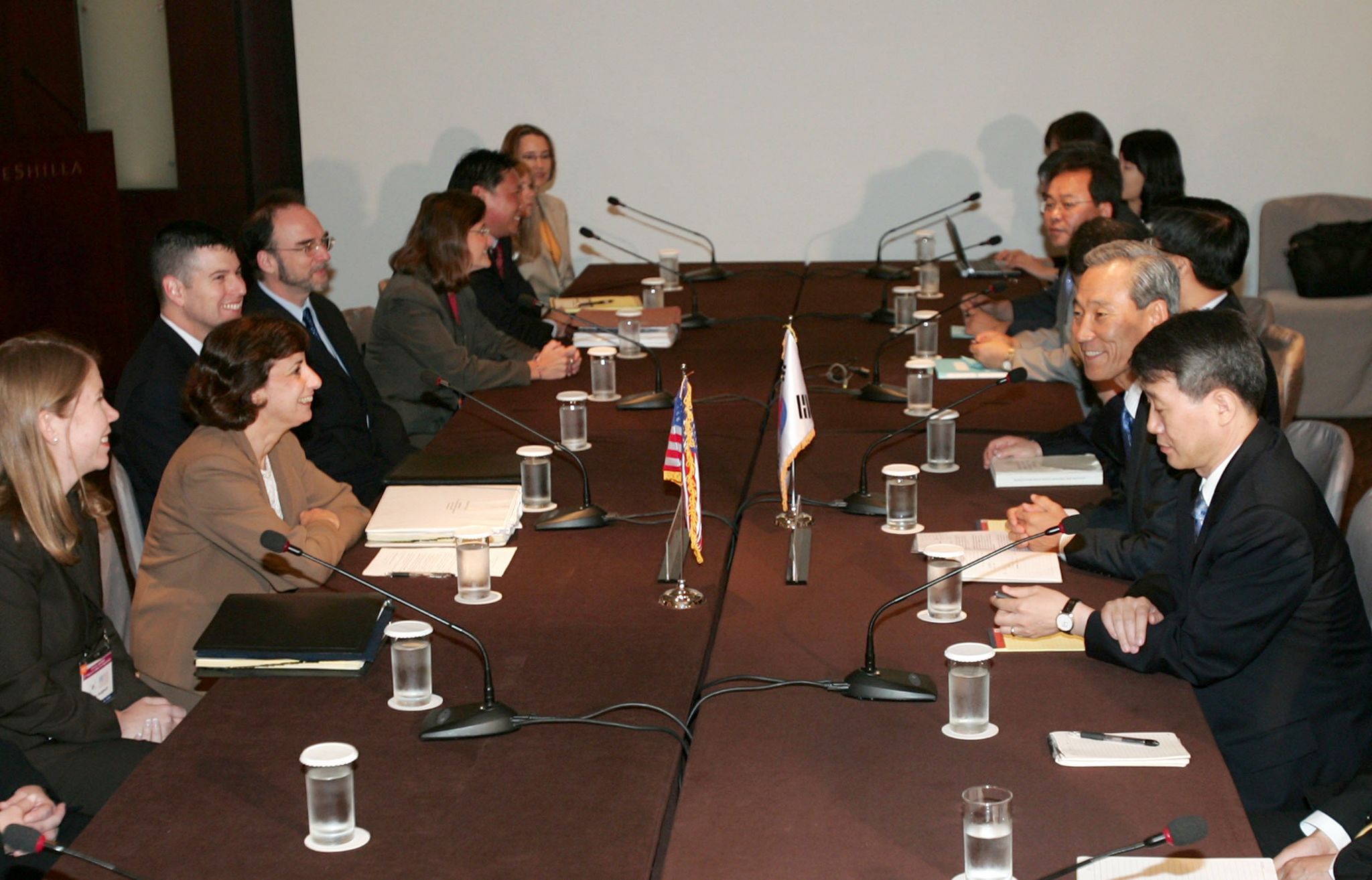
While public briefings reassured markets, diplomatic engagement continued behind the scenes. Trade envoys and senior officials maintained regular consultations aimed at clarifying intentions and preventing misunderstandings from escalating into formal disputes.
This ongoing dialogue highlights the institutional depth of South Korea US trade, where disagreements are typically addressed through negotiation rather than escalation, reflecting decades of accumulated trust and cooperation.
Global Trade Fragmentation Forms the Backdrop
The episode unfolded against a broader backdrop of global trade fragmentation. Governments worldwide are reassessing supply chain dependencies and industrial policy priorities, often blending economic and security considerations in ways that complicate traditional trade relationships.
Within this environment, South Korea’s emphasis on dialogue and continuity underscores its strategy of balancing national interests with global integration, ensuring that South Korea US trade remains a pillar of economic resilience.
Outlook for the Remainder of 2026
Looking ahead, economists expect South Korea US trade to remain broadly stable through the remainder of 2026, supported by strong mutual economic incentives and continued strategic alignment between the two countries. While political uncertainty may persist in the global arena, the economic cost of disruption is high for both sides, encouraging restraint, dialogue, and pragmatic engagement.
South Korea’s measured response to renewed tariff warnings highlights how mid sized economies can manage great power politics through credibility, clear communication, and strong institutions. In a global environment shaped by rapid change and persistent political noise, these strengths are likely to play a decisive role in sustaining confidence around South Korea US trade.
Stability Over Speculation
The latest developments serve as a reminder that modern trade relationships are tested not only by policy decisions but also by perception. Seoul’s swift reassurance reflects confidence in its economic foundations and in the long term durability of South Korea US trade ties.
As global markets continue to adapt to shifting geopolitical dynamics, the ability to project stability and continuity may prove as valuable as any formal agreement. For South Korea, maintaining calm amid uncertainty reinforces its reputation as a reliable partner in an increasingly complex global economy.