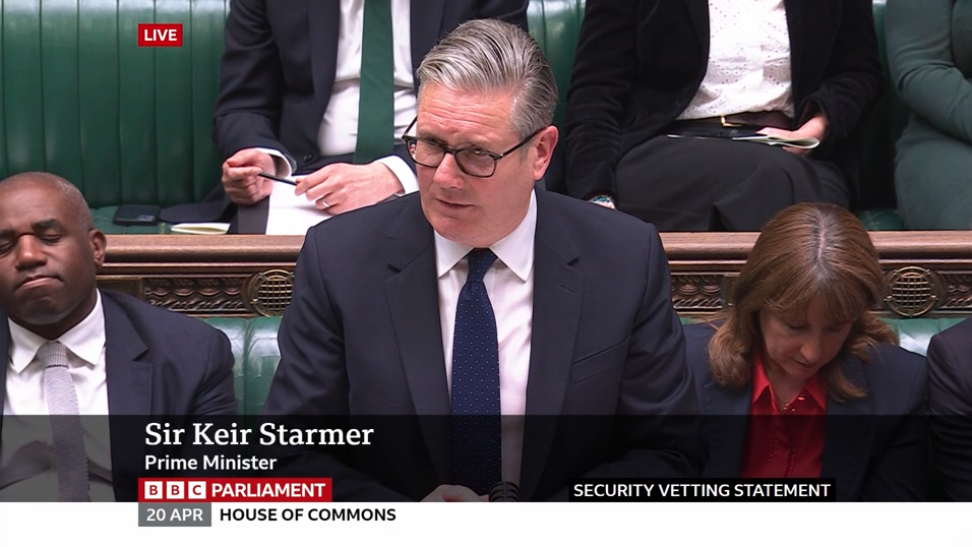
The atmosphere in the House of Commons this Monday reached a fever pitch as Prime Minister Keir Starmer faced a wall of condemnation over the security vetting scandal involving Lord Mandelson.
In a session marked by raw anger and historic ejections, the Prime Minister was forced to defend his administration against allegations of systemic failure and personal negligence regarding the appointment of one of New Labour’s most controversial figures to a high-ranking diplomatic role.
The crisis centres on the revelation that Lord Mandelson was denied developed vetting clearance by UK Security Vetting, yet the appointment proceeded regardless, leading to what many in Westminster are calling a catastrophic breach of national security protocols.
Addressing a packed and hostile chamber, Keir Starmer told the Commons it “beggars belief” that he was not informed Lord Mandelson had failed his security vetting. The Prime Minister’s defence rested heavily on the claim that a “deliberate decision was taken to withhold that material from me,” an admission that has sparked further questions about the internal discipline and transparency of his Cabinet Office.
Under intense pressure from the opposition benches, Starmer repeated that the responsibility for the appointment ultimately lay with him. The moment of contrition did little to quiet the shouting, Starmer admitted he should not have appointed Mandelson, stating: “I should not have appointed Peter Mandelson” and that the “judgement I made was wrong”.
The timeline of the scandal suggests a series of ignored warnings that began months before the appointment was finalised. It has emerged that Starmer ignored advice from the former cabinet secretary Lord Case in November 2024 to vet Mandelson thoroughly before confirming the appointment. Despite this high-level caution, the process continued. On January 28, 2025, UK Security Vetting recommended Mandelson be denied developed vetting clearance, citing concerns that remain largely classified but are understood to relate to past associations and commercial interests.
However, in a turn of events that has stunned the intelligence community, Foreign Office officials: specifically Sir Olly Robbins: granted the clearance anyway, effectively bypassing the professional recommendation of the security services and giving Lord Mandelson access to highly sensitive government information.
Sir Olly Robbins, who has since been effectively sacked following the fallout, has argued that his hands were tied by protocol. Starmer quoted him in the chamber today, saying: “he couldn’t provide this information to me because he wasn’t allowed”. This explanation has been met with incredulity by constitutional experts and opposition MPs alike, who argue that the Prime Minister’s office must be the ultimate recipient of such critical security information. The discrepancy has left a vacuum of accountability that Kemi Badenoch, the Leader of the Opposition, was quick to exploit. Calling for the Prime Minister to resign, Badenoch accused Starmer of a cowardly retreat from responsibility, saying: “He’s throwing everybody under a bus.”
The debate briefly spiralled into chaos as Reform MP Lee Anderson was ejected from the chamber for a particularly blunt assessment of the Prime Minister’s integrity, shouting that “That man couldn’t lie straight in bed.”
Shortly thereafter, Zarah Sultana was also ordered to leave after calling the Prime Minister a “barefaced liar.” The Speaker struggled to maintain order as the accusations of dishonesty flew.
Starmer admitted he inadvertently misled parliament in previous statements regarding the timeline of his knowledge but remained firm in his denial of knowingly lying to the House. This distinction, however, seems to be lost on a public and a parliament already weary of political manoeuvring with many comparing it to the denials by Boris Johnson of parties in No 10 during the Covid lockdowns.
Liberal Democrat leader Sir Ed Davey joined the chorus of condemnation, framing the scandal not just as a failure of process but as a fundamental error in the Prime Minister’s personal judgment.
Sir Ed Davey said: “The prime minister knew that appointing Mandelson was an enormous risk. He decided it was a risk worth taking: a catastrophic error of judgment, and now that it’s blown up in his face, the only decent thing to do is to take responsibility.” This sentiment was echoed across the chamber, as backbenchers from multiple parties questioned how a Prime Minister who campaigned on a platform of integrity and “service” could allow such a basic failure of security vetting to occur at the highest levels of government.
As the dust settles on one of the most damaging days for the Starmer administration, the focus now shifts to the civil service and the role of the Foreign Office. The fact that Sir Olly Robbins allegedly felt unable or unwilling to share a vetting denial with the head of the government suggests a profound breakdown in the machinery of the state.
Sir Olly is appearing in front of MPs to give his side of the events tomorrow, so the scandal continues, and the damage to the Prime Minister and wider Labour Government continues. But it will bring down Sir Keir? Commentators seem split. Some believe it’s a matter of time, but the Labour Party has never been as ruthless as the Conservatives, and with some of the main contenders to replace the PM are either not in Parliament, or dealing with their own problems, and with most Labour MPs expecting a damaging set of election results next month, for now at least, he seems safe.
Starmer clings on after bruising day in the Commons