

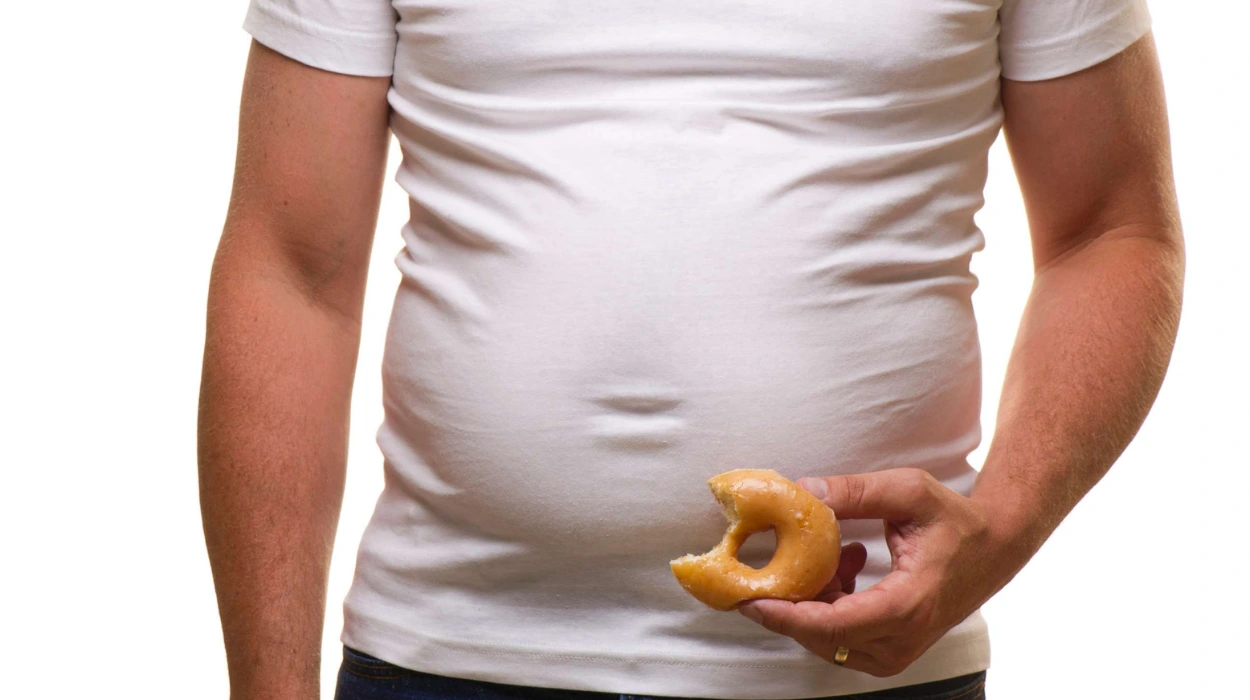
UK (Parliament Politics Magazine) – Research shows abdominal obesity in men may harm heart function, shrinking chambers, and reducing blood flow, increasing the risk of heart failure.
As reported by The Independent, a new study shows men with a “beer belly” face higher risks of heart damage than those with fat in other areas.
What did a new study reveal about tummy fat and heart health?
Research shows that abdominal obesity, or tummy fat, leads to more harmful changes in heart structure than overall body weight.
At the Radiological Society of North America’s annual meeting, researchers showed that abdominal fat may reduce the heart’s pumping ability, raising the risk of heart failure.
Study author Jennifer Erley, radiology resident at University Medical Center Hamburg-Eppendorf in Germany, said,
“It appears to lead to a potentially pathological form of cardiac remodelling, concentric hypertrophy, where the heart muscle thickens but the overall size of the heart doesn’t increase, leading to smaller cardiac volumes.”
He stated,
“In fact, the inner chambers become smaller, so the heart holds and pumps less blood. This pattern impairs the heart’s ability to relax properly, which eventually can lead to heart failure.”
Dr Erley added that middle-aged adults should prioritize preventing belly fat accumulation through regular exercise, a balanced diet, and medical support if needed.
The study analyzed cardiovascular MRI data from 2,244 German participants, aged 46 to 78, all without heart disease, using a long-term population research dataset.
The researchers considered participants’ BMI, a standard measure of body mass, and waist-to-hip ratio to assess general and abdominal obesity.
According to the study, around 69% of men and 56% of women were overweight or obese by BMI standards, while the waist-to-hip ratio showed 91% of men and 64% of women met WHO obesity criteria.
The study reported that general obesity was often linked to enlarged heart chambers, while belly fat was associated with thicker heart muscle and smaller chamber sizes.
Researchers found that structural heart changes were more pronounced in men, even after adjusting for risk factors such as high blood pressure, smoking, diabetes, and cholesterol.
Carrying extra abdominal fat is linked to fat deposits in the arteries and major organs, increasing the risk of hypertension, high cholesterol, and type 2 diabetes.
The British Heart Foundation explains that damage to arteries supplying the heart can trigger a heart attack, while similar changes in brain arteries can cause a stroke or vascular dementia.
Excess abdominal fat is more common in men, raising their likelihood of developing health issues.
What did Professor Naveed Sattar say about belly fat and men’s health risks?
Naveed Sattar, professor of Metabolic Medicine at the University of Glasgow, said,
“Men put their fat in their tummies faster than women, that means men have a higher risk of type 2 diabetes, heart disease and heart failure than women.”
He added,
“Women have a better capacity to store fat in their skin, arms, legs, and fat there is locked up. Whereas when you start putting fat in the tummy you are also putting fat into organs where it shouldn’t be, such as the liver, muscle, pancreas and the heart. Therefore men’s buffering capacity for weight is not as good as women.”
How many people have heart problems in the UK?
More than 7.6 million people in the UK are living with heart and circulatory diseases, including more than 4 million men and about 3.6 million women.
Heart and circulatory diseases cause around 174,693 deaths annually in the UK, which equates to about 480 deaths every day. Specifically, over one million people have heart failure, and around 2.3 million live with coronary heart disease in the UK.
The major cause of heart disease in the UK is atherosclerosis, driven by high blood pressure, cholesterol, smoking, diabetes, and lifestyle factors.