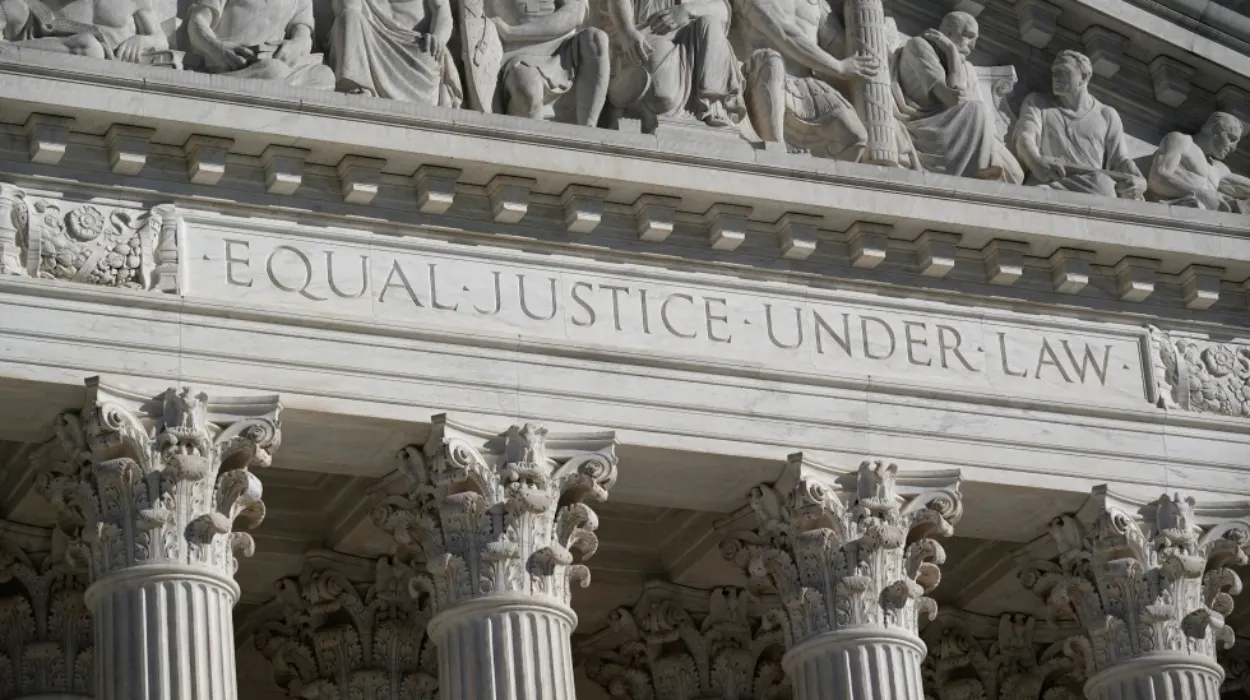
USA (Parliament Politics Magazine) – The US Supreme Court heard arguments on 10 December 2025 in Hamm v. Smith, grappling with whether Alabama can execute Joseph Clifton Smith, deemed intellectually disabled by lower courts despite IQ scores of 72-78, due to testing margins of error and adaptive deficits. Justices appeared divided on holistic IQ assessments versus strict cutoffs, with Alabama AG Steve Marshall urging reversal and Smith’s counsel Seth P. Waxman defending comprehensive evidence review.
Case Background and Crime Details
Joseph Clifton Smith, now 55, was sentenced to death for murdering Durk Van Dam in Mobile County, Alabama, on 5 March 1997. As detailed by The New York Times, Smith assaulted Van Dam with a hammer and saw in a robbery attempt, stealing $140, boots, and tools; Van Dam’s body was found in his stuck Ford Ranger truck in a wooded area.
The Washington Post noted Smith’s history: childhood abuse by father and stepfather, special education placement, failing seventh and eighth grades, dropping out, and incarceration for 15 of the prior years, including a six-year burglary sentence paroled days before the murder.
ABC News reported Smith’s academic levels at crime time: kindergarten maths, third-grade spelling, fourth-grade reading. Under Alabama law, intellectual disability requires IQ below 70, significant adaptive deficits, and onset before age 18.
IQ Testing and Legal Standards
Smith’s five IQ assessments yielded 72-78. The New York Times explained Alabama’s cutoff at 70 or below, but a district judge in 2021 ruled him disabled, citing margins of error making his lowest potentially 69, plus adaptive evidence. Reuters’ summary noted 2002’s Atkins v. Virginia bans executions for the intellectually disabled; 2014 Hall v. Florida and 2017 Moore v. Texas mandate considering scores near 70 with other factors.
As reported by PBS NewsHour, Alabama attorney Robert M. Overing argued:
“There [is] no way he can [have] an IQ [of] 70,”
stressing no score below 70. Smith’s team, per Cornell Law filings, advocated:
“When IQ scores [are] inconclusive, courts must also weigh additional evidence pertaining to intellectual functioning,”
Lower Court Rulings and Supreme Court History
A 2021 federal district judge vacated Smith’s sentence, calling it “a close case” but permitting further evidence for borderline scores. The 11th Circuit affirmed via “holistic approach” to multiple scores and testimony, after Supreme Court remand last year for clarification, per ABC News and Reuters.
USA Today highlighted decades-old precedents: Atkins set the ban; recent cases address IQ nuances. Rights groups’ brief, cited by ABC, stated:
“Intellectual disability diagnoses based solely on IQ test scores are faulty and invalid.”
Alabama’s Steve Marshall countered in filings:
“A collective view of Smith’s test results indicated he was not intellectually disabled.”
Oral Arguments and Justice Reactions
Justices scrutinised cumulative IQ effects. Newsweek reported Thomas and Alito appearing to back execution, questioning holistic methods. The New York Times noted debates on whether courts overstepped by adjusting scores downward. PBS quoted Overing’s straightforward claim on scores never below 70.
Smith’s lawyers argued lower courts followed law in “holistic assessment of all relevant evidence,” per ABC News. The Trump administration supported Alabama, per Reuters.
Broader Death Penalty Context
Twenty-seven states retain capital punishment with varying disability criteria. The Washington Post framed it as weighing multiple IQs for robbery-murder death eligibility. UrbLaw previewed Hamm v. Smith on 10 December defining disability. A ruling is expected by June 2026, per Reuters.
Disability advocates decry rigid cutoffs ignoring real-world deficits like Smith’s social, living, and academic struggles from youth.
State and Federal Positions
Alabama seeks reversal, arguing incorrect standards ignored overall scores above 70. Marshall’s office emphasised legal criteria. Federal support aligns with stricter enforcement. Smith’s defence highlights abuse, education failures, and incarceration patterns as deficits.