Headline: U.S. Weighs New Protections for North Atlantic Right Whales
In a significant move to bolster the dwindling population of North Atlantic right whales, the Biden administration is considering revising existing regulations intended to shield these endangered marine mammals. The proposal, which comes in response to alarming population declines, underscores the urgent need for protective measures as these whales face threats from vessel strikes and fishing gear entanglement. The discussions are taking place in Washington, D.C., with stakeholders from environmental organizations, fishing industries, and scientific communities scheduled to meet over the coming weeks.
The Current State of North Atlantic Right Whales
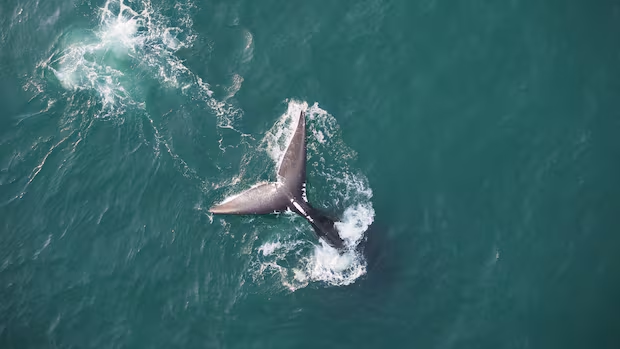
Once decimated by whaling, the North Atlantic right whale has struggled to recover, with an estimated population of fewer than 340 individuals remaining. This species is listed as critically endangered under the Endangered Species Act, facing an uphill battle for survival amidst multiple threats. According to recent studies, the primary hazards include ship collisions and entanglements in fishing gear, which can lead to injury or death.
The urgency for regulatory updates arises from the fact that the North Atlantic right whale’s population has stagnated, prompting experts to call for immediate intervention. In the last few years, the species has seen more deaths than births, exacerbating its vulnerable status.
Proposed Changes to Existing Regulations
While the National Marine Fisheries Service (NMFS) has implemented various protective measures over the years, advocates argue that adjustments are necessary to strengthen these frameworks. The new proposals aim to enhance speed restrictions for vessels in right whale habitats, introduce additional seasonal closures for fishing, and expand the areas designated as critical habitats.
Officials, including NOAA Administrator Dr. Rick Spinrad, have acknowledged that the existing regulations may not be sufficient. "We are committed to taking every possible step to protect these whales," Spinrad stated during a recent press conference, emphasizing the need for a multifaceted approach to conservation efforts.
Stakeholder Perspectives
The proposed changes have garnered a mixed response from various stakeholders. Environmental groups, including the Whale and Dolphin Conservation and Oceana, are largely in favor, citing an urgent need for stricter regulations to protect the whales. Rachel O’Connor, marine policy analyst with Oceana, remarked, “Without immediate action, we risk losing the last of this remarkable species.”
Conversely, members of the fishing industry have expressed concerns about the potential economic impacts of more stringent regulations. Fishermen fear that increased restrictions could limit their catch and revenue, particularly in areas critical for their livelihoods. The New England Fishery Management Council has raised alarms about how changes might disrupt longstanding fishing practices and the local economies that depend on them.
"The balance between conservation and economic viability is delicate," said Chairman David Goethel. "We hope that any new regulations will account for the livelihoods at stake while still prioritizing the protection of right whales."
The Role of Technology in Conservation
One exciting aspect of the proposed regulatory changes involves the integration of technology in conservation efforts. Innovations such as aerial surveys and acoustic monitoring could be employed to improve whale detection and inform vessel operators of right whale presence in real-time. These advancements hold great promise for reducing ship strikes and offering better insights into whale behavior, particularly during calving season when females are most vulnerable.
Furthermore, advancements in fishing gear, including the development of ropeless traps, could help mitigate entanglements. These technologies, if adopted widely, could make a substantial difference in the survival rates of North Atlantic right whales.
Legislative and Scientific Support
Support for these initiatives extends beyond conservation organizations; several legislators have rallied behind the cause as well. Among them is Congresswoman Chellie Pingree of Maine, who has advocated for increased funding for right whale research and the development of protective measures. "If we are to honor our commitment to preserving biodiversity, we must prioritize the North Atlantic right whale," she stated during a recent congressional hearing.
Scientific research has also played a crucial role in informing policymakers about the state of right whales and the urgent need for regulatory updates. Institutions like the University of Florida and various marine research organizations have been examining the whales’ migration patterns, feeding habits, and overall health to provide data-driven recommendations.
The Path Forward: A Call to Action
As discussions unfold in the coming weeks, environmentalists urge a collaborative approach that brings together scientists, policymakers, and industry representatives. This cooperative effort is essential for striking a balance between effective conservation measures and economic sustainability.
The fate of the North Atlantic right whale hangs in the balance, with experts warning that time is of the essence. As the U.S. considers changing regulations, stakeholders are hopeful for a future where the right whale can thrive in its natural habitat, free from human-induced threats.
Conclusion
The North Atlantic right whale’s preservation is not just an ecological concern but a testament to our commitment to conserving marine biodiversity. With the looming possibility of regulatory changes, stakeholders from all sides must come together for a collaborative solution that ensures both the survival of this majestic species and the economic stability of coastal communities. As we await the administration’s decision, one thing is clear: the time for action is now.
As discussions advance and further steps are outlined, updates will continue to emerge, providing insight into how this critical issue unfolds in the coming months. Environmental advocates, scientists, and the fishing community remain vigilant, each hoping their vision for the future of North Atlantic right whales will prevail.