
UK (Parliament Politics Magazine) – King’s vice-chancellor says UK degrees no longer guarantee social mobility, but degrees no longer ensure social mobility due to oversupply and economic pressures.
As reported by Richard Adams of The Guardian, a leading vice-chancellor has warned that Britain faces a graduate oversupply, making university degrees no longer a guarantee of social mobility.
What did Prof Shitij Kapur say about UK degrees and social mobility?
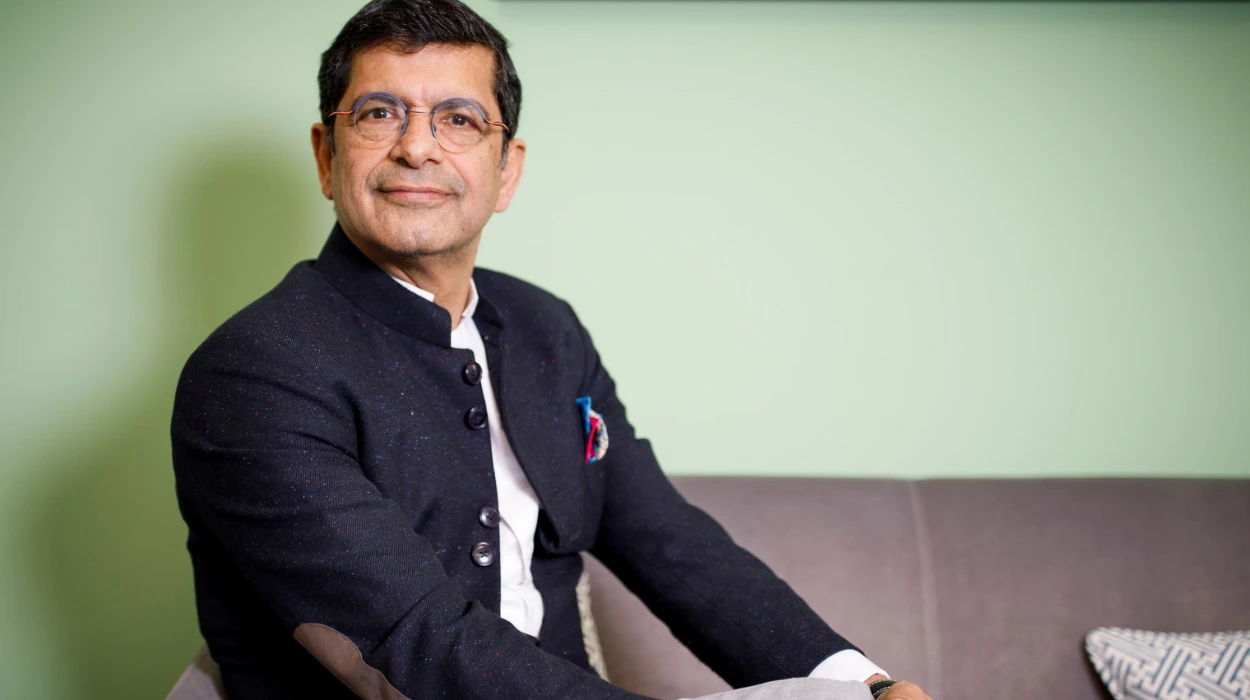
Prof Shitij Kapur, vice-chancellor of King’s College London, said the era when university degrees assured graduates well-paying jobs is over, as nearly half the population now attends higher education.
He called a university degree a “visa” to opportunity rather than a guaranteed career, reflecting shrinking graduate pay and rising competition from AI and global graduates.
“The competition for graduate jobs is not just all because of AI filling out forms or taking away jobs. It’s also because of the stalling of our economy and it’s also because of a surfeit of graduates. So I feel that that simple promise [of a good job] has now become conditional on ‘Which university did you go to? What course did you take?’”
Kapur stated.
He continued,
“The personal equation of the university as a vehicle for social mobility, almost as a passport to social mobility, meant that if you got a degree, you were certain to get a job as a socially mobile citizen. But now I think it has become a visa for social mobility – it means you’ve got a chance to go and visit that place called social mobility. Maybe you’ll make it there, maybe you won’t.”
Discussions over the role of university degrees have continued for decades, but in 2025, Prime Minister Sir Keir Starmer said that targeting 50% participation in higher education was “not right for our times,” marking the end of former Prime Minister Tony Blair’s 1999 pledge.
The Prime Minister’s remarks came two years after former PM Rishi Sunak criticized the target, calling the goal of 50% of children attending university “one of the great mistakes of the last 30 years.”
The vice-chancellor stated that Trow predicted,
“Three things will happen. Social regard for the exceptionalism of university graduates will go down. The second thing is, the graduate premium will go down, because a degree will become something that’s not scarce at all. And from being a privilege, it [a university education] will start becoming a necessity”
for participating in modern society.
He continued,
“I think in the UK we are reaching that point now.”
Data from the Department for Education indicate that graduates in England continue to have higher employment and pay than non-graduates, but the real income of younger graduates has remained flat over the past decade.
Kapur highlighted that Britain’s slow economic growth coincided with the 2012 introduction of £9,000 tuition fees and student loans, calling it “the worst possible time” for students to transition to individual loans.
His 2022 analysis of UK higher education described a “triangle of sadness” between students facing debt and uncertain futures, government fee cuts, and university staff caught in the middle.
By earning more from tuition fees, universities like King’s College London can pay for top research and stay highly ranked. This also allows them to charge higher fees while giving local students better access to teachers and more courses.
Rising public concern over immigration has prompted recent governments to tighten international student visas and impose a new fee levy, potentially affecting the benefits they provide.
Kapur said,
“It’s an interesting national conversation we need to have. Often people think that international students are some sort of self-serving indulgence. But what I would like people to understand is that this is now a feature of our system. It really does bring benefits to our domestic students, in addition to the nation. Therefore, if we’re going to mess with it, we should do it knowingly.”
He warned,
“Governments have to be careful, because if there is any hope that this productivity slump we keep talking about is going to change, it is not going to be because we become faster baristas.”
The vice chancellor added,
“It will only turn around if we are able to ride the new wave of technology better than others, that we are the makers and not the takers of the next technological revolution, and universities will have a central role in doing that.”
How many international students are studying in the UK?
British universities enrolled 732,285 international students in the 2023/24 academic year, marking a 7% decline from the previous year and the first drop in a decade.
In January 2024, the UK government stopped most international students from bringing family members. Even so, demand grew a lot in 2025, with student acceptances up 31% and visa applications up 30% in the first five months.
From 2027, the Graduate Route visa will shrink to 18 months, likely lowering student visa applications by 12,000 a year, though UK international student numbers are forecast to reach 900,000 by 2030.
