
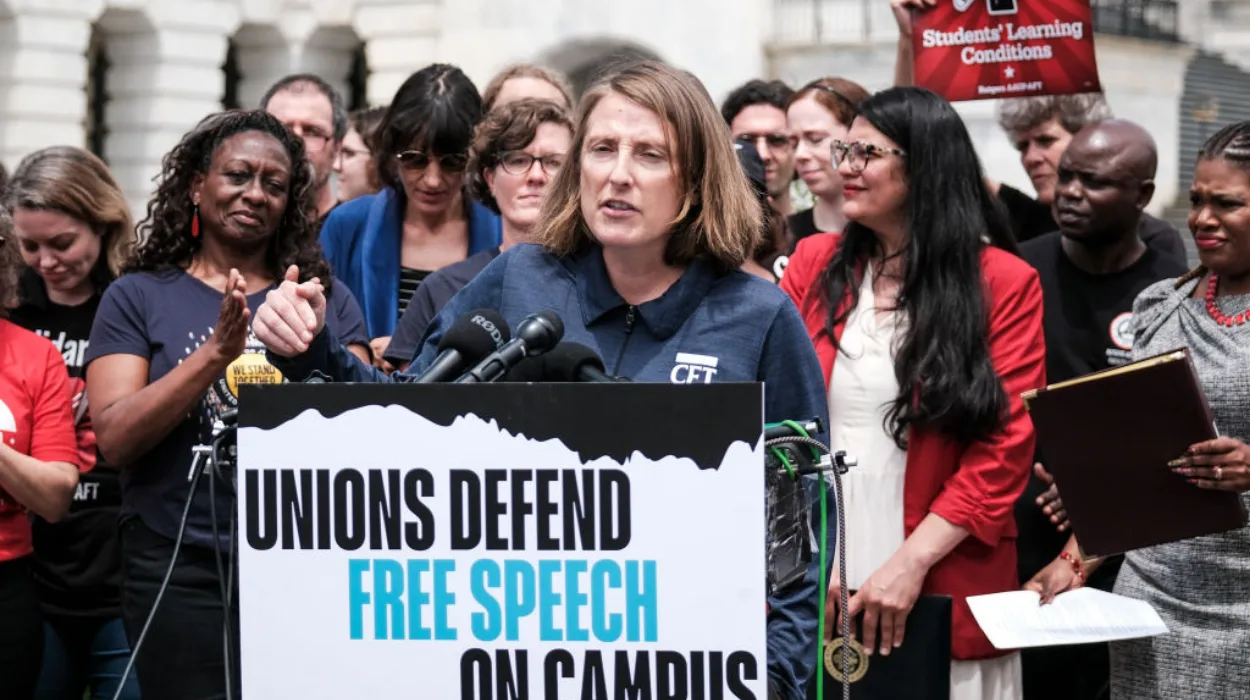
Washington (Parliament Politics Megazine) – January 16, 2026 – The year 2025 has been described as catastrophic for academic freedom and institutional autonomy in US universities. Reports from scholarly organisations document widespread incidents of censorship, political interference, and funding cuts targeting dissenting views. Legislative actions in multiple states exacerbated pressures on faculty and campus speech.
A comprehensive report released by the American Association of University Professors (AAUP) on 15 January 2026 labels 2025 as the most severe year for academic freedom since tracking began in 1915. The document records 148 violations across 34 states, surpassing the previous record of 112 in 2023. Key issues include state laws mandating curriculum oversight, dismissal of tenured professors, and defunding of diversity programmes.
The report attributes much of the decline to partisan legislation following the 2024 elections. President Donald Trump’s administration issued executive orders in March 2025 directing federal funding priorities away from institutions deemed non-compliant with “patriotic education” standards. Universities in red states faced the brunt, with over 60% of incidents concentrated in Texas, Florida, and Ohio.
Key Violations and Incident Breakdown
AAUP data categorises violations into speech suppression, hiring interference, and autonomy erosion. Speech suppression accounted for 52 cases, including firings for social media posts critical of government policies. In Texas, the University of Austin dismissed three history professors after state audits flagged their syllabi for “woke bias.”
Hiring interference rose 40%, with 38 instances of political litmus tests for faculty appointments. Florida’s Board of Governors mandated ideological balance clauses in job descriptions, leading to 12 rejected hires at public universities. Autonomy erosion involved 58 cases of external board takeovers, often by governor appointees.
As reported by Sarah Klein of The Chronicle of Higher Education, AAUP President Ted Liebowitz stated,
“2025 represents a systemic assault on the foundational principles of higher education.”
Foundation for Individual Rights and Expression (FIRE) President Greg Lukianoff noted,
“Censorship now comes from both left and right, but right-wing laws dominate,”
according to Jonathan Turley of The New York Times.
Legislative and Federal Actions
Twenty-three states enacted 47 anti-DEI bills by December 2025, banning related programmes and requiring reporting on faculty political affiliations. Texas Senate Bill 17 prohibited diversity offices outright, affecting 45 public campuses. Florida expanded its Stop WOKE Act to tenure reviews, resulting in 22 non-renewals.
Federally, the Department of Education under Secretary Linda McMahon withheld $2.4 billion from 89 institutions for non-compliance with Title VI reinterpretations. Executive Order 14147, signed 15 June 2025, tied grants to “viewpoint diversity” metrics, audited via student surveys.
Ohio’s HB 285 dissolved the faculty senate at Kent State University, replacing it with a governor-selected council. Similar measures in Georgia and Iowa led to mass resignations, with 300 faculty leaving public systems.
According to Emma Goldberg of The New York Times, Liebowitz remarked,
“Legislatures are now de facto accreditors, undermining peer governance.”
FIRE’s report corroborates, documenting 76 faculty discipline cases linked to legislation.
Impact on Faculty and Students
Faculty departures hit record levels, with 15,000 tenured professors resigning or retiring early. The Scholar Rescue Fund supported 450 at-risk academics relocating domestically. Student enrolment in humanities dropped 18%, per National Student Clearinghouse data.
Minority-serving institutions suffered disproportionately, losing 30% of federal aid. Howard University cut 200 positions after funding lapsed. Jewish and Muslim student groups reported heightened self-censorship amid Israel-Palestine discourse restrictions.
Campus protests faced crackdowns under expanded Clery Act interpretations, with 34 arrests at Columbia University in April 2025. Safe space mandates in California clashed with free speech protections, leading to 19 lawsuits.
As per Jennifer Schuessler of The New York Times, Lukianoff stated,
“Autonomy is eroding as states treat universities like political fiefdoms.”
AAUP surveys show 68% of professors altering courses to avoid scrutiny.
Historical Context and Precedents
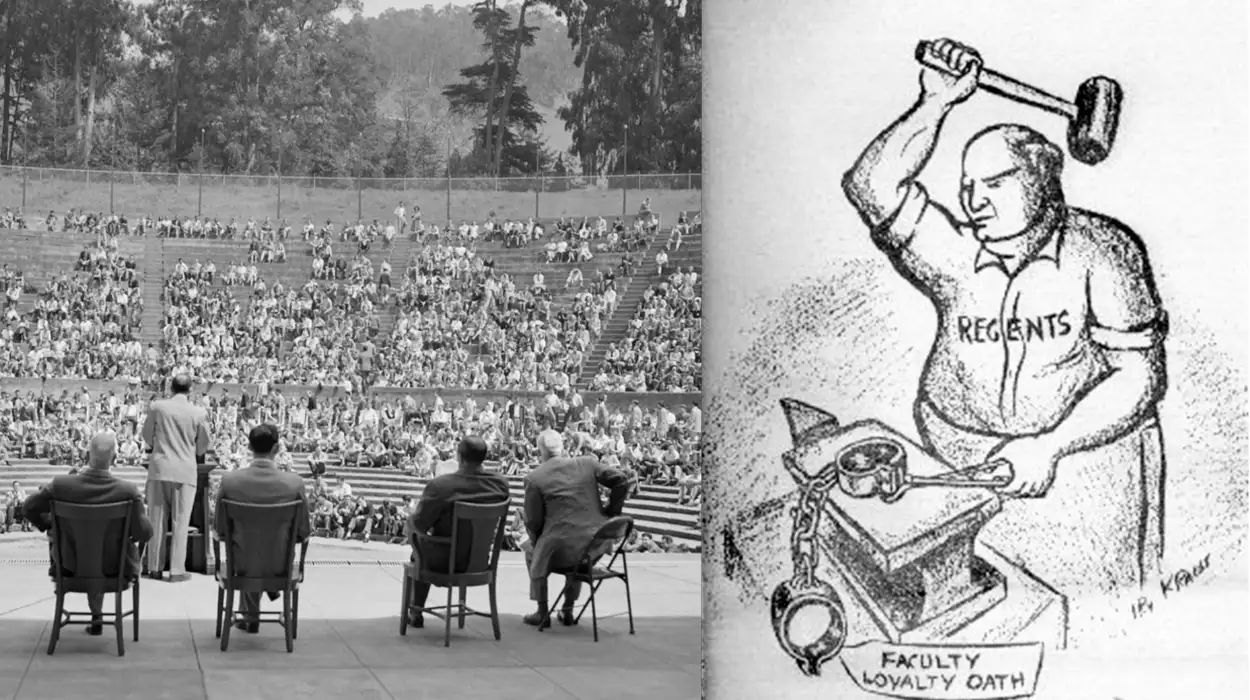
Academic freedom crises echo McCarthyism, when 100 professors lost jobs in the 1950s. The 1960s saw loyalty oaths, struck down by courts. Modern triggers trace to 2022 Florida laws, escalating post-2024.
The AAUP’s 1940 Statement, endorsed by 250 associations, defines freedom as essential for inquiry. Violations peaked during Vietnam War protests but never matched 2025’s scope. International indices like the Academic Freedom Index scored the US at 0.45/1.0, down from 0.78 in 2020.
Comparative data shows Europe stable, with Germany at 0.92. US declines correlate with polarisation, per Varieties of Democracy project.
Reuters’ Steve Holland covered Trump’s order: “No more indoctrination on the taxpayer dime.” McMahon affirmed in congressional testimony, “Accountability ensures excellence.”
Institutional Responses and Legal Challenges
Harvard sued the DOE in July 2025, winning a preliminary injunction blocking $500 million cuts. The Supreme Court heard arguments in December on tenure protections. ACLU and AAUP filed 42 amicus briefs.
Private universities like Stanford adopted neutrality pledges, pausing DEI initiatives. Public systems in blue states, including California, bolstered tenure laws.
FIRE awarded “gold” ratings to only 28 campuses in 2025, down from 45. Student chapters grew 25%, advocating via petitions.
According to Inside Higher Ed’s Colleen Flaherty, Harvard President Alan Garber said,
“We defend the right to think freely.”
Texas Tech President Lawrence Schovanec defended compliance:
“Adaptation preserves mission.”
Stakeholder Reactions and Future Outlook
AAUP calls for federal moratoriums on state interventions. FIRE pushes bipartisan reforms. Trump administration touts “reforms” restoring meritocracy.
Global partners paused exchanges; DAAD cut US ties by 15%. Philanthropy shifted, with MacArthur Foundation halting grants.
The report projects 2026 worsening absent intervention. AAUP plans congressional testimony in February.
As reported by Scott Jaschik of Inside Higher Ed, Liebowitz warned, “Without autonomy, universities cease to function.” Lukianoff urged, “Restore marketplace of ideas,” per The Washington Post’s Felicia Sonmez.
