

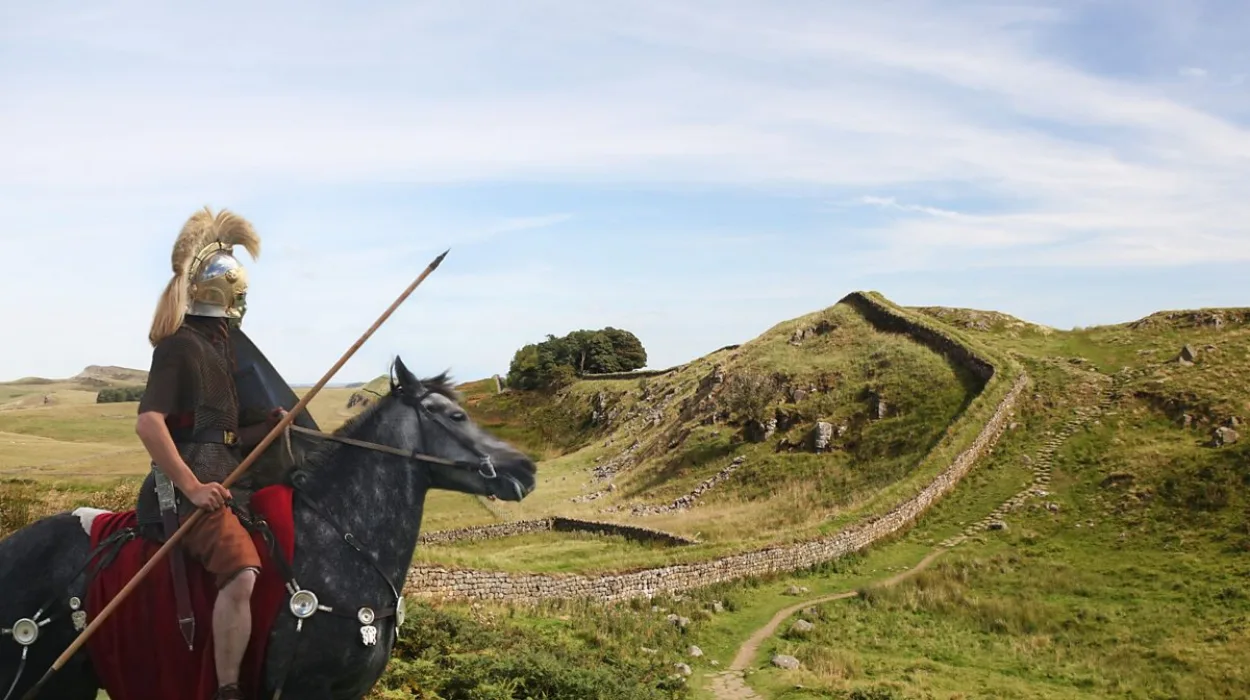
The Roman conquest of Britain is one of the most contentious historical events. Many wonder if the Roman conquest of Britain can be regarded, in general terms, as violent, and violence was a key determiner of the conquest, or if the conquest was strategic. The truth is a mixing of both. Romans were militarily powerful and engaged in war many times to take land. They also relied on diplomacy, carefully scheduled planning, and political control to expand their empire. In this article, I will critically examine the Roman conquest of Britain: was it violent, strategic, or a mixture of both?
1. The First Roman Invasions
In 55 and 54 BC, Julius Caesar made his first attempts to conquer Britain. His invasions were small and unsuccessful. The invasions ultimately projected Roman power. They were really more about strategy than a complete conquest. His visits were clearly a projection of power when he was quickly on British soil, and the Roman point in defending that power was clear: those expeditions were comparatively not terribly violent in the way the Romans would later campaign in the year 43 AD.
About 90 years later, Claudius ordered a proper invasion of Britain. It was a mass invasion by any account. As a well-planned military operation, it leveraged thousands of soldiers and advanced weapons in the effort. This time the Romans came to stay. Here conquest was both violent, in that Rome engaged in battle, and strategic, in that Rome had an end goal in strategy.
2. Violence During the Conquest
There were many confrontations with local tribes during the Roman invasion of Britain. The Britons were not easy to conquer. Rebel leaders like Caratacus and Boudica led large-scale uprisings against Roman rule. The uprisings resulted in the devastation and terrorizing of large numbers of the population. Violent displays were a critical aspect of establishing control in the early stages.
The revolt led by Queen Boudica in AD 60–61 was one of the most violent episodes in the Roman conquest of Britain. Boudica’s army caused devastation and destruction to Roman towns, including Colchester and London (sometimes still called Londinium) and St. Albans (called Verulamium). In retaliation, the Romans defeated Boudica’s army at a battle that resulted in the deaths of thousands on both sides. It is very clear that violent episodes were a major part of the conquest narrative.
3. Strategy in Roman Conquest
The Romans were master builders. After conquering land, the Romans built roads, forts, and camps. Building was a strategic move for the Romans because they could move troops quickly and control large areas more effectively. Roads brought wealth, trade, and communication and also promoted further violence and superiority of Roman rule.
Diplomacy with Local Leaders
The entire Roman conquest was not entirely predicated upon violence. In many cases, they may have simply negotiated on political grounds with local leaders. Many leading figures in local tribes accepted Roman Empire rule in exchange for protection and benefits. This was a strategic decision with the potential to eliminate violence and nurture loyalty.
Using Divide and Rule
‘Divide and rule’ was used by the Romans. They promoted competition amongst tribes so that they were less likely to unite against Roman power. By weakening their enemies, the Romans could lessen the constant state of warfare and fighting.
4. The Balance of Violence and Strategy
When we ask, was the Roman conquest of Britain violent or strategic? The answer is both. The Romans employed violent methods to deal with resistance, but they also employed strategic methods for holding onto that power quickly and in the long term. Without a strategic plan, the Romans would not have a lasting empire. Without violence, they would never have controlled the original territories to begin with.
Establishing Romanisation
Following the fighting came the establishment of Roman culture, laws, and civilization. They built towns, baths, temples, and theaters. They constructed them with the understanding that many of the Britons would come to view themselves as part of Rome. The more elements of ancient Roman culture that Britons adopted, the more they were Romanized. Many Britons adopted Roman customs of their own volition. Again, violence caused the destabilization of traditional British practices, and strategy acted in the form of slowly introduced daily-life civility.
5. Daily Life Under Roman Rule
Once the violent phase of conquest was over, Roman Britain became less violent. People started to experience a level of order for the first time – travel was safer than before, trade increased, and towns flourished. By bringing order to chaos, the Romans were able to relatively improve their lives.
Stability came at a cost. The Romans deeply taxed the Britons, punishing those who resisted by violence. After conquest, strategy and violence continued to work hand in hand.

6. Comparing Violence and Strategy
Violence was a tool used to force submission. Romans destroyed villages, people, and executed rebels. It was violent, but it worked in the short term.
On the other hand, strategy formed the foundation of Roman triumphs. Building infrastructure, forming alliances, and spreading the Roman way of life allowed them to be ruled for nearly 400 years. Without all that strategy, violence would not have sustained the empire. After all, when it is based on violence, a buy-in from the receiver is difficult to achieve.
Rome’s Dual Path
So, was the Roman conquest of Britain violent or strategic? The answer is both. The Romans undertook bloody battles and executed extreme violence against rebels. At the same time, the Romans built roads, constructed cities, and formed systems of governance, suggesting they arranged everything with foresight. Violence allowed the Romans to take control, yet strategy allowed them to keep control.
The Roman conquest of Britain is one of a story of war and wisdom. It shows us empires are built by force and strategic thinking, and by watching this tension, we will see the deeper story of one of history’s great wonders.
