

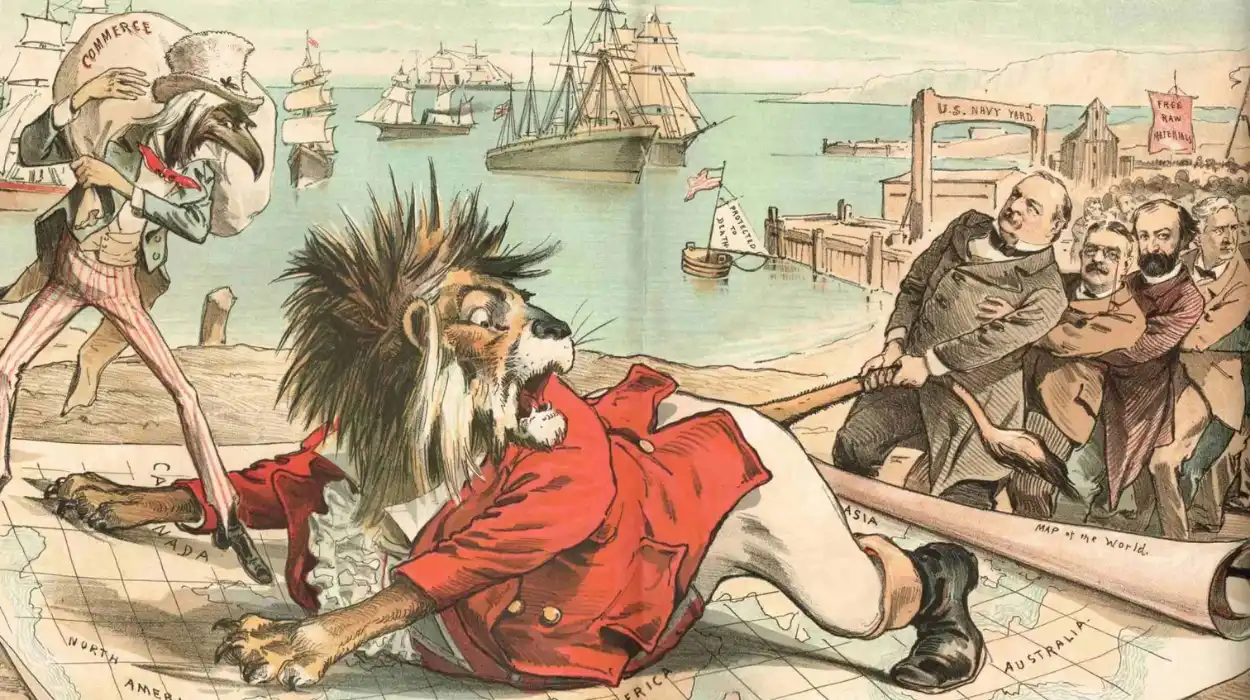
What is the definition of Pax Britannica? To unravel this complicated question, we must go back in history to a time when Britain was the most dominant empire with global power.
The term refers to a time of peace, stability, and global influence through British power. Pax Britannica was not just about war or political scheming but was about Britain’s existence over trade, diplomacy, and culture. Understanding the “Pax” era allows us to see how history shaped today’s world order.
What Is the Pax Britannica?
Pax Britannica in Latin means “British peace.” Pax Britannica was a time in the 19th century when Great Britain maintained global affairs. Britain managed global views through its navy, economy, and diplomacy, all to maintain order and keep the major powers of the world from coming to conflict. Britain acted as the policeman for the world. In many ways, the idea is similar to Pax Romana, where one world power created stability and order for many years.
The Trigger for Pax Britannica
The Pax Britannica started in 1815, when Napoleon was finally defeated at the Battle of Waterloo. With France weakened and other European powers suffering from Napoleon’s aggression and war, Great Britain was able to assert itself as the most powerful global power. At this time the Royal Navy was the most powerful navy in the world. It controlled all paths to key sea trading routes and delicate lines of global trade. This naval superiority was a key element of the Pax Britannica
The Era of Pax Britannica
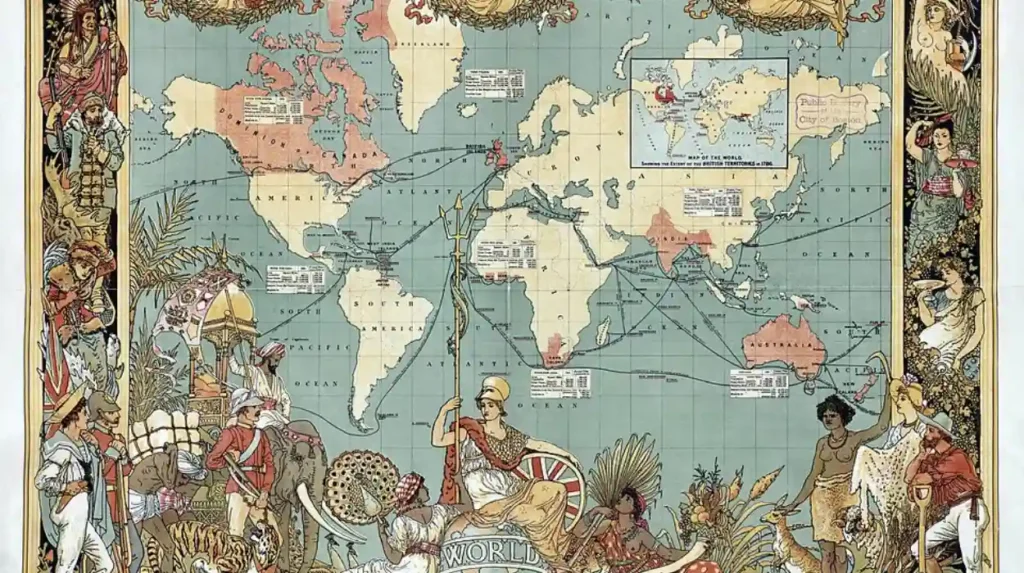
Historians typically see the Pax Britannica as occurring from 1815 to 1914. It lasted just under a century and concluded with WWI.
During this time, Britain expanded the largest empire. Colonies were developed in Africa, Asia, the Americas, and the Pacific. These colonies gave Britain unparalleled global reach.
Britain was the world’s first country to industrialize. It was the site of tactical and operational paradigms leading to negotiated power. By creeping capitalism, textiles, railways, and other industries such as farming produced wealth. Britain became known as the “workshop of the world.”
Meaning of Pax Britannica in Global History
- Political Influence: From a political perspective, what was the Pax Britannica? Britain’s use of its power and diplomacy to maintain political stability. Britain was the mediator of disputes and set international precedents.
- Economic Relevance: The Pax Britannica allowed free trade to expand and grow greater than ever before. The British Empire expanded the ability to trade, and currency and financial systems began to grow based on British leadership. The British pound became the most dependable global currency.
- Cultural Significance: British values, language, and various forms of education have expanded and influenced the entire world. Music, history, and theater, and the English language expanded as a global language for commerce and business. Many education systems were modeled on Britain, and many institutions followed those that operated by British precedents.
Significance of Pax Britannica
Six major Significance of Pax Britannica are:
1. Triumph of Global Trade Systems
One of the significances of the Pax Britannica was global trade systems. Britain opened markets up, branded, and demanded goods of overall quality. Ports, railroads, and shipping lanes created during the Pax Britannica linked producers and consumers across the world. Many of these international trade routes remain in use today and form the trade routes of modern international commerce. By establishing many of the systems of globalisation, the Pax Britannica set the groundwork for modern globalisation.
2. The Rise of London as a Financial Center
During the Pax Britannica, London became the center for global finance. The British pound became a stable and trusted international currency. Banks, insurance companies, and trading houses based in London managed the capital for businesses and governments around the globe.
England’s financial supremacy and banking system had an enduring influence over global markets. To this day, London remains one of the world’s leading financial centers because of the roots formed during the Pax Britannica.
3. The Spread of English as an International Language
The Pax Britannica established English as a key language of communication, trade, and diplomacy. English became an integral part of the administration and education systems in British colonies in Asia, Africa, and the Americas.
The use of English in trade and diplomacy continued long after the colonies gained independence. Currently, English is the most commonly used language internationally, particularly in business, science, and the media. The Pax Britannica was an important step in establishing this current global status.
4. Impact on Political and Legal Systems
That British-style governance influenced political and legal systems is not open to debate. Political and legal systems of governance (including common laws, parliamentary models, administrative systems, etc.) were established throughout the colonies.
When nations subsequently gained independence, they operated political institutions fostered by their colonial past. Countries like India, Canada, Australia, and South Africa still feature distinctively British approaches to rights, laws, and governance. Though other aspects of colonial life have changed (for better or worse), there was a lasting British legacy that remains a feature of many modern states.
5. Template for Future Superpowers
Another component of the Pax Britannica was the template it provided for later superpower stability. Britain fulfilled a stabilizing function in the world by maintaining peace and order among the other major powers on the planet using their status as an imperial superpower. This role was largely taken over by the United States after the Second World War period in what became known as the Pax Americana. Britain showed how a hegemonic power was capable of shaping a global order and maintaining that order on a global basis.
6. Lasting Cultural and Social Impact
The cultural implications of Britain during the Pax Britannica can still be seen in societies today. Education systems, competitive sports like cricket and football, and social customs were imbibed across the world. British literature, science, and technological knowledge were propagated globally via colonial networks. Positive and negative impacts must be recognized, such as cultural appropriation (and oppression) and the emergence of unequal societies.
