

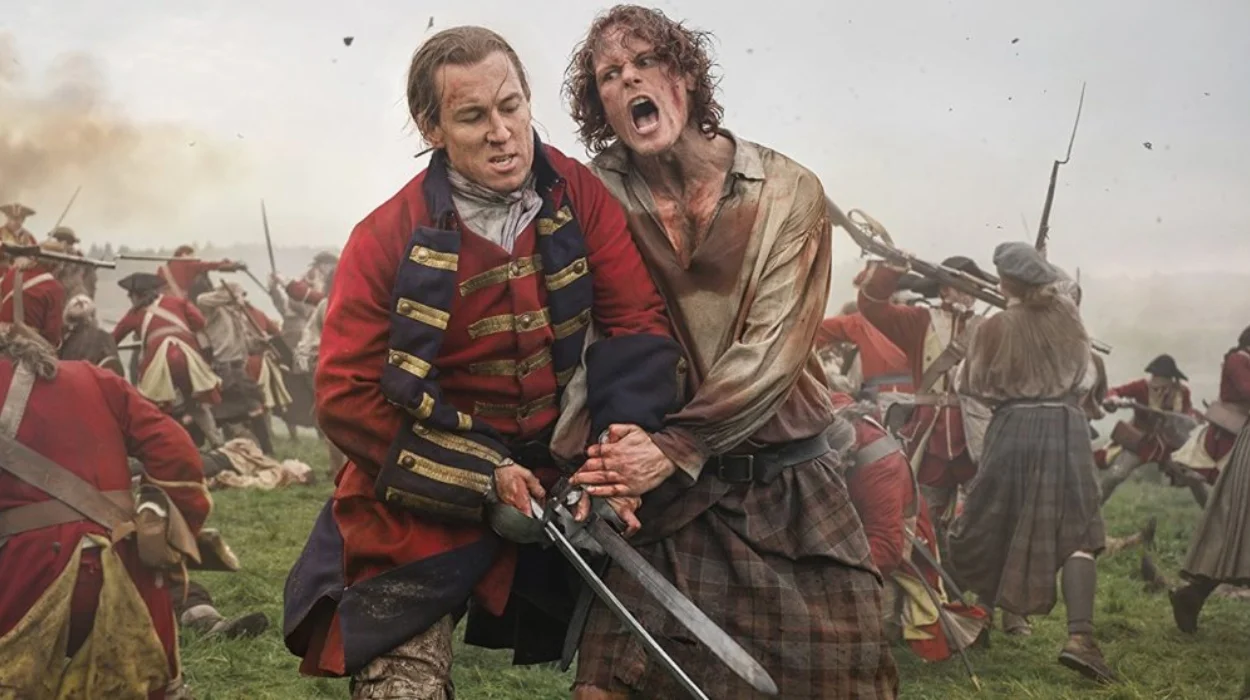
The Battle of Culloden on April 16, 1746, was undoubtedly one of the most crucial turning points in Scottish and British history. It was also the last pitched battle fought on British soil. The battle ended the Jacobite rising of 1745.
Many people will say, What was the Battle of Culloden? Did it even matter? What was the significance? The answer to these questions requires understanding a complex relationship of dynastic claims, political strife, religious differences, and cultural schism.
Who Were the Jacobites?
The Jacobites were men and women who were loyal to the Stuart claim for rule in Britain. They were loyal to James II, his son James Francis Edward Stuart (the “Old Pretender”), and his grandson, Charles Edward Stuart, or Bonnie Prince Charlie.
Jacobites came from all kinds of backgrounds, but in Scotland, many Highlanders offered their allegiance to the Stuart claim, seeing their claim as restoring a traditional monarch and offering Scotland greater independence.
Why Did the Jacobites Rise Again?
The Jacobite claim had already caused two uprisings in 1689 and 1715, both of which ultimately failed. In the 1740s, Europe was at war once more, and Britain was swept up in the conflict. This presented the perfect opportunity for Bonnie Prince Charlie to pursue another attempt at regaining the Stuart claim to the monarchy in Britain. He came to Scotland in 1745, raised an army, and won multiple battles in quick succession.

The Political Factors
The main cause of the Battle of Culloden was a clash between two royal families. For the Stuart dynasty, they believed they had a God-given right to rule. For the Hanoverians, their right to rule had come from laws passed by Parliament.
This was not only a question of kings and queens; it involved the issue of Parliament’s power and people’s rights. The Hanoverians reflected a new political system where Parliament had more power, while the Stuarts represented the old idea of divine right monarchy.
Foreign Issues
Another factor was foreign-defined politics. France, Britain’s great rival, had actively engaged in the Jacobite cause, as they wished to weaken Britain by helping out the Stuarts. The Jacobite rebellion was not only a Scottish political issue; it was also a part of a larger European war of political influence.
Sectarian
Finally, there were sectarian issues in the conflict. The Stuarts were Catholic, while the Hanoverians were Protestant. Many Protestants in Britain were afraid that a Stuart restoration would mean a return to Catholic rule, which meant less freedom for them.
Many Catholics were hopeful that the Stuarts would bring about more toleration and rights. This made it more difficult for the Jacobites to gain full support throughout Britain.
The Campaign of 1745
Bonnie Prince Charlie arrived in Scotland in 1745 and quickly injected himself into the Highland clans, asking for support. His army marched south and reached Derby in England, only about 125 miles from London. For a brief moment, it looked like the Jacobites might be successful.
The Retreat
Unfortunately, without adequate reinforcements from France and with the English support for the Jacobites much weaker than anticipated, he was forced to retreat back into Scotland. The Hanoverian government forced their armies to prepare for the attack, determined to finish the rising once and for all.
The Road to Culloden
As of early 1746, the Jacobites were tired, hungry, and running out of supplies. Prince Charles continued to insist on one more battle as a last chance to save his cause. The Hanoverian army, led by the Duke of Cumberland (son of King George II), was pursuing the Jacobites and forced them to fight close to Culloden Moor, near Inverness.
The chosen battlefield was a serious blunder for the Jacobites. Culloden’s ground was flat and boggy, great for the government’s trained army and not good for the Highlanders and the way they traditionally charged.
The Battle of Culloden

On 16 April 1746, the two armies met.
The Jacobite army had about 5,000 men, mostly poorly armed and fatigued.
The Hanoverian army had roughly 9,000 professional soldiers with artillery.
Hanoverian artillery decimated the Jacobite line before they even charged. Once the Highlanders charged, they were shot down. The Jacobite army was broken in less than an hour.
Why Did the Battle of Culloden Happen?
Taking the causes together, the battle happened because of:
- Royal dynastic rivalry: dynasty with Stuart claim to the throne vs. the present Hanoverian king.
- Political change: conflict between the old monarchy and the new parliamentary power.
- Religious divide: Catholic Stuart supporters vs. Protestant Hanoverian reign.
- Foreign influence: France supported the Jacobites vs. Britain.
- Scottish identity and clan loyalty: Many Highlanders thought restoring the Stuart kingship would protect their traditional way of life.
These causes came together in 1745-46 and culminated in the battle at Culloden.
The Aftermath
The loss at Culloden was disastrous for the Jacobites. Bonnie Prince Charlie left the battlefield but later managed to escape to France. The Duke of Cumberland was nicknamed “the Butcher” for the harsh punishments that were carried out after the battle, including executions, imprisonment, and destroying Highland culture.
After Culloden, the wearing of Highland dress, the carrying of weapons, and many ancient clan customs were made illegal. The old clan system was beginning to crumble, and the Highlands would never be the same again.
The Legacy of Culloden
By preventing French involvement at home, Culloden created the conditions for global expansion. It also secured the succession of the House of Hanover, who are the ancestors of the current King Charles III.
The Battle of Culloden was more than a military defeat. It was the end of any serious attempt to restore the Stuart dynasty. It also permanently changed Scotland, weakening traditional culture and binding the country more closely to the United Kingdom.
Today, people ask, why did the Battle of Culloden happen? The answer reveals a lot about power, religion, culture, and the struggle between tradition and change.
