

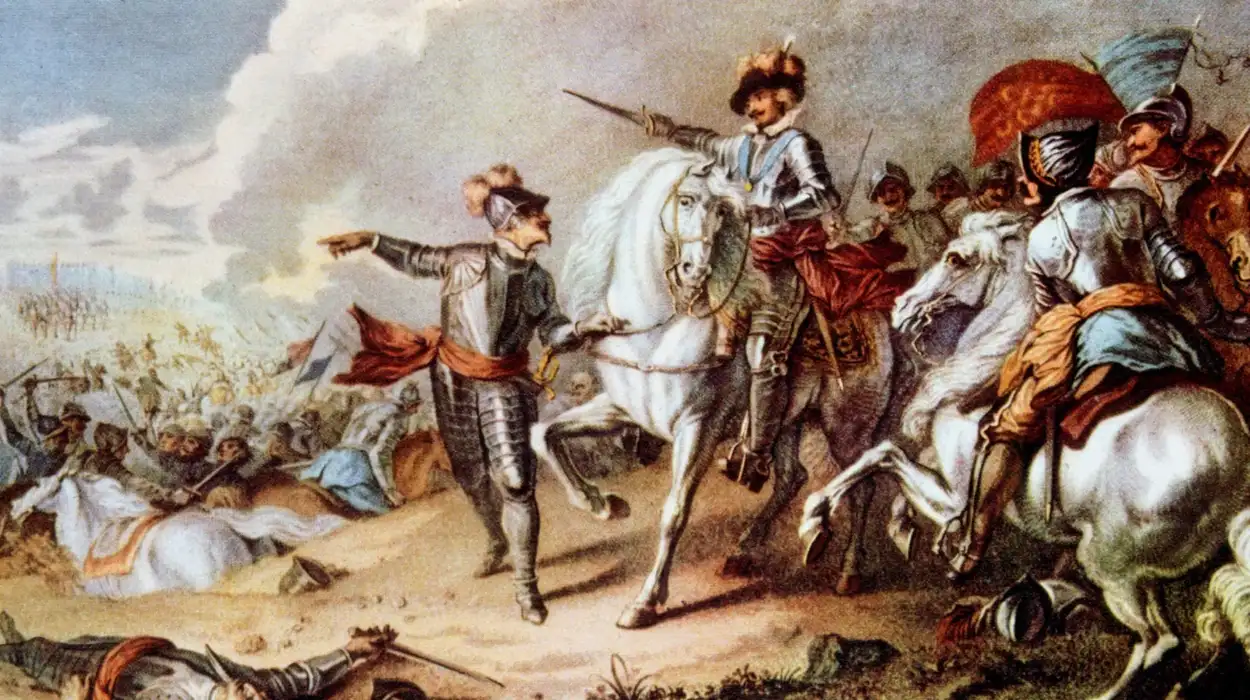
The Commonwealth of England (1649-1660) represented one of the most radical political experiments in the English tradition. With the execution of King Charles I of England, England entered a period of republicanism led by Parliament and followed by Oliver Cromwell and Richard Cromwell.
For the first time in England’s history, the monarchy was abolished, and an authority that claimed to represent the people superseded the traditional order of kingship.
This experiment collapsed, and in 1660, the monarchy was restored. Historians have asked what seems to be the obvious question about the Commonwealth: why did it fail? The full answer includes political factionalism, unpopular policies, military supremacy, and the traditions of monarchy in English society.
The Birth of the Commonwealth

The Commonwealth was declared in January 1649, after King Charles I was executed for treason. Charles’ trial and execution were shocking for Europe because the king was seen to be appointed by God. However, to much of Parliament and the army, Charles was seen as an abuser of power.
Parliament abolished the monarchy, abolished the House of Lords, and proclaimed England a “Commonwealth and Free State.” The power rested in the House of Commons, while in practice, the army and Cromwell’s leadership of the army assumed the “power.”
The idea was ambitious: England would not have a hereditary ruler but chosen representatives. Nevertheless, to create a republic in a society so different from a republic was a daunting task.
Why Did the Commonwealth of England Fail?
Commonwealth of England fail because:
1. Deep Political Divisions
The lack of unity was arguably the largest factor in its failure. The Commonwealth had three main factions:
- Republicans who believed in a representative parliament.
- The army (New Model Army) that saw themselves as the revolution’s protectors.
- The radical sects such as Levellers and Fifth Monarchists who wanted extensive reform.
Although the army, the republicans, and the radical sects all wanted reform, they could not agree on what type of reform, who had the right to vote, or what personal and religious freedoms were immediately possible. Conflict between the three factions had broken out, which prevented the republic and the army from working together effectively and weakened the republic.
2. Cromwell’s Personal Rule
Oliver Cromwell was the most powerful person to emerge from the Commonwealth. He began as a liberator but ended as an authoritarian leader. In 1653 he dissolved the Rump Parliament and expressed anger with their inability to reform sufficiently and at the speed he wanted.
He formed the Protectorate, which gave him near-monarchical powers as Lord Protector. His reliance on the army for his authority made him more like a military dictator than a man leading a free republic. Several supporters began to perceive Cromwell as king.
3. Lack of Support from Ordinary People
The ordinary public was very comfortable with monarchy. A republic, radical, appeared foreign and inherently unstable. The disbanding of the monarchy and House of Lords left many confused over the process.
Moreover, Cromwell’s strict Puritan laws—banning theaters, weeks of celebration, and strict moral law—alienated much of the population. The Commonwealth was tied to harshness.
4. Financial Burdens
The war and the government placed an enormous financial burden on the Commonwealth. The cost of keeping the New Model Army was substantial, and taxation rose significantly. Without an economic system, resentment started to grow amongst both landowners and the common person. Many considered the monarchy financially withstanding when compared to the expensive republican experiment.
5. All the Conflicts over Religion
Religion was the primary focus of 17th-century politics. The Commonwealth provided greater levels of religious freedom; however, in practice, it favored Puritanism.
Anglicans and Catholics felt suppressed.
- Radical Protestants sought many more reforms.
- Cromwell’s religious policies fed division rather than unity.
- Rather than rebuild after the Civil War, the Commonwealth deepened the religious divide.
6. Dynastic Uncertainty After Cromwell’s Death
The Commonwealth’s survival was very dependent on Cromwell. Once he died in 1658, his son Richard Cromwell assumed control but was alone in political skill and military power. Richard almost immediately resigned, and the vacuum of leadership followed, because without Cromwell, the Commonwealth was easily thrown into chaos.
The Consequence of the Commonwealth’s Failure
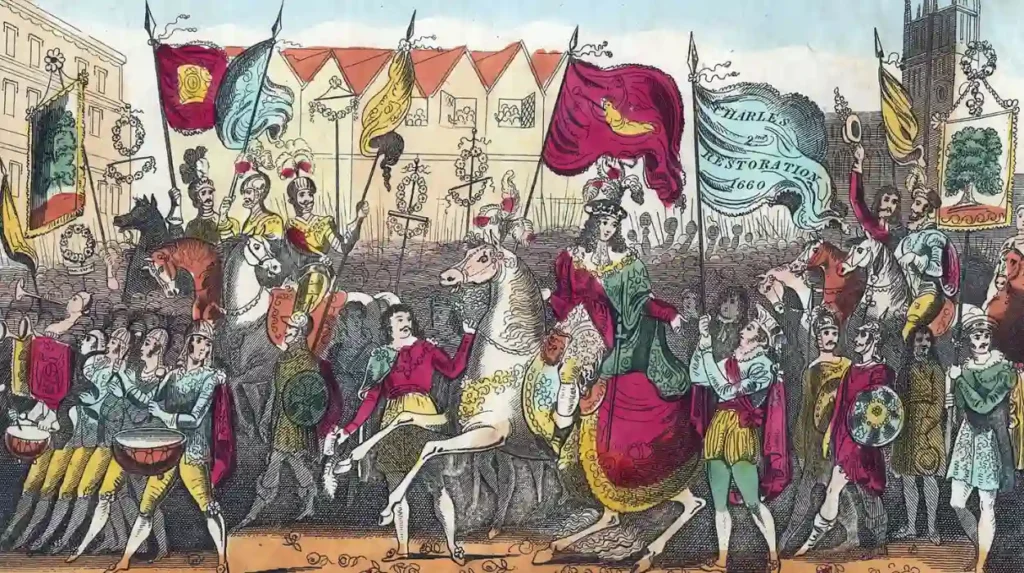
- Restoration of the Monarchy: In 1660 Charles II, the son of the executed king, was invited back. This was the period of the Restoration, which demonstrated republicanism could not establish itself in English society.
- Lasting Distrust of Radical Reforms: The failure of the Commonwealth made future generations suspicious of radical reforms. The monarchy remained, but with lessons learned: kings would need to seek greater collaboration with Parliament.
- The Development of Constitutional Monarchy: The downfall of the Commonwealth was part of a long struggle, which ultimately led towards today’s constitutional monarchy. The Glorious Revolution of 1688 built upon lessons from the Commonwealth experience, establishing a monarchy limited by law and with the authority of Parliament.
- Impact on Religion and Society: The Restoration brought back the Puritan restrictions, which enabled traditional forms of worship to return. The discussions on religious freedoms initiated by the Commonwealth informed future debates.
Lessons from the Commonwealth of England
The question of “Why did the Commonwealth of England fail?” does not have a single answer. The failure of it offers several broader lessons:
- Radical change needs ordinary people: a republic cannot rely only on elites or the military.
- Leadership matters: Cromwell’s leadership meant the system collapsed without him.
- Tradition matters: The deep-rooted nature of monarchy made it impossible to remove overnight.
- Unity matters: Divided republicans, soldiers, and radicals doomed the effort.
The Rise and Fall of the Commonwealth of England
The failure of the Commonwealth of England was to balance reality. The Commonwealth had a vision of liberty, representation, and reform of religion; the reality was an inconsistent and divided, authoritarian regime that was anti-popular. Financial resources, military predominance, and a lack of popular support made certain its collapse.
In its short existence, it was significant. It pushed against the presumption of absolute monarchy, inspired conversations about democracy, and provided the energy for later constitutional monarchy in England. The Commonwealth continues to be a compelling reminder that bad political revolutions, no matter how grand, need to win the hearts and minds of their people if they are to last.
