

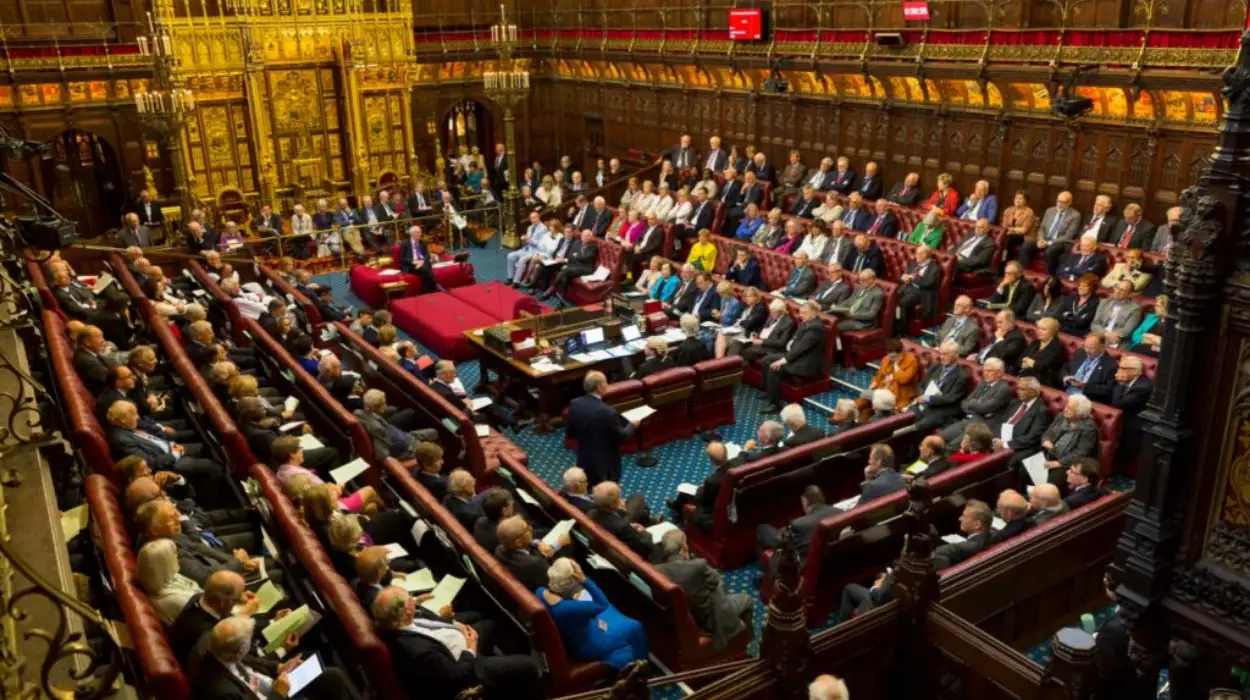
The English Parliament was the body that exerted the greatest influence on the development of representative government among those that had been fashioned in Europe during the Middle Ages. Parliament arose out of assemblies called by the kings to decide disputes, to perform judicial functions; it was not planned, but an unintended consequence of expedient inventions. Over time, Parliament started to address significant state issues, most notably the collection of funds required to fund the monarch’s policies and choices. It progressively transformed into a legislative body as its judicial duties were progressively transferred to courts. The English system had started to assume some of the hallmarks of modern parliamentary rule by the close of the 15th century. As an example, laws had to be granted by the king and be enacted by both houses of parliament.
The gradual path to UK democracy
The UK is a democratic model today, and its Parliament is one of the world’s oldest representative assemblies. But there was a slow shift to a representative type of government. The first monarchy established by Athelstan, the Anglo-Saxon king, in the United Kingdom lasted until 927. When William the Conqueror was crowned in 1066 and the Norman conquest took place 1066, a new Anglo-Norman ruling class of lords appeared, which formed feudalism as an influential political system in medieval Europe. The lords in fiefdoms provided security and land to vassals in return for military service and taxes.
The UK was governed at the head of this feudal system by a series of dynastic families of English kings throughout the Middle Ages, the most prominent in the Middle Ages being the houses of Plantagenet, Tudor, and Stuart. The nobles and the monarchy did not always get along well. Magna Carta, a royal charter that shields church and baron rights against abuse by the monarch and his government, was signed by King John in 1215 as a result of tensions with a dissident group of barons. This arrangement gave the nobility more authority by forcing the king to confer with a Great Council of barons on tax-related issues.
The Monarchy and medieval councils
Over the course of hundreds of years, the English Parliament changed. A significant step toward a more democratic and representative governance was taken by the first English parliaments in the Middle Ages.
Before William the Conqueror led the French Norman invasion and occupation of England in A.D. 1066, the English monarchy had existed for a considerable amount of time. Following the conquest, the English monarchy was maintained by a new dynasty of Norman monarchs. The English held that the king’s authority was a gift from God. They also acknowledged that the right was passed down to his successor, who was typically his eldest son. However, the monarch of England had obligations to the populace as well. He pledged to uphold the unspoken “common law” that has been passed down through the ages at his coronation.
The monarch was the sole legislator in ancient England and frequently broke the law. However, after King John lost a battle to his strong barons, who compelled him to sign the Magna Carta, things started to change in 1215. The barons, who comprised the majority of the landowning class, were primarily granted certain powers under this feudal constitution.
During the 17th century and later, even in the democratic quarters, the fear of the majority’s tyranny was common. It was implied that most people will certainly abuse the basic rights of minorities whenever they have the opportunity. Property rights were thus considered particularly weak, as most of the individuals who have little or no property were likely to wish to oppress the rights of the propertied minority. The same concern was shared by Madison and other delegates to the Convention, and this influenced their document immensely.
The english civil war and the temporary abolition of the Monarchy
Anglo-Scottish War, 1650-1652, was the third English Civil War. Despite the similarities during the wars in England, Scotland, and Ireland, all of them possessed individual issues and objectives. The central problem with the First English Civil War was the appropriate balance of power between Charles I and Parliament. The Royalists lost in June 1646, and the king went to jail.
However, the result showed a variation among the lawmakers regarding the nature of political agreement. The lack of compromise by Charles led to a standoff as the vast majority of the population went to war in 1642 to protect the right of the Parliament to be involved in the process of governance, rather than to depose the king. A coalition of moderate Parliamentarians and Royalists, with Covenanter Scots support, came about due to the fears of political dominance of extremists such as Oliver Cromwell within the New Model Army. Charles I was executed in January 1649 following the defeat of the Royalists at the Second English Civil War in 1648, and the Commonwealth of England was instituted.
The Glorious Revolution (1688) and the Bill of Rights (1689)
In April 1688, he required a second Declaration of Indulgence to be proclaimed in every pulpit on two Sundays following. In 1687, he made a Declaration of Indulgence, which stayed the repressive legislation of nonconformity and recusancy.
Canterbury Archbishop William Sancroft and six other bishops petitioned against him and were accused of seditious libel.
They were acquitted just about the same moment that Mary of Modena, the Roman Catholic queen to James, produced a son in June. This event led to the discontent and guaranteed the interminable existence of his policy. William of Orange had been sent a letter by seven prominent Englishmen, a bishop and six celebrated politicians, both Whigs and Tories, asking him to dispatch an army to reduce the evils of the land. William was the nephew and son-in-law of James. His wife, Mary, was heir until the birth of James’s son.
The primary aim of William was not to allow the French domination of Europe to become excessive. The takeover of Luxembourg, Strasbourg, Casale Monferrato, and other places by Louis XIV was vital to the defence of the German Rhineland. Between 1679 and 1684, he invaded the Spanish Netherlands and northern Italy because of the impotence of England and the fear of being invaded by the Turks under Emperor Leopold I.
The Reform Act of 1832: Expanding the electorate and ending rotten boroughs
After years of criticism of the electoral system from both inside and outside of Parliament, the Reform Act was passed into law. Britain’s elections were neither representative nor fair. Most working-class individuals were not allowed to vote because they had to possess land or pay certain taxes. Old Sarum in Salisbury was one of the seats with a large number of electors that elected two Members of Parliament. With few voters and no secret ballot, it was simple for candidates to buy votes in these “rotten boroughs.”
A local Justice of the Peace presided over the meeting, which was summoned by the magistrates. They discussed the petition’s language and distributed it to the town hall and stores for individuals from various socioeconomic backgrounds to sign. The petition that was approved is this one.
In most city-state democracies and republics, involved factions, including informal as well as formal political parties. In several countries, political parties were formed long after representative democracies to coordinate parliamentary backing to (or against) the prime minister and his cabinet and to select candidates to compete in parliamentary elections. Nevertheless, the leading political theorists such as Montesquieu still believed that factions were a very real threat to democracies and republics up to the end of the 18th century.
The role of World War I in accelerating democratic reforms
In order to address “the German Question,” or the function of the biggest and most powerful state in Europe, the EU has supplied the necessary infrastructure. This summer, as Europeans remember the Great War of 1914–18, they should be thinking back on the start of a new approach to international affairs, exemplified by the EU, as well as the diplomatic errors and the massive loss of life. A century later, Europeans were also haunted by the diplomatic pacts and commitments made during World War I, particularly in the Middle East. Although it was disrupted, the balance of power theory of international affairs was not destroyed. A revolutionary new approach to inter-state interactions was only possible after the Second World War, when enough political forces came together.
Europe was worn out and in ruins following both wars. The distinction was that, at least in Western Europe, the second major internal conflict in a generation caused a significant shift in political beliefs regarding the proper conduct of state-to-state relations. The revolutionary ideas of the EU’s “founding fathers,” including statesmen like Robert Schuman, Alcide De Gasperi, and Jean Monnet, who came up with the original concept of a community of states building a political system based on sharing sovereignty, were set against the backdrop of Die Stunde Null.
