

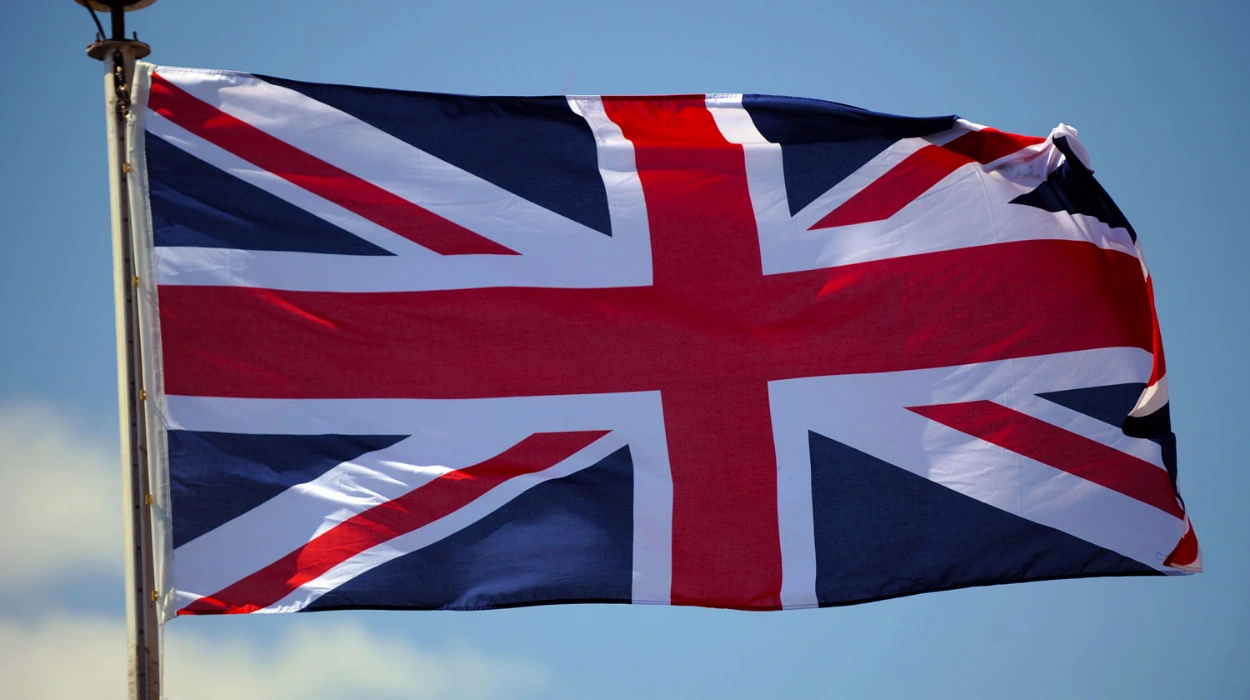
The flag of the United Kingdom is one of the most recognizable national symbols in the world. People often refer to it as the Union Jack, but its history and name are more complex than many realize. This article explains where the name comes from, how the flag was formed, and why it remains relevant in modern society.
The Union Jack
The United Kingdom’s flag, commonly called the Union Jack, combines the national symbols of the countries that have united under the Crown: England, Scotland, and Northern Ireland. It serves as a symbol of both political unity and national identity, appearing on government buildings, military uniforms, ships, and in major sporting and cultural events.
A common question is: why is it called the Union Jack instead of the Union Flag? The answer lies in naval tradition and how the term evolved over time.
Union Flag vs. Union Jack
Formally, the correct term for the UK’s national flag is the Union Flag. When this flag is flown on land—at public buildings, during national events, or by civilians—it is technically the Union Flag.
However, when the same design is flown on a naval ship, it is traditionally called the Union Jack, because it was originally flown as a small ensign at the bow (front) of British warships.
-
Union Flag: the correct term when the flag is displayed on land.
-
Union Jack: historically used for the flag flown at sea.
In 1908, the British government clarified that both terms could be used, effectively endorsing the common public usage of Union Jack. Today, the term Union Jack is widely accepted and used in everyday language, even though Union Flag remains the official constitutional designation.
Origins of the Union Flag
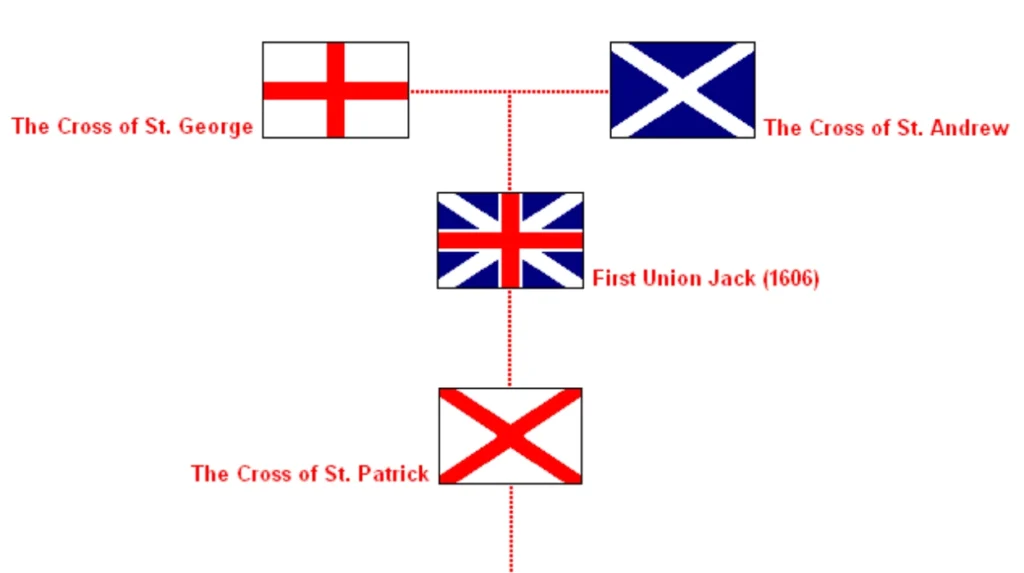
The first version of the Union Flag was created in 1606, following the personal union of the crowns of England and Scotland in 1603. When James VI of Scotland inherited the English and Irish thrones, he became James I of England and Ireland, while remaining James VI of Scotland. This created a single monarch ruling over separate kingdoms.
To visually represent this union, a new flag was designed, combining:
-
The red cross of St. George (patron saint of England) on a white field.
-
The white saltire of St. Andrew (patron saint of Scotland) on a blue field.
This first version was used mainly as a naval flag, symbolizing the union of England and Scotland under one crown. Wales was already legally joined with England (through the Laws in Wales Acts of the 16th century), so it was not separately represented in the design.
Adding Ireland to the Union
In 1801, the Act of Union between Great Britain and Ireland created the United Kingdom of Great Britain and Ireland. To reflect this new political union, the flag was redesigned to include the red saltire of St. Patrick, the legendary patron saint of Ireland.
The current design therefore combines:
-
St. George’s Cross – England (red on white).
-
St. Andrew’s Cross – Scotland (white diagonal on blue).
-
St. Patrick’s Cross – Ireland (red diagonal on white).
Wales, as part of the Kingdom of England, again had no separate representation in the flag. This is why the modern Union Jack does not include a Welsh symbol such as the red dragon.
The Naval Meaning of “Jack”
The term “jack” comes from the naval tradition of flying a small flag at the bow of a ship, known as the jack. The British Union Flag flown in this position became known as the “Union Jack”.
Over time, sailors and the public began using “Union Jack” not only for the bow flag, but as the common name for the national flag itself, regardless of where it was displayed. This informal usage gradually overtook the more technical distinction between Union Flag (on land) and Union Jack (at sea).
A Symbol of Unity and Identity
The Union Jack is more than just a piece of cloth; it represents the unity of the nations that make up the United Kingdom: England, Scotland, and Northern Ireland. Each cross carries its own historical and cultural meaning, tied to national saints, medieval kingdoms, and centuries of shared and contested history.
Three key roles of the Union Jack today are:
-
National pride: Many people in the UK see it as a symbol of heritage, continuity, and shared identity.
-
Global recognition: The flag is instantly recognizable around the world, thanks in part to the former British Empire and modern British culture.
-
Cultural impact: The Union Jack appears constantly in music, fashion, sports, and film, often stripped of its political meaning and used as a visual motif.
The Union Jack Around the World
The British Empire influenced the design of many national flags, particularly in Commonwealth countries. Several former dominions still include the Union Jack in their own flags as a reminder of their historical links to Britain. Examples include:
-
Australia
-
New Zealand
-
Fiji
-
Tuvalu
-
Cook Islands
Some subnational flags, such as the flag of Hawaii (a U.S. state), also incorporate the Union Jack, reflecting the Hawaiian Kingdom’s historical ties with Britain in the 19th century.
The Union Jack in Contemporary Times
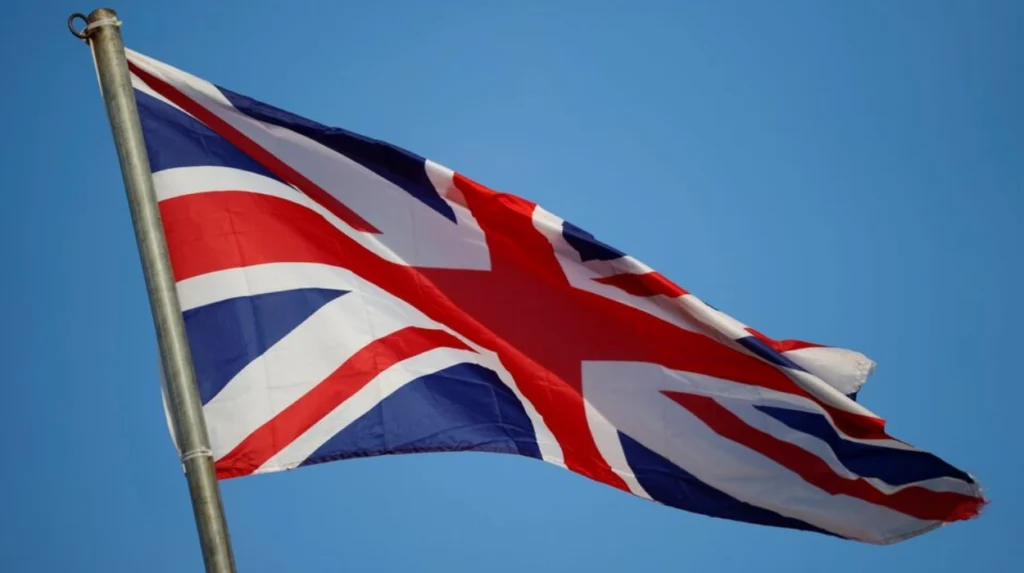
In today’s society, the Union Jack remains highly visible. It flies over government buildings, is used in national celebrations, and is proudly displayed at international events such as the Olympic Games and World Cup football matches.
The flag also appears widely in design and fashion—on clothing, bags, and home décor—often detached from overt patriotism and used more as a stylistic or brand symbol.
At the same time, the Union Jack is politically contested. Some view it as a symbol of unity, democracy, and resilience, while others associate it with colonialism, imperialism, and historical injustice. These debates ensure that the flag continues to carry emotional and political weight, not just decorative value.
Interesting Facts About the Union Jack
Here are some key points to help remember the flag’s history and design:
-
There is no “official” upside‑down version of the Union Jack, but it can be flown incorrectly if the diagonals are reversed. The white diagonal of St. Andrew should be above the red diagonal of St. Patrick on the hoist (left) side when viewed from the front.
-
Wales is not represented in the design because it was already legally united with England when the first Union Flag was created in 1606.
-
The three crosses are overlapping, but each has its own origin in the saints and kingdoms of England, Scotland, and Ireland.
-
The Union Jack is one of the most imitated and copied national symbols in fashion, art, and commercial branding.
Union Jack and British Culture
Beyond politics, the Union Jack has become a cultural icon. It features in music festivals, films, and global brands, often stripped of national meaning and used purely for aesthetic effect.
In the 1960s, the Mod subculture and bands like The Who adopted the Union Jack in clothing and stage designs, turning it into a rebellious, youth‑oriented symbol. Since then, the flag has been constantly reused in advertising, entertainment, and fashion, showing how a national flag can transcend its original political purpose and become a global cultural signifier.
Union Flag or Union Jack: Which Is Correct?
The question “Is it the Union Flag or the Union Jack?” is still debated today. Purists point out that Union Flag is the official constitutional term, while Union Jack originated as a naval designation.
In practice, language has evolved. The vast majority of people use Union Jack in everyday speech, regardless of whether the flag is on land or at sea. Because of this widespread usage, both terms are now considered acceptable, though Union Flag is technically the more precise formal term.
So why is the British flag called the Union Jack? The short answer is: history and tradition. It began as the Union Flag in 1606, symbolizing the union of England and Scotland under one monarch. Later, Ireland was added, completing the modern design. The name “Jack” emerged from naval custom, and over the centuries it became the popular, everyday name for the flag.
The Union Jack is more than just a national banner. It reflects the history of the United Kingdom, the unity and tensions of its constituent nations, and the cultural influence Britain has exerted around the world. Whether you call it the Union Flag or the Union Jack, it remains one of the most powerful and recognizable national symbols in global history.
