

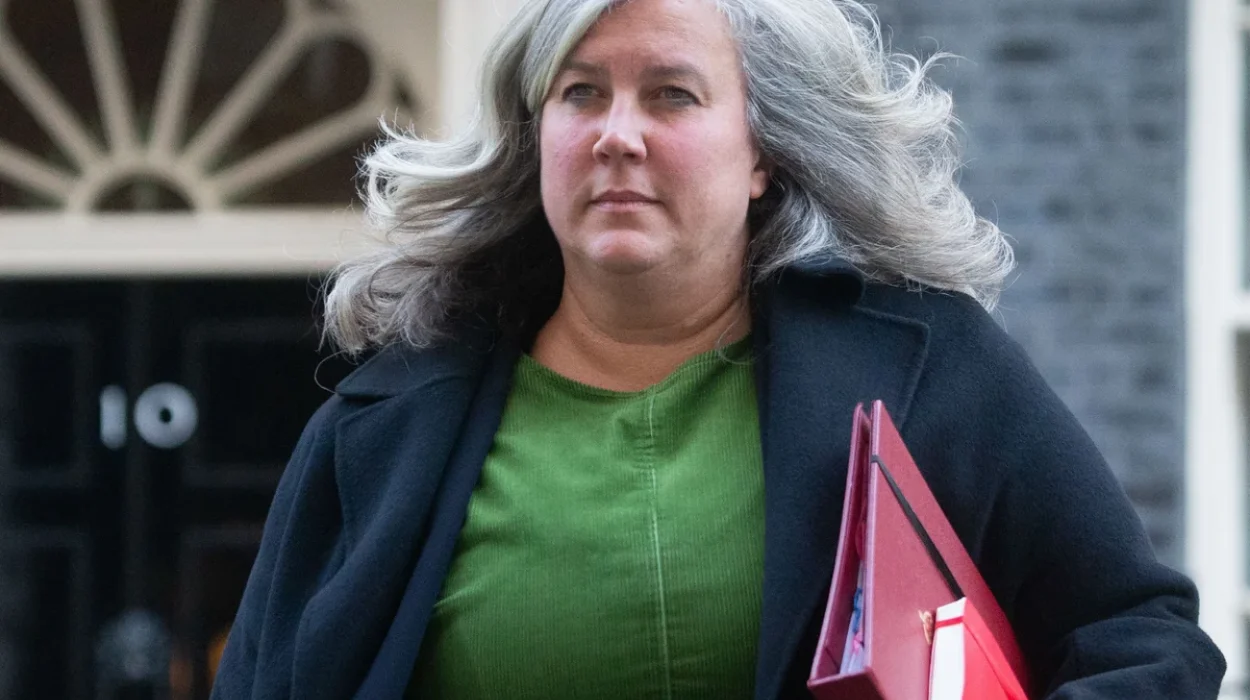
UK (Parliament Politics Magazine) – Transport Secretary Heidi Alexander approves Heathrow’s third runway plan, including M25 relocation, calling it the most credible option to boost the economy.
As reported by The Independent, ministers have approved Heathrow’s plan to relocate the M25 for runway expansion.
What did Heidi Alexander say about Heathrow’s third runway plan?
Heidi Alexander rejected the Arora Group proposal, calling Heathrow’s plan the “most credible and deliverable” option.
The airport expansion would include a 3,500-metre runway, with a new M25 tunnel and bridges rerouted 130 metres west of their current location.
According to her statement to Parliament, Ms Alexander warned the Arora’s plan would have a “considerable impact” on the M25 and require more homes to be compulsorily purchased.
The transport secretary said Tuesday’s move would
“allow a decision on a third runway plan this Parliament which meets our key tests including on the environment and economic growth.”
She added,
“We’re acting swiftly and decisively to get this project off the ground so we can realise its transformational potential for passengers, businesses and our economy sooner.”
The government will hold further consultations as it reviews the Airports National Policy Statement that governs airport planning decisions.
Ms Alexander also promised to seek guidance from the Climate Change Committee to ensure Heathrow’s expansion aligns with the government’s carbon reduction targets.
What did Surinder Arora say about Heathrow’s third runway announcement?
Hotel tycoon Surinder Arora’s group proposed a 2,800-metre runway that would avoid the need to reroute the M25.
Mr Arora said his group still hopes to be chosen as the third runway “promoter,” while accepting today’s announcement. He stressed that competition is essential to control costs at the airport.
The proposed third runway is planned to cost around £33 billion, including £1.5 billion to relocate the M25, and is expected to be fully privately funded.
The expansion would boost Heathrow’s capacity to 756,000 flights and 150 million passengers per year.
What did a Heathrow spokesperson say about the airport’s expansion plans?
A Heathrow spokesperson praised the government’s decision, saying expanding the airport
“will mean more connectivity, increased trade, improved passenger experience and a huge economic boost for the British businesses that will help design and build it.”
The spokesperson added that further guidance is needed on the project’s next phase, calling on the Government and Civil Aviation Authority to make “definitive decisions” by mid-December.
How much will Heathrow’s expansion cost?
The airport estimated the runway and related airfield works will cost £21bn, 50% higher than the £14bn quoted in 2018. Consumer prices have risen 30%, meaning the cost increase exceeds standard inflation.
Heathrow attributes the extra £2.8bn to higher “construction inflation.” The cost of new runways and taxiways, along with the T5X terminal, will add a further £12bn.
The airport’s expansion includes new car parks north and south of the runways, but opponents have called the cost “absurd.”
Sir Howard Davies, head of the 2015 Airport Commission that initially proposed the basic third runway, says,
“Yes, it would be expensive, but if you want to have the best airport for transit passengers and indeed an airport that is worthy of the UK’s major city and probably still the hub for Europe, then it’s going to cost money.”
Who is against Heathrow expansion and what are their concerns?
Heathrow’s expansion faces strong opposition from residents over noise and traffic, while environmental groups argue that the increase in flights conflicts with carbon reduction targets.
Dr Douglas Parr, policy director for Greenpeace UK, stated,
“The government has decided yet again to prioritise more leisure opportunities for a comparatively small group of frequent fliers, whilst the rest of us have to live with the consequences of their disproportionate polluting.”
He added,
“The thousands who live on and around the site of the new runway will see their lives put on hold for a few more years while more money and time is wasted on a doomed scheme to export more tourism wealth out of the UK in the most polluting way possible, until everyone is forced to admit that there will never be enough genuinely ‘sustainable’ aviation fuel to reduce the industry’s emissions, and the economic case for the whole debacle just will not fly.”
Paul McGuinness, chair of the No 3rd Runway Coalition, said,
“Not only is Heathrow’s third runway proposal set to be by far the most expensive and least cost-effective airport expansion anywhere in the world for each extra passenger, but ratings agents have already said that Heathrow would struggle to raise even half of the £48bn required to fund the project, given the airport’s current debt burden.”
He continued,
“So, even if the taxpayer is called in to foot the bill for the decade of disruptive construction, it seems that Ryanair’s boss wasn’t a lone voice when he described the government’s support for Heathrow expansion as ‘HS2 all over again.’”
When was Heathrow Airport constructed, and what is its capacity?
Heathrow Airport opened on 25 March 1946 and handled 63,000 passengers in its first year.
Today, Heathrow Airport operates near full capacity, handling around 84 million passengers annually from a cap of about 480,000 flights.
A proposed third runway and new terminals are designed to boost Heathrow’s capacity to 150 million passengers a year. It has become one of the busiest hubs in Europe, serving millions of international travelers each year.
