

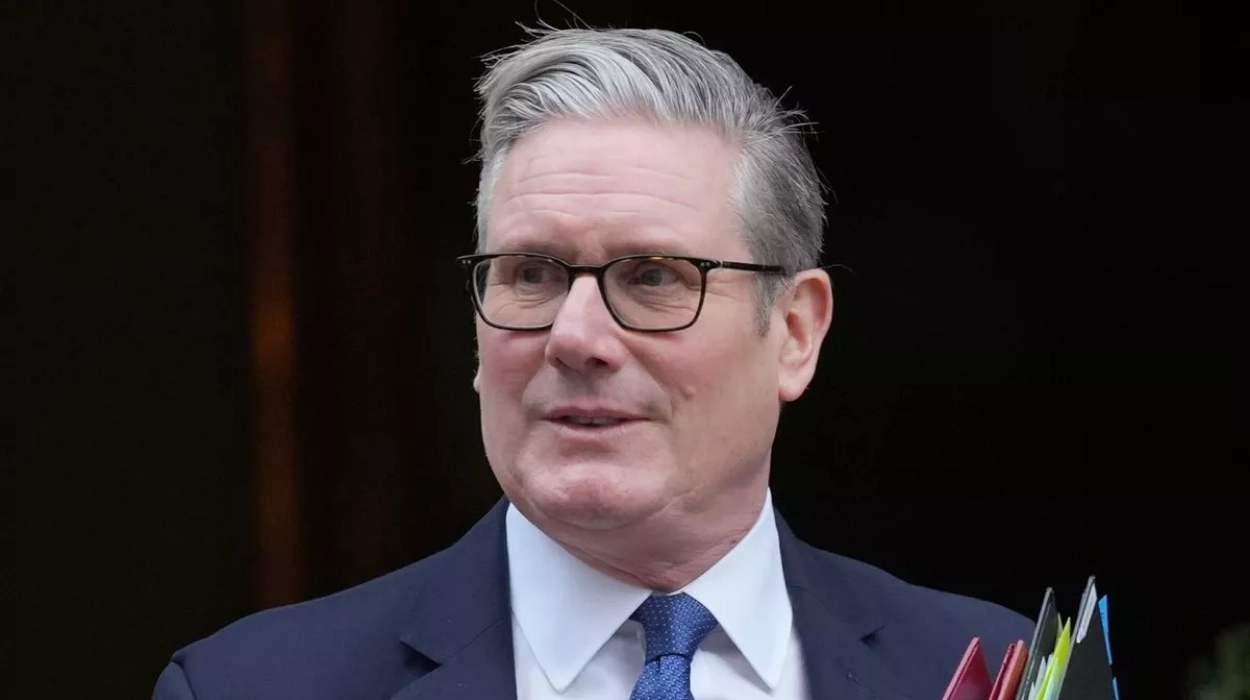
UK (Parliament Politics Magazine) – British Prime Minister Keir Starmer faces pressure as dozens of Labour MPs sign a letter opposing restrictions on jury trials, raising tensions over justice reforms.
As reported by David Maddox of The Independent, Labour leader Sir Keir Starmer faces pressure from a fresh backbench revolt as 39 Labour MPs challenge his plans to curb jury trials.
How are Labour MPs challenging court reform proposals?
Earlier this month, Justice Secretary David Lammy announced plans to end jury trials in England for offences with likely sentences under three years.
He confirmed that magistrates, who handle the majority of criminal cases, will take on increased responsibilities and that “swift courts” will be established following Sir Brian Leveson’s review.
Several of Keir Starmer’s MPs have described the proposals as “madness,” signaling their refusal to support the changes.
The letter was organised by Kingston upon Hull MP Karl Turner, who highlighted that MPs from various factions, “not just the usual suspects,” had signed it.
It said,
“The drastic restriction of the right to trial by jury is not a silver bullet. To limit a fundamental right for what will make a marginal difference to the backlog, if any, is madness and will cause more problems than it solves.”
The letter added that the public
“will not stand for the erosion of a fundamental right.”
Mr Turner labelled the proposed changes as “unjust,” highlighting that the “right to be heard by a tribunal of their own people” has existed for around 800 years.
He said,
“It won’t work and I’m afraid the government are going to have to realise that and change their tune.”
The MP acknowledged he had previously followed the Labour whip but is prepared to rebel for the first time.
Mr Turner recommended that the restrictions come with a sunset clause, applying only after the backlog has been addressed.
Liverpool Walton MP Dan Carden, chair of the influential Blue Labour group, said,
“I did serve on a jury this year and I was incredibly impressed with the whole process. Jury trials are the cornerstone of civic participation and the long history of British justice. Neither of which I wish to see diminished.”
Andy Slaughter, head of the justice select committee, raised concerns about the jury changes.
He told the Commons on Thursday,
“Restricting jury trial may help to reduce the crown court backlog, but there is no evidence that the use of juries caused the current delay.”
The letter was endorsed by senior Labour figures, including Diane Abbott, currently suspended as former shadow home secretary, Vicky Foxcroft of the Tribune group, and Dan Carden, head of the Blue Labour faction.
What did the latest data reveal about England and Wales’ crown court backlog?
New data released by the Ministry of Justice shows the crown court backlog in England and Wales has risen to almost 80,000 cases, marking a record high, up 9% from last year.
The number of crown court cases pending for a year or more surpassed 20,000 for the first time, reaching 20,155 at the end of September, up 25% from last year and 6% since June. The open caseload includes all unresolved cases.
The data follows Ministry of Justice projections earlier this month, suggesting the crown court backlog could reach 125,000 cases by the end of this Parliament if current trends continue.
Commenting on the latest figures, the Deputy Prime Minister David Lammy said,
“This government inherited a system on the brink of collapse. This government inherited a system on the brink of collapse.”
He added,
“The scale of this crisis means tinkering at the edges is not enough. We simply cannot spend our way out of this mess – only fundamental reform can give the brave survivors of crime fairer and faster justice.”
Which changes are being proposed to jury trials?
The UK government announced significant proposed reforms to jury trials in England and Wales to address a record backlog of nearly 80,000 cases in the Crown Court.
The core proposed changes include:
- Jury trials will be scrapped for crimes with sentences under three years.
- Serious offences like murder, rape, and robbery will still go before a jury.
- Magistrates will handle more cases and can sentence up to 18 months, with backup powers to two years.
- Judge-only trials will be introduced for certain cases, including fraud and complex financial crimes.
- New “swift courts” will process cases faster, aiming to reduce delays.
- The reforms aim to tackle a Crown Court backlog approaching 78,000 cases.
