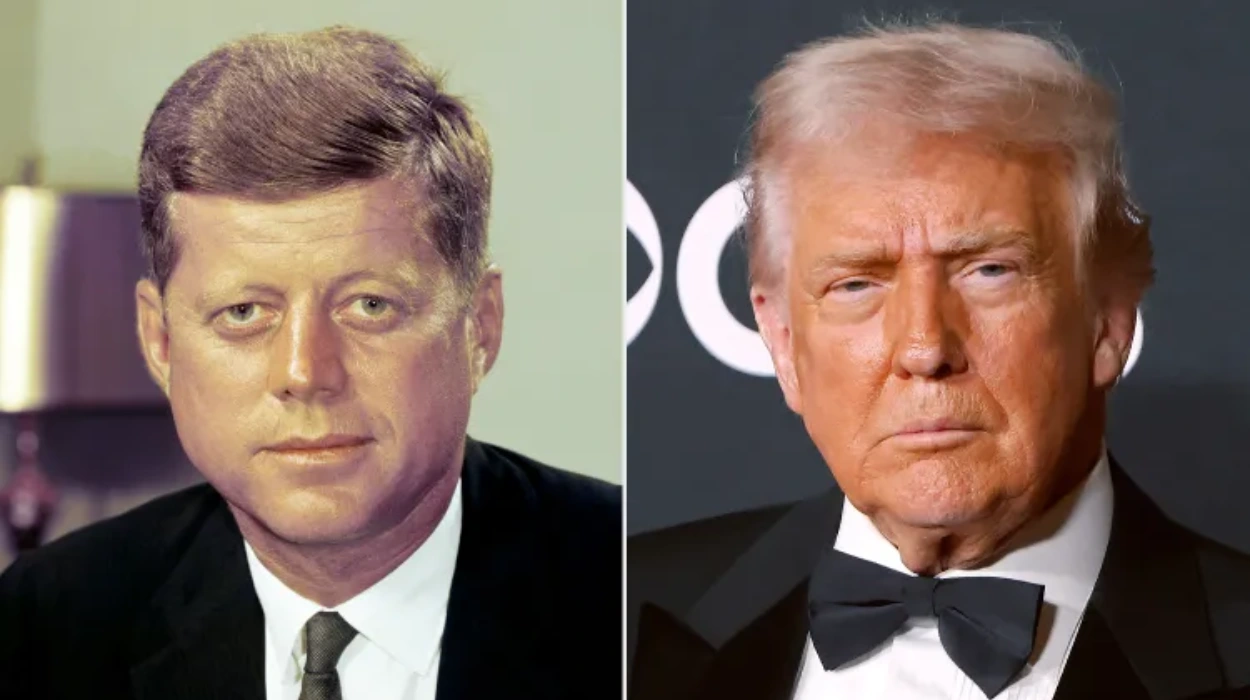
USA (Parliament Politics Magazine) – The Kennedy Center will now be known as the Trump-Kennedy Center, the White House confirms, marking a historic rebranding of the performing arts venue.
On social media, press secretary Karoline Leavitt stated that
“the unbelievable work President Trump has done over the last year in saving the building”
was the reason for the board’s unanimous vote.
“This will be a truly great team long into the future,”
Leavitt added, congratulating President John F. Kennedy. Without a doubt, the structure will achieve unprecedented prosperity and magnificence.
The relocation would be extremely contentious, especially in Washington, DC, where the center has been a famous landmark ever since it was built and given Kennedy’s name.
President Donald Trump dismissed every member of the center’s board shortly after taking office, replacing them with supporters who then voted for Trump to become chairman.
In order to cover significant upgrades and other expenses at the arena, the president obtained around $257 million in legislative funds.
The concept for a national performing arts center dates back to the 1950s, and it was named in Kennedy’s honor after the 35th president was slain in 1963.
What role does Congress play in renaming national cultural sites?
Congress holds primary authority over renaming federally established artistic institutions like the Kennedy Center, as names are generally codified in enabling legislation taking statutory correction.
The 1964 John F. Kennedy Center Act( cantina. L. 88- 260) explicitly names it, calling congressional blessing via new legislation for changes; boards or directors warrant unilateral power, with precedents like public monuments showing Congress routinely enacts or blocks renamings.
Congress finances and oversees similar spots through appropriations and authorizations, frequently mooting emblematic changes amid prejudiced divides, as seen in failed attempts without bicameral passage and presidential hand.