Tehran (Parliament Politics Magazine) – Iran executed 1,922 people in 2025 amid a spy crackdown and political unrest, the highest number in two decades, HRANA reports.
As reported by Cameron Henderson of The Telegraph, new figures reveal Iran executed its highest number of people in two decades amid a crackdown on alleged spies.
What does the new HRANA report reveal about Iran’s rising executions amid internal unrest?
The Human Rights Activists News Agency reports Iran has executed 1,922 people this year, more than double last year’s total.
Following June’s 12-day conflict with Israel, Tehran’s monthly executions increased sharply, rising from nearly 100 per month to over 300 in November, according to HRANA’s annual report.
A spokesperson for the National Council of Resistance of Iran, Kamran Dalir, called the country’s internal unrest “a powder keg that could erupt at any point.”
He said,
“The 12-day war revealed the Iranian regime’s weaknesses so the government has turned to more repression internally. That is why they keep having to increase the number of people they are executing month after month.”
According to human rights groups, the actual figure may be higher, with Iran executing more people per capita than any other nation.
After the 1979 Islamic Revolution and the Iran-Iraq War, Tehran conducted mass executions in the 1980s and 1990s. Activists claim the country now applies the death penalty more aggressively than at any point in the past 30 years, fueled by tensions with Israel.
Iranian judiciary head Gholam-Hossein Mohseni-Eje’i announced in August that suspected spies would face “decisive and legal” action, following the execution of an alleged Israeli spy.
Iran has since carried out a series of executions targeting individuals accused of working for Mossad, Israel’s national intelligence agency.
According to the Oslo-based Iran Human Rights group, Aghil Keshavarz, 27, was executed on December 20 after allegedly confessing to spying for Israel under torture.
The country faces widespread political unrest as authorities step up repression. In December, the Iranian currency fell to a record low of over 1.3 million rials per US dollar amid sanctions and geopolitical strains.
Tehran’s struggling economy has deepened amid US President Donald Trump’s “maximum pressure” campaign, fresh oil sanctions, European snapback sanctions reimposed in September, and uncertainty surrounding stalled US nuclear talks.
Unrest escalated in November as a severe drought prompted protesters to take to the streets after officials warned that a major dam providing water to Tehran and a neighbouring province could run dry.
Severe air pollution, intensified by ongoing drought, forced schools to close across multiple Iranian cities, while Tehran was named the world’s most polluted capital earlier this month.
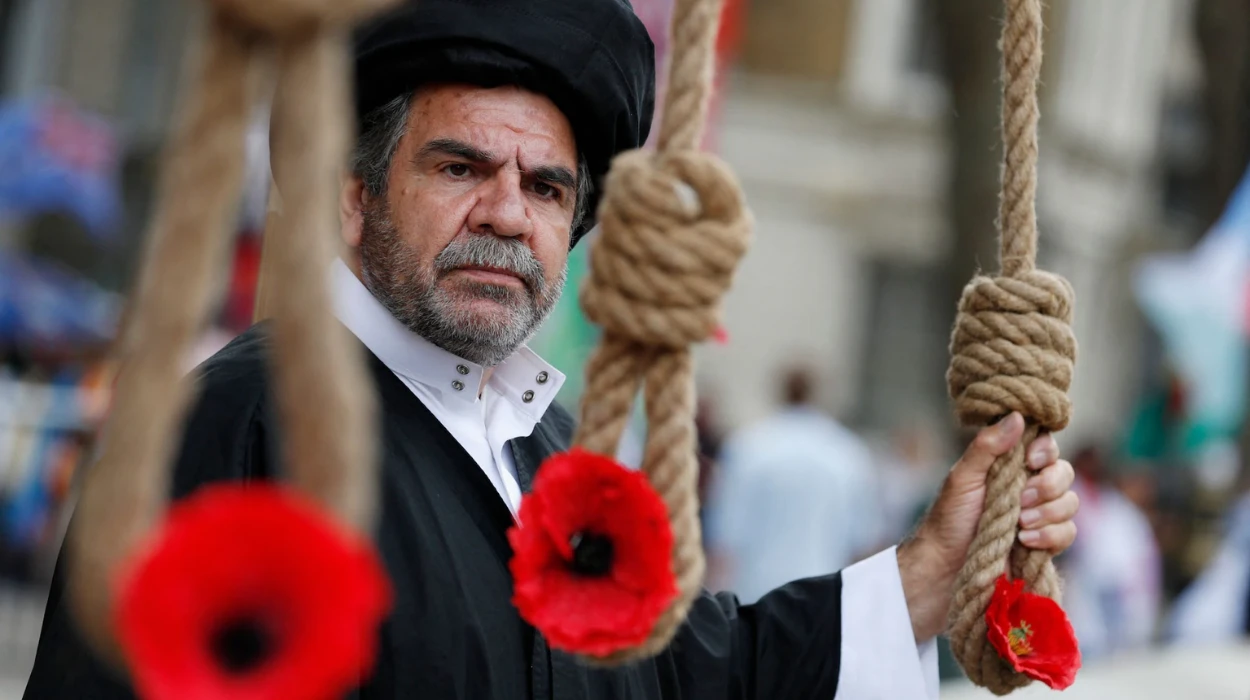
According to HRANA, 95% of executions in Iran are carried out behind closed doors, primarily by hanging, though some public executions still take place.
Tehran carries out executions for a range of offences, including drug-related crimes, murder, and political activities seen as a threat to state security.
According to the NCRI, more than 900 executions took place from October to December. This marks the deadliest three-month period since 1988, when 30,000 Iranian political prisoners were killed.
One prisoner, Zahra Tabari, 67, an electrical engineer, was accused of working with the banned opposition group, the People’s Mujahideen Organisation of Iran (PMOI), her family said.
The Islamic Revolutionary Court in Rasht convicted her of “armed rebellion” following a trial via video link that lasted under 10 minutes.
Currently, 17 political detainees, aged 22 to 66, are at risk of execution after being charged with membership in opposition groups.
Families of political prisoners are calling for an end to executions, as a group of former ambassadors, parliamentarians, and senior figures appeal to the United Nations, calling the situation in Iran a “massacre unfolding in plain sight.”
What did Maryam Rajavi say about Khamenei’s crackdown amid rising executions?
Maryam Rajavi, chair of the NCRI, said,
“The scale of these criminal executions, especially in the 21st century when most countries have abolished the death penalty, wounds the conscience of contemporary humanity.”
She added,
“With this unprecedented bloodshed and the creation of an atmosphere of terror, Khamenei is futilely trying to prevent the formation of a popular uprising.”
How many died in the 12-day Iran-Israel conflict in June?
The Iranian Ministry of Health confirmed that 610 people were killed and more than 4,700 were wounded.
A separate report from the US-based Human Rights Activists in Iran put the death toll higher, at 1,190 killed, including military personnel, civilians, and many senior commanders.
Israeli sources said 28 civilians and one off-duty soldier were killed, with more than 3,200 people injured by Iranian strikes.