

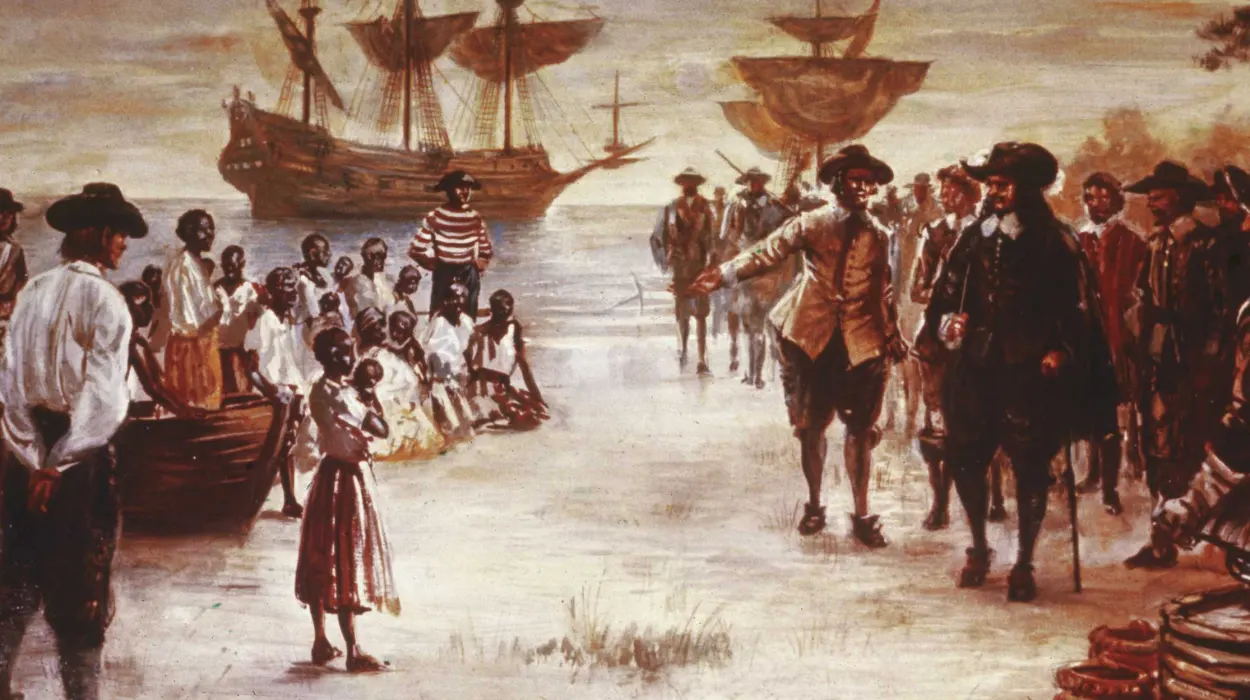
The Atlantic Slave Trade was one of the most horrific events in human history. For over 400 years, millions of people from Africa were taken from their homes and turned into people who worked without pay in the Americas under the cruelty of the system.
This system of cruelly treating people changed the world forever, but what was the story of how the Atlantic slave trade started?
The story of how the Atlantic slave trade ‘began’ is not a single event in time. It happened over a long period of time, for economic reasons, on the basis of power, and a terrible hunger for cheap labor.
What was the Atlantic Slave Trade?
Before we get into how it started, we need to clearly define what the Atlantic Slave Trade was. The Atlantic slave trade was a big, organized system for taking people from Africa against their will and selling them as enslaved people. West African people provided European boats and crews with captured men, women, and children in return for goods that the local Europeans wanted for trade.

These people were taken from Africa, agreed by them to be enslaved after accepting goods in exchange for their freedom, and put into boats for a brutal journey across the Atlantic Ocean called the Middle Passage. Once they arrived, they were sold and forced to work for the rest of their enslaved lives without any pay or freedom.
The World Before the Atlantic Slave Trade
To understand how the Atlantic slave trade began, we must look at the world in the 1400s.
- Slavery Existed Before: Understanding Context. It is important to understand that slavery wasn’t new. Many groups, including some in Africa, had forms of slavery. However, these forms of slavery look nothing like the racialized, permanent, and savage system that would emerge in the Americas.
- Europe’s Craving for Goods: Throughout the Middle Ages, European nobles began craving the goods produced in Asia. Items such as spices and silk were in high demand, but land routes were long and controlled by others. Beginning in the mid-1400s, countries such as Portugal and Spain began to search for a sea route to Asia that circumvented other nations.
- Portugal Leads the Way: Portugal was a leader in seafaring exploration. The Portuguese prince, Henry the Navigator, sponsored voyages of exploration south along the west coast of Africa. The goal of these voyages was to find gold, navigate to Asia, and spread Christianity.
The First Important Steps: Portugal and West Africa
The very beginning of the Atlantic slave trade is intricately linked with Portugal’s exploration of West Africa.
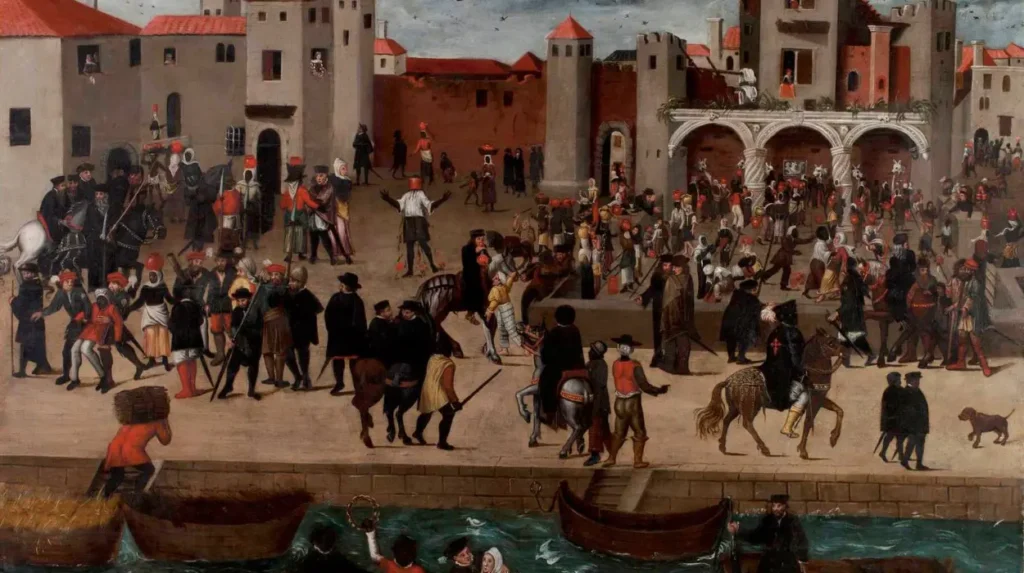
- Trading for Gold, Not People: The Portuguese were primarily interested in gold and other resources at that time. In 1482, they established a small fort on the present-day coast of Ghana called Elmina Castle (which translates to “The Mine”). This fort served as a base for trade with African kingdoms for gold, ivory, and pepper.
- The Shift to Trading for People: The first significant event occurred during the mid-1400s. The Portuguese began taking small numbers of African people back to Portugal. They usually did this by invading and raiding or by trading with local groups in Africa. These African people were commonly forced to be servants or laborers in Europe. The Portuguese began the European market for African labour.
The Game Changer: The Colonization of the Americas
Columbus’ voyages and the exploration of the Americas were what really was the bombshell showing how the Atlantic slave trade went to massive proportions.
There were two aspects to colonization that mattered; one was Columbus and his “commitment” to finding the “New World.” In 1492, Columbus, sailing for Spain, found the Caribbean islands. That opened up a whole “New World” for the European powers. The Spanish, Portuguese, English, French, and Dutch swarmed like bees from colony to colony in the Americas, grabbing as much land as possible.
A Problem: The Need for Labor
They needed cheap, strong labor to harvest the crops and dig the mines. The European powers in North America had large plantations producing sugar, tobacco, and cotton. There were also mines filled with silver and gold that needed to be dug.
Slavery men could be forced to work to recover the cost of owning the male slaves and to expand the plantations further.
- First Attempt: Indigenous People: Initially, they forced the Indigenous populations of the Americas to labor. But tens of millions of native people died from European diseases, such as smallpox, to which they had no immunity, and under terribly harsh working conditions.
- Second Attempt: Some Europeans came as indentured servants to the Americas. They work for a limited number of years to pay for their passage. But there were never enough of them to satisfy the demand of a labor force.
This strong need for a controllable and sizable workforce was the primary reason for the transatlantic system of slavery.
The Tragic Partnership: European Traders and African Kingdoms
A common question is, “How did the European people gain so many people?” That was not simply accomplished by them going into their interior and kidnapping the several million, such as they later did in the Americas. The process was more complicated than that.
The Role of African Kingdoms
Starting the Atlantic trade in slaves had deeply complicated ties between some Europeans and some African kingdoms. Powerful kingdoms in West Africa, such as the Asante, had been participating in the slave trade, just in Africa. European traders brought goods such as guns, gunpowder, metals such as manila nails or brass, cloth, and alcohol for locally high goods.
They would travel to coastal trading posts and sell these goods to kings and merchants in exchange for captives. Captives, who were often people captured in wars between kingdoms or victims of slave raids purposely conducted to supply the European trade.
This trade was simply business-minded. European ships would sit at the coast waiting for African traders to show up with their captives, and it was a business transaction. This allowed the trade to be of immense size because it utilized local networks of already established power and violence.
The First Official Slave Voyages Across the Atlantic
When did the first legitimate journey occur that initiated the transatlantic system?
The Portuguese and Brazil
Most historians suggest that the establishment of trade directly from Africa to the Americas began in the late 1520s to the 1530s. The Portuguese were setting up sugar plantations in Brazil. They needed workers, so they went to their trading posts in Africa.
By the 1530s, the Portuguese were regularly transporting enslaved Africans across the Atlantic to be sold in Brazil. This created the horrific “Middle Passage” route that would be used for centuries.
The Spanish and the Asiento
Spain also needed labor for their colonies in Mexico, Peru, and the Caribbean. At the start of the 1500s, Spain began to grant licenses, asientos, to other countries. An asiento is a contract given to a company or a country to be the only legal supplier of enslaved Africans to Spanish colonies. This is what made the slave trade a legal and sponsored enterprise.
A Legacy of Pain and Injustice
The Atlantic slave trade begins as a story of economic gain for Europe, founded on unspeakable human suffering for Africa, and it did not start with an event but rather a build-up of exploration, an urgent need for labor in the Americas, and the perverse partnership of European traders and African powers.
This system started with the early Portuguese trips in the 1500s and eventually expanded into a fully industrial system. It displaced over 12 million Africans across the ocean and condemned unknown millions to death before and along the way.
Its legacy of racism and economic inequality and pain is still deeply felt today. To discover how the slave trade originated offers one entry point into understanding its deep and persistent effects on our world.
