UK (Parliament Politics Magazine) January 11, 2026 – The Met Office has issued yellow weather warnings for snow across parts of Yorkshire, including Leeds, predicting up to 6 inches of accumulation in higher areas.
Leeds Bradford Airport reported multiple flight delays and diversions due to runway closures, while the M1 and local roads faced hazardous conditions from black ice and drifting snow. Authorities urged residents to avoid non-essential travel as disruptions continued into Sunday afternoon, compounded by the recent effects of Storm Goretti.
The Met Office confirmed the activation of yellow warnings for snow effective from early Saturday, covering Leeds and the surrounding districts in West Yorkshire.
Forecasters reported that a band of wintry precipitation moved across northern England, leading to surface temperatures dropping below freezing. As detailed by meteorologist Clare Nasir of the Yorkshire Evening Post,
“Snow showers are intensifying over Leeds, with 2-4 cm expected in the city centre and up to 15 cm on the Dales.”
Travel chaos ensued at Leeds Bradford Airport, where airport operator Leeds Bradford Airport Limited announced delays averaging two hours for incoming and outgoing flights. British Airways and Ryanair flights to Dublin and Amsterdam were among those diverted to Manchester.
According to reporter Felicity Mellor of Examiner Live, airport spokesperson Amy Spink stated,
“Safety remains our priority; de-icing operations are ongoing, but low visibility persists.”
Rail services across the affected regions faced disruptions, with National Rail Enquiries highlighting the wider impact in an official update on X,
“🧊❄️ #WintryWeather – The Met Office have issued yellow and amber weather warnings for snow, ice, rain and wind which cover northern England and Scotland today, with some remaining active until Monday morning ☁️ Storm Goretti brought strong winds and snow on Thursday evening. The main impact of the storm has now taken place, but poor weather conditions can still be expected in some areas 📱 Please check your journey before you travel on any of the affected days 🎥 The visual disruption map video has been updated ℹ️ Full video is available here.”
🧊❄️ #WintryWeather – The Met Office have issued yellow and amber weather warnings for snow, ice, rain and wind which cover northern England and Scotland today, with some remaining active until Monday morning
How is the snow impacting Leeds roads and the M1 motorway?
Credit: JUSTIN TALLIS/AFP via Getty Images
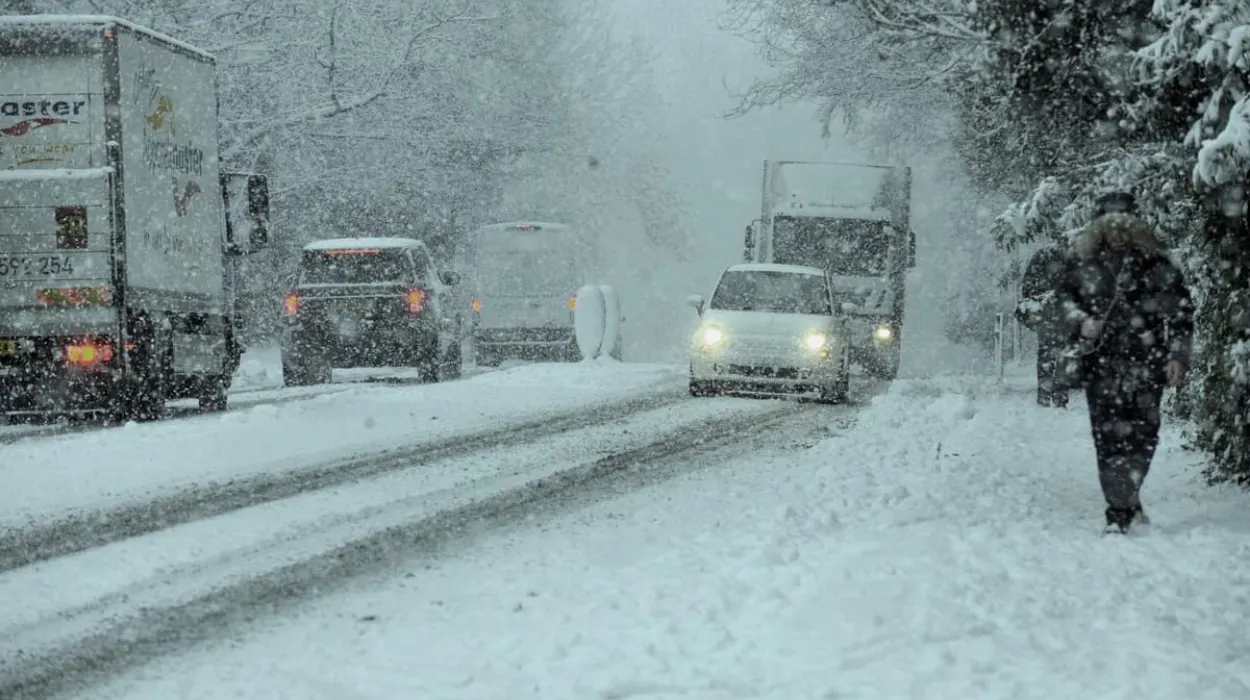
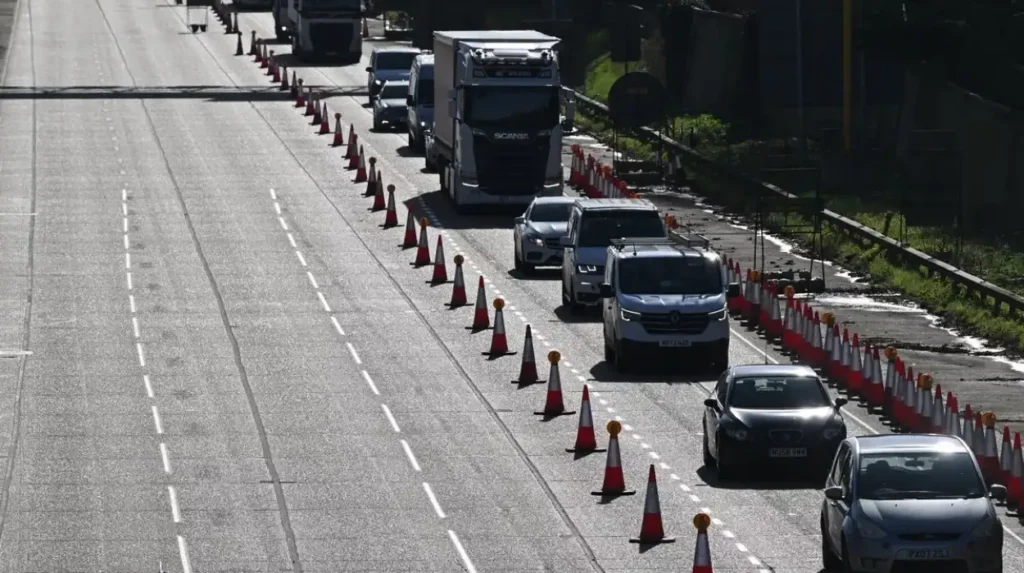
National Highways reported closures on the M1 northbound between Junctions 41 and 42 near Leeds due to multiple collisions involving eight vehicles. Gritting teams worked overnight, but compacted snow reduced friction on untreated sections. West Yorkshire Police confirmed three minor injuries from a pile-up, with no fatalities reported.
Local councils in Leeds deployed over 50 gritters, yet side roads in Headingley and Chapel Allerton remained treacherous.
As reported by Jonathan Manning of the Yorkshire Evening Post, council leader Judith Blake noted,
“We are prioritising main arteries, but residents should check live updates via our app.”
Leeds City Council activated its severe weather protocol, opening three warming centres at community halls in LS6, LS12, and LS14 postcodes. Volunteers distributed hot drinks and blankets to those affected by power outages from fallen branches.
How long will snow and severe weather affect Leeds and the surrounding areas?
The yellow warning spans from 6 am Saturday to 11.59 pm Sunday, affecting Leeds, Bradford, Wakefield, and Calderdale. Met Office chief forecaster Frank Saunders explained that a cold front from the North Sea channelled moist air over elevated terrain, enhancing snowfall rates.
“Elevations above 200 metres could see 15 cm, with lying snow causing untreated surfaces to become impassable,”
Saunders said in an official release.
Maps from the Met Office illustrated the warning polygon stretching 50 miles wide, overlapping with amber ice alerts in South Yorkshire. Historical data indicates similar events in January 2010 led to 24-hour closures at Leeds Bradford Airport.
A meteorologist provided context on the meteorological drivers behind the event. Weatherman Uttam said in X post,
“Due to a disruption in the Polar Vortex, there is a strong possibility of enhanced Western Disturbance activity after mid-January. Currently, this very disruption has resulted in an Arctic blast over Europe, causing heavy snowfall, an event being referred to as Storm Goretti.”
Between 15 January and 15 February, the MJO cycle may show a significant impact 🌏.
Due to this, frequent Western Disturbances (WDs) may occur, and unseasonal rainfall could be observed in Gujarat as well as the northwestern plains of India.
What flights are affected at Leeds Bradford Airport amid snow?
Credit: PA Archive
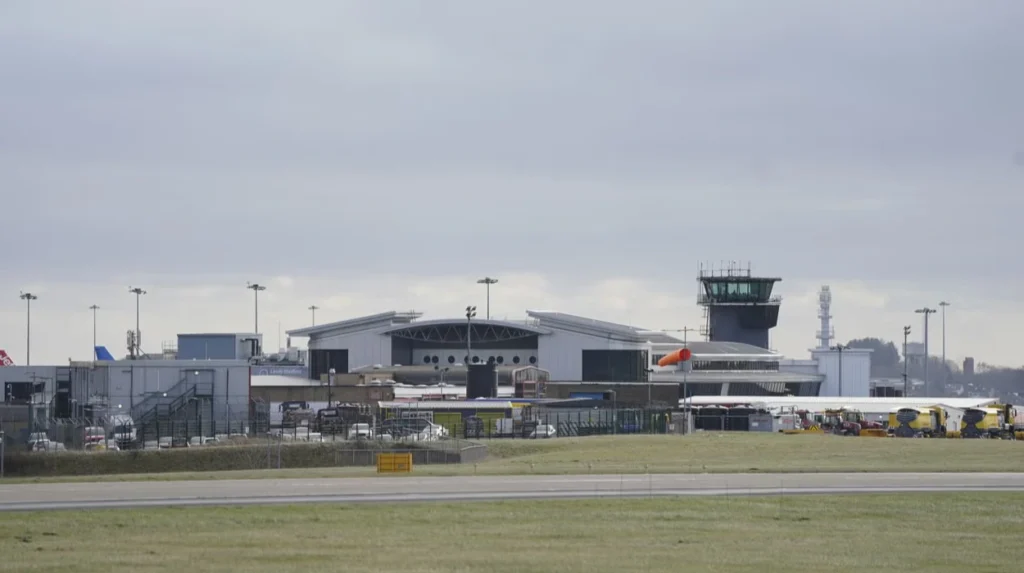
Leeds Bradford Airport, handling 5.5 million passengers annually pre-event, grounded 20% of its Sunday schedule. EasyJet cancelled services to London Gatwick and Belfast, offering rebooking or vouchers. Passenger numbers dropped 40% as airlines issued ‘do not travel’ advisories.
Runway friction tests fell below operable thresholds at 10 am, prompting a two-hour full closure, as teams worked overnight to clear snow. Airport data logs showed 12 cm accumulation by noon, cleared partially by ploughs. Ryanair’s UK operations director, Neil Sorahan, commented to aviation reporter Susannah Streeter of Examiner Live,
“We prioritise passenger welfare amid these exceptional conditions.”
The airport’s status as the UK’s highest-elevation runway exacerbated the challenges, with officials noting ongoing disruptions even after partial reopening.
How are Leeds residents coping after Storm Goretti and the snow?
Storm Goretti, which battered the UK earlier in the week with 80mph gusts, left weakened infrastructure vulnerable to the cold snap. The storm caused significant damage across Yorkshire, felling trees and flooding homes in Leeds. Environment Agency flood barriers held at the River Aire, averting repeats of previous inundations.
Post-Goretti recovery efforts included restoring power to thousands of homes by Friday. However, snow exacerbated outages, with Northern Powergrid reporting widespread issues. As covered by environmental correspondent Elena Cresci of the Yorkshire Evening Post, Goretti’s low-pressure system stalled, drawing Arctic air southward.
What emergency actions are in place for Leeds residents?
West Yorkshire Combined Authority convened an emergency meeting on Saturday evening, allocating funds from reserves for gritting and shelters. Police and fire services conducted welfare checks on vulnerable residents identified via council databases.
Schools across Leeds closed preemptively, affecting thousands of pupils. The University of Leeds shifted lectures online, citing unsafe campus paths. NHS England declared a level 2 cold weather alert, preparing hospitals for increased admissions from slips and hypothermia.
Leeds Rhinos rugby match against Wakefield Trinity proceeded behind closed doors at Headingley Stadium, prioritising player safety. Event organisers cited Met Office advice in the decision.
How are snow and cold weather warnings affecting the UK?
Credit: Getty Images
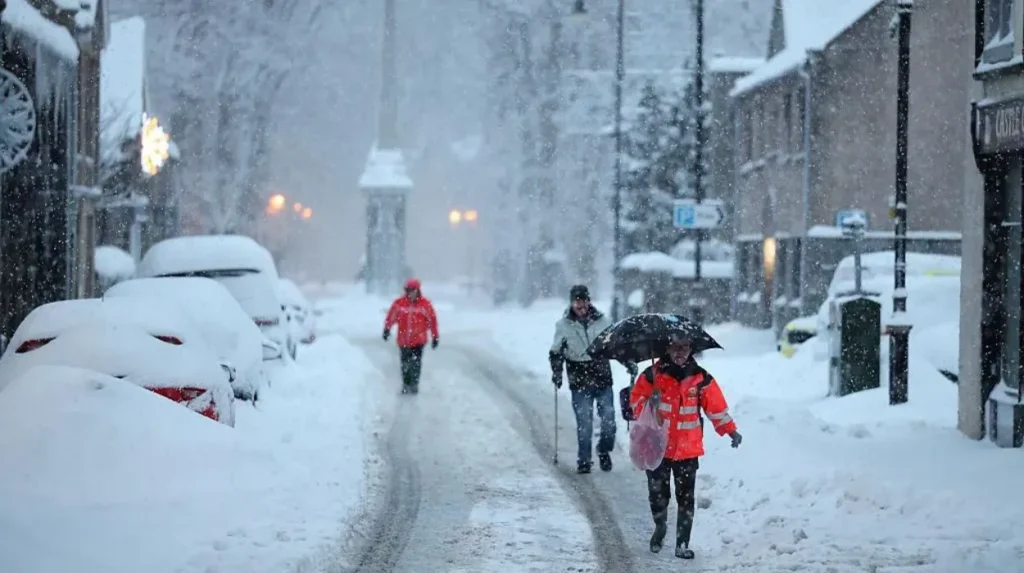
Parallel warnings cover Scotland and northern England, with the Met Office forecasting a national cold spell through mid-week. Temperatures fell as low as -12.5 °C overnight, bringing a second day of school closures and travel disruptions. BBC Weather’s Simon King noted patterns similar to past events, though less intense.
RAC breakdown services reported a surge in callouts, mostly snow-related strandings. Government advice via GOV.UK urged checking vehicle readiness and carrying blankets.
What challenges are snow and cold weather creating in Leeds?
Retail sectors in Leeds city centre saw footfall drops, per industry figures. Public transport operator First Bus diverted routes, with replacement services for isolated villages.
Farmers in surrounding areas faced livestock challenges, prompting support claims. Dairy operations halted collections from snow-blocked farms.
Met Office campaigns emphasised travel planning mantras. Apps aided rescue coordinates for incidents. Samaritans offered support for isolated individuals.
Leeds Teaching Hospitals NHS Trust prepared extra beds, anticipating falls-related surges. Aid organisations distributed thermal kits at distribution points.