
Tehran, JANUARY 2026 —According to parliament news., the latest wave of political protests Iran has become one of the most defining political developments of the year. Across major cities citizens have taken to the streets expressing frustration over economic hardship governance challenges and perceived political stagnation. The demonstrations mark a significant escalation in public pressure within Iran, signaling a shift from isolated dissent to sustained national unrest.
Unlike previous episodes these protests reflect deeper structural strains rather than single triggering events. Analysts note that domestic political agendas now play a central role in shaping both the scale and persistence of the demonstrations.
Roots of Discontent in Domestic Political Structures
The foundations of the current unrest lie within Iran’s complex political framework. Multiple power centers operate simultaneously creating policy gridlock and diluted accountability. This structure has struggled to respond decisively to mounting public demands. As a result the political protests Iran movement has evolved into a broad critique of governance effectiveness rather than opposition to any single policy.
Public confidence has eroded gradually as political debates fail to translate into measurable improvements in daily life. Citizens increasingly view institutional processes as disconnected from economic realities.
Economic Pressures Driving Public Mobilization
Economic stress remains a powerful engine behind the demonstrations. Rising inflation reduced purchasing power and employment uncertainty have affected households nationwide. For many families economic survival now dominates daily decision making. These pressures have intensified perceptions of inequality and mismanagement.
Experts emphasize that while economic challenges alone do not automatically lead to unrest their persistence combined with political inertia has amplified the political protests Iran across social and geographic lines.
Urban Centers as Focal Points of Protest Activity
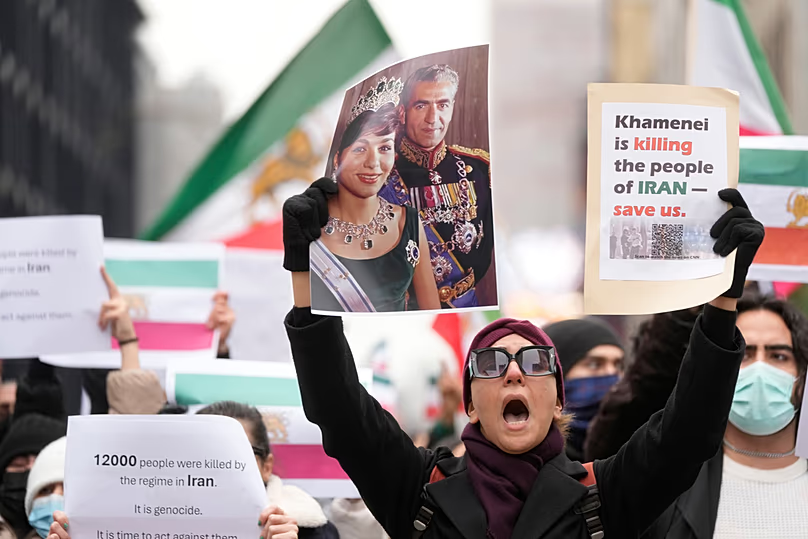
Major urban areas including the capital have emerged as focal points for protest activity. Dense populations high living costs and greater exposure to political discourse contribute to heightened civic engagement. Demonstrations in these cities often set the tone for national sentiment.
Urban protests also attract greater media attention which reinforces their symbolic significance within the broader political protests Iran narrative.
Parliamentary Debate Under Public Scrutiny
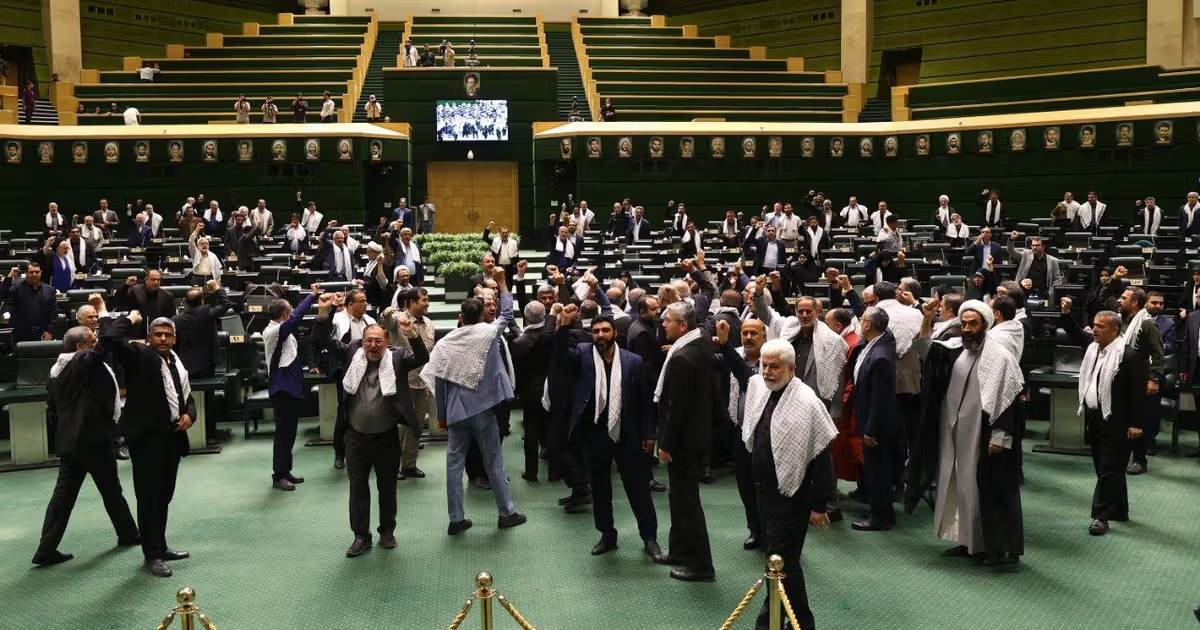
Parliament has found itself under intense public observation as lawmakers debate economic reform governance accountability and social policy. Citizens increasingly expect legislative sessions to deliver concrete outcomes rather than rhetorical exchanges.
The perceived gap between debate and action has fueled skepticism reinforcing the momentum of political protests Iran as an external expression of political frustration.
Information Control and Competing Narratives
Information management plays a crucial role during periods of unrest. Official channels emphasize stability gradual reform and national unity while alternative narratives highlight public grievances and systemic shortcomings. This divergence shapes public perception and trust.
Inconsistent messaging has contributed to uncertainty further embedding the political protests Iran within the national consciousness.
Security Responses and Their Social Impact
Authorities have responded with visible security measures aimed at maintaining public order. While officials describe these actions as necessary for stability critics argue that heavy enforcement risks deepening resentment.
The relationship between enforcement and dialogue remains central to determining whether the political protests Iran will escalate or gradually subside.
Youth Participation and Generational Pressure
Young citizens represent a significant portion of protest participants. Facing limited economic mobility and uncertain futures younger generations are increasingly vocal in demanding change. Their involvement reflects structural challenges related to employment education and social opportunity.
The prominence of youth underscores why the political protests Iran cannot be addressed through short term concessions alone.
Social Media and Collective Mobilization
Digital communication has facilitated rapid information sharing and coordination among demonstrators. While access fluctuates online platforms remain critical tools for shaping protest dynamics. These networks amplify both grievances and solidarity across regions.
This digital dimension has strengthened the resilience of the political protests Iran movement even amid restrictions.
Regional and International Attention
Although driven by domestic factors the protests are closely monitored beyond Iran’s borders. Regional stability economic partnerships and diplomatic engagement can all be influenced by prolonged internal unrest.
International observers view the political protests Iran as an indicator of broader political and economic trends within the region.
Governance Constraints and Reform Challenges
Calls for reform have intensified alongside the protests. However institutional complexity entrenched interests and fiscal limitations constrain rapid transformation. Policymakers face a delicate balance between maintaining stability and addressing legitimate demands.
This tension sustains the political protests Iran as incremental reforms struggle to meet public expectations.
Public Trust and Institutional Credibility
Trust in institutions has emerged as a decisive factor shaping protest dynamics. Many citizens cite a lack of transparency and accountability as central grievances. Rebuilding trust requires consistent policy execution and open communication.
Without renewed confidence the political protests Iran risk becoming a recurring cycle rather than a catalyst for resolution.
Economic Policy and Social Resilience
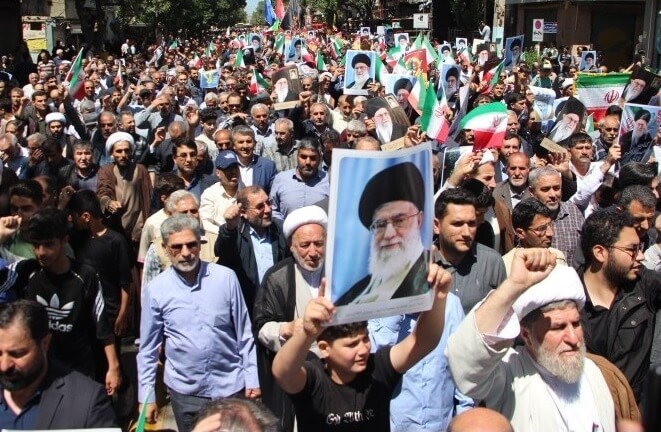
Long term stability depends on aligning economic policy with social resilience. Structural reforms investment strategies and employment creation are essential to easing pressure. Short term relief without systemic change is unlikely to produce lasting calm.
Economic outcomes will therefore influence the future trajectory of the political protests Iran.
Cultural Factors and Civic Identity
Beyond economics and politics cultural identity and civic expectations shape protest behavior. Citizens increasingly view participation as a legitimate form of engagement rather than dissent alone. This shift reflects evolving norms around governance and accountability.
Such cultural change reinforces the persistence of the political protests Iran.
Media Coverage and International Perception
Global media coverage has elevated the visibility of the protests shaping international narratives. While attention can generate pressure for reform it can also complicate diplomatic relations. Managing perception alongside policy remains a strategic challenge.
The international spotlight adds another layer to the political protests Iran dynamic.
Expert Perspective on the Protests
The current wave of demonstrations has prompted extensive analysis from political observers who view the situation as the result of long-term internal pressure rather than sudden instability. Analysts emphasize that economic stress political fragmentation and declining public trust have converged to create conditions where street mobilization becomes a primary outlet for public expression. One senior regional analyst summarized the situation clearly, stating,
“What we are witnessing is not a temporary surge of anger but the cumulative outcome of unresolved governance challenges that have pushed citizens toward sustained political protests Iran.”
Potential Paths Toward De escalation
Experts suggest that sustainable de escalation requires inclusive dialogue credible reform timelines and economic relief measures. Symbolic gestures without substance may temporarily reduce tension but risk long term backlash.
The durability of the political protests Iran highlights the need for comprehensive solutions.
A Defining Year for Domestic Politics
As 2026 unfolds the protests represent a defining chapter in Iran’s domestic political evolution. Decisions made now will shape institutional legitimacy social cohesion and economic direction for years.
The outcome of the political protests Iran will therefore influence the nation’s broader trajectory.
A Test of Governance and Society
The current unrest is not merely a reaction to isolated grievances but a reflection of accumulated pressure within political economic and social systems. Addressing these challenges requires strategic vision patience and public engagement.
Whether this moment becomes a turning point or a prolonged stalemate will depend on how effectively domestic institutions respond to the voices emerging across the country during this pivotal year.