

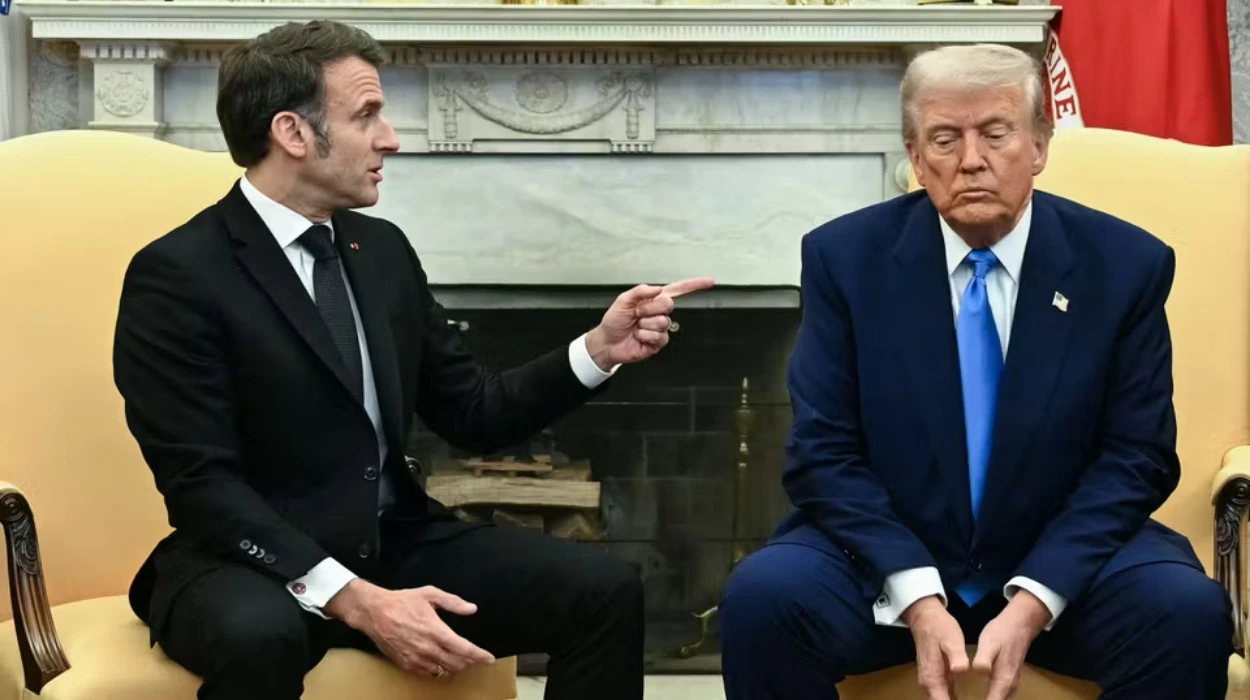
Brussels (Parliament Politics Magazine) January 18, 2026 – Senior European Union diplomats convened for emergency crisis talks following US President Donald Trump’s announcement of tariffs targeting eight nations over their opposition to his push to acquire Greenland. French President Emmanuel Macron urged activation of the EU’s unused anti-coercion instrument to counter the measures, while leaders including Italy’s Giorgia Meloni and Finland’s Alexander Stubb condemned the threats as mistakes and blackmail. The standoff has jeopardised a recent EU-US trade deal and raised alarms over NATO unity and transatlantic relations.
Senior European diplomats gathered in Brussels on Sunday for crisis talks after US President Donald Trump announced tariffs on Denmark, Norway, Sweden, France, Germany, the UK, the Netherlands, and Finland. As reported by Jennifer Rankin of The Guardian, Trump targeted these nations in a Truth Social post on Saturday for deploying troops to Greenland, accusing them of playing “a very dangerous game”. He stated the tariffs would begin at 10% from 1 February, rising to 25% from 1 June, until a deal is reached for the “Complete and Total purchase of Greenland”, a largely autonomous Danish territory.
The ambassadors of the EU’s 27 member states met in an emergency session later on Sunday, summoned by Cyprus, holder of the rotating EU presidency, as detailed by Philip Blenkinsop of Reuters. EU diplomats confirmed the meeting started at 5 p.m. local time (1600 GMT). This followed Trump’s vow to impose the tariffs until the US can buy Greenland, escalating a dispute over the Arctic island’s future.
Macron Leads Calls for EU Anti-Coercion Instrument Activation
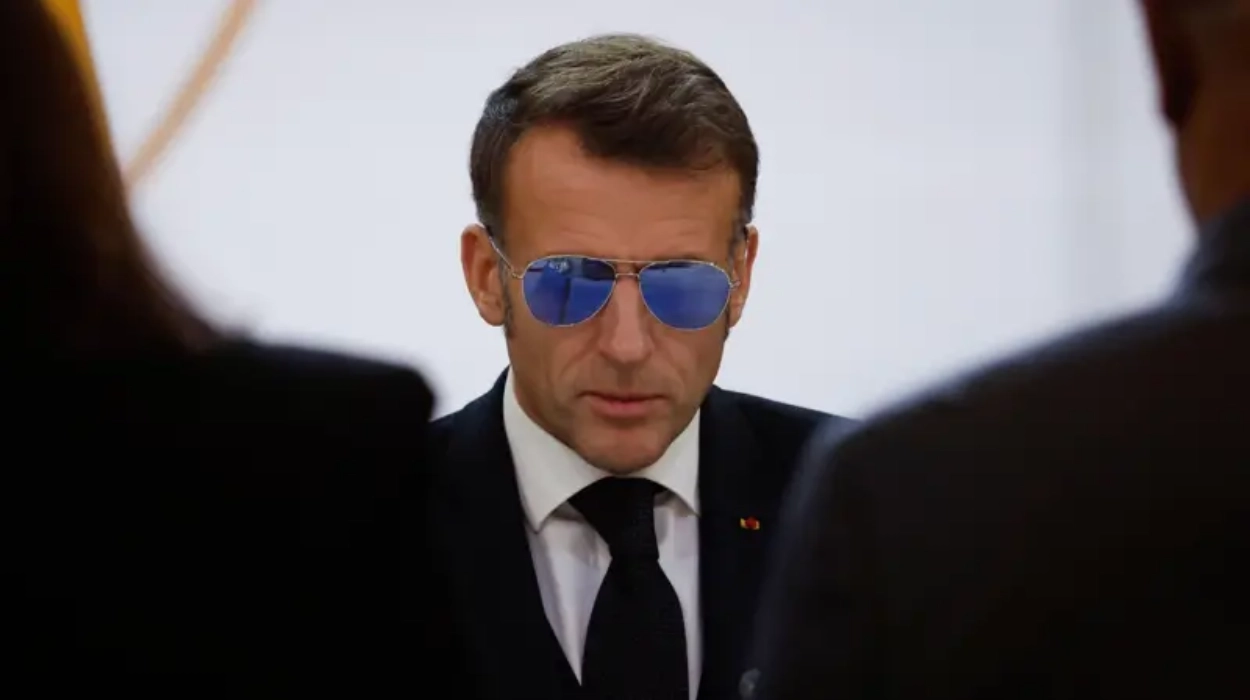
At the forefront of the response, French President Emmanuel Macron has pushed strongly for the EU to activate its anti-coercion instrument. Macron calls Trump’s tariffs threats over Greenland “unacceptable”, says Europe will respond in a united and coordinated manner “should they be confirmed”.
Michel Rose posted on X,
“Macron calls Trump’s tariffs threats over Greenland “unacceptable”, says Europe will respond in a united and coordinated manner “should they be confirmed.”
Macron calls Trump’s tariffs threats over Greenland “unacceptable”, says Europe will respond in a united and coordinated manner “should they be confirmed” https://t.co/9VQODpyot1
— Michel Rose (@MichelReuters) January 17, 2026
A source close to Macron told Reuters he was coordinating a European response, with the instrument potentially limiting US access to EU public tenders or restricting trade in services where the US holds surpluses. Further confirming this stance, Bloomberg correspondent Gerardo Ortega said in an X post,
“French President Emmanuel Macron will request the activation of the European Union’s anti-coercion instrument after US President Donald Trump announced new tariffs on European countries over Greenland.”
French President Emmanuel Macron will request the activation of the European Union’s anti-coercion instrument after US President Donald Trump announced new tariffs on European countries over Greenland. https://t.co/2bMqoElYrR
— Gerardo Ortega (@Ortega_Gerardo) January 18, 2026
The anti-coercion instrument, conceived originally against threats like those from China and never deployed, enables punitive measures against economic coercion such as tariffs. Bernd Lange, German Social Democrat chair of the European Parliament’s trade committee, called for its use in late Saturday social media posts, as noted by The Guardian and Reuters. Valerie Hayer, head of the centrist Renew Europe group, and Germany’s engineering association supported this on Sunday.
Some EU diplomats cautioned against immediate escalation, telling Reuters it was premature. Ireland’s prime minister affirmed the EU would retaliate if tariffs proceed but viewed anti-coercion activation as too soon, per another Reuters dispatch.
European Leaders Condemn Tariffs as Blackmail and Mistake
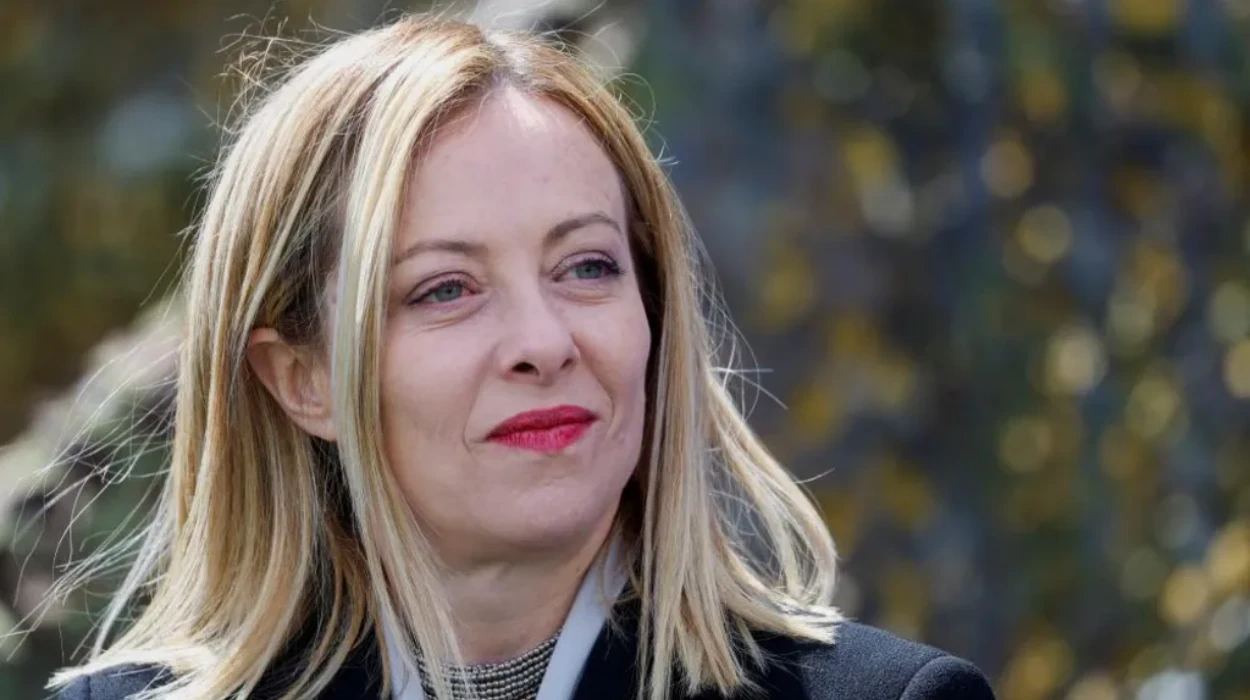
Reactions poured in from targeted nations. Italy’s Prime Minister Giorgia Meloni, one of Trump’s closest EU allies, described the tariffs as a “mistake” during a briefing in Seoul, Korea. As reported by Jennifer Rankin of The Guardian, Meloni said she had spoken to Trump hours earlier and told him her views; she planned further calls with European leaders. Italy has not sent troops to Greenland.
Dutch Foreign Minister David van Weel labelled Trump’s threats to allies as “blackmail”, per The Guardian. Finland’s President Alexander Stubb, who shares a golfing interest with Trump, wrote on X that European countries stand united behind Denmark and Greenland, warning tariffs would “undermine the transatlantic relationship and risk a dangerous downward spiral”.
Spain’s leader Pedro Sánchez said in an interview with La Vanguardia, published Sunday, that a US invasion of Greenland would make Vladimir Putin “the happiest man on Earth” by legitimising Russia’s actions in Ukraine and tolling the “death knell for NATO”. The interview predated Trump’s latest threat but reflected broad support for Denmark.
EU top diplomat Kaja Kallas tweeted that “China and Russia must be having a field day”, adding that Greenland’s security should be addressed within NATO and tariffs would impoverish both Europe and the US while distracting from aiding Ukraine against Russia.
Denmark’s Foreign Minister Lars Løkke Rasmussen, fresh from “constructive” talks in Washington with US Vice-President JD Vance and Secretary of State Marco Rubio, expressed surprise at Trump’s announcement. He wrote that the increased military presence in Greenland aims to enhance Arctic security.
In the UK, Culture Secretary Lisa Nandy told Sky News that Britain’s position on Greenland is “non-negotiable” and allies must work together without a “war of words”, as reported by Reuters and The Guardian.
All eight targeted countries have deployed small numbers of military personnel to Greenland in recent days. Denmark announced an increase in its presence last week, while the others sent troops on short scoping missions to demonstrate NATO members’ commitment to Arctic security, according to The Guardian and Reuters.
Trump criticised these moves, mocking Denmark’s defences as “two dogsleds” and claiming China and Russia covet Greenland while Denmark cannot protect it.
Thousands of Greenlanders marched in Copenhagen on Saturday against Trump’s takeover threats, waving flags in protest, as photographed by Kristian Tuxen Ladegaard Berg for NurPhoto/Shutterstock and covered by The Guardian.
Trade Deals and NATO Face Uncertainty
The tariffs cast doubt on recent trade agreements. The EU-US deal signed last August, which would zero out EU tariffs on some US goods, faces suspension. Manfred Weber, leader of the European Parliament’s largest centre-right group, tweeted Saturday that “approval is not possible at this stage”, joining Socialist and Green MEPs, per The Guardian. A vote had been slated for late January.
A US-UK tariff deal from May and the EU’s July agreement with the US are also in question, given their structure where partners remove duties while the US retains broad tariffs, Reuters noted.
The threats overshadowed the EU’s signing of its largest free trade deal with Mercosur in Paraguay on the same day. EU leaders Ursula von der Leyen and António Costa issued a joint statement saying tariffs would “undermine transatlantic relations and risk a dangerous downward spiral”. Von der Leyen emphasised choosing “fair trade over tariffs” and “productive partnership over isolation”.
Former NATO official Robert Pszczel, now at Warsaw’s Centre for Eastern Studies, called the situation an “existential crisis” for NATO on X, citing violations of the North Atlantic Treaty’s articles on peaceful dispute settlement.
Macron reiterated on Saturday that
“no amount of intimidation or threat will influence us – neither in Ukraine, nor in Greenland, nor anywhere else”,
as reported by The Guardian.
What is an anti-coercion instrument?
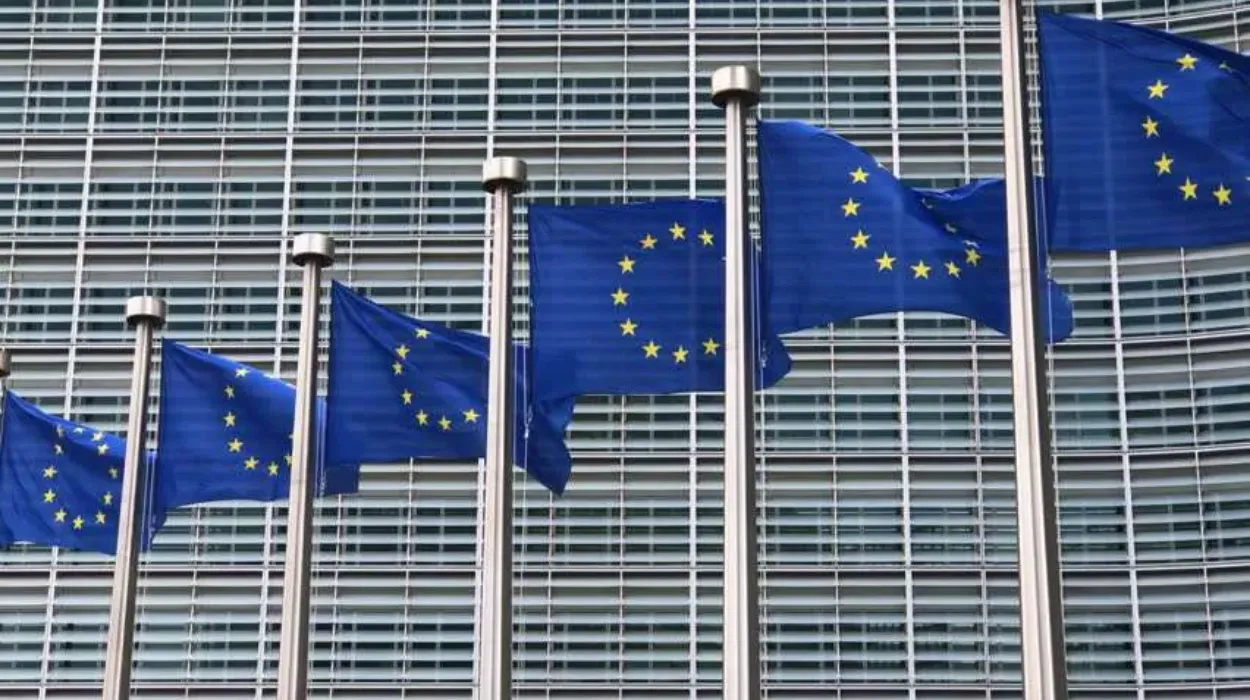
The European Union’s Anti-Coercion Instrument (ACI), dubbed the bloc’s “trade bazooka,” came into force on 27 December 2023 to protect the EU from economic pressure by third countries. It allows the European Commission to identify coercive measures—such as tariffs, investment restrictions, or sanctions—intended to influence EU policy. Once confirmed by the Council, the Commission can first pursue dialogue or mediation with the offending country.
If these efforts fail, the Commission can propose countermeasures approved by a qualified majority, including retaliatory tariffs, restrictions on service trade, limits on public procurement, intellectual property barriers, or curbs on foreign investment. Designed for proportionality and deterrence, the ACI has not yet been deployed but provides the EU a robust mechanism to prevent economic blackmail and protect its unified trade interests.