

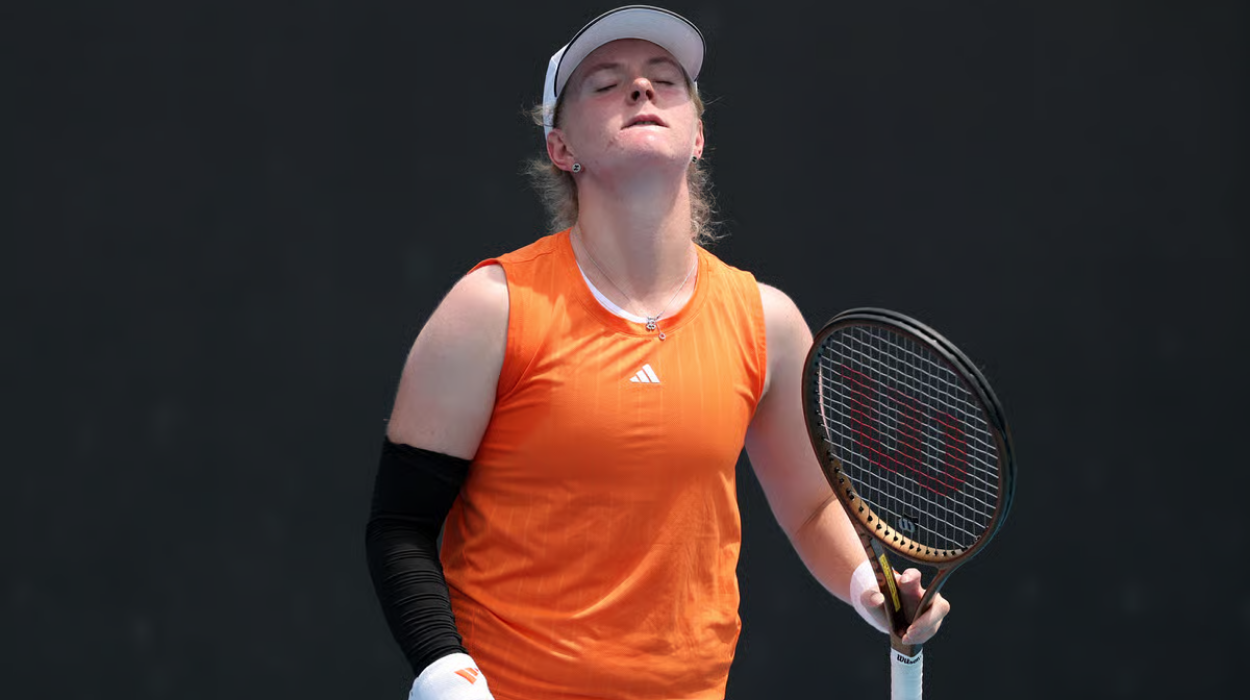
Melbourne (Parliament Politics Magazine) January 19, 2026 – Day two of the Australian Open 2026 delivered a stark reminder of tennis’s physical demands as four players retired in first-round matches due to injuries and cramps. Britain’s Francesca Jones tore her glute muscle and withdrew in tears against qualifier Linda Klimovicova, while seventh seed Félix Auger-Aliassime succumbed to cramp versus Nuno Borges. Canadian Marina Stakusic collapsed with leg cramps, and Jacob Fearnley battled through a fall to defeat.
The second day of the 2026 Australian Open unfolded at Melbourne Park with unexpected drama, as multiple competitors were forced to retire from their opening matches. Temperate conditions—29 degrees Celsius with 29% humidity and a heat stress scale of 1.9 out of 5—did little to ease the toll on players’ bodies, according to reports from on-site journalists.
Francesca Jones’s Heartbreaking Glute Injury Retirement
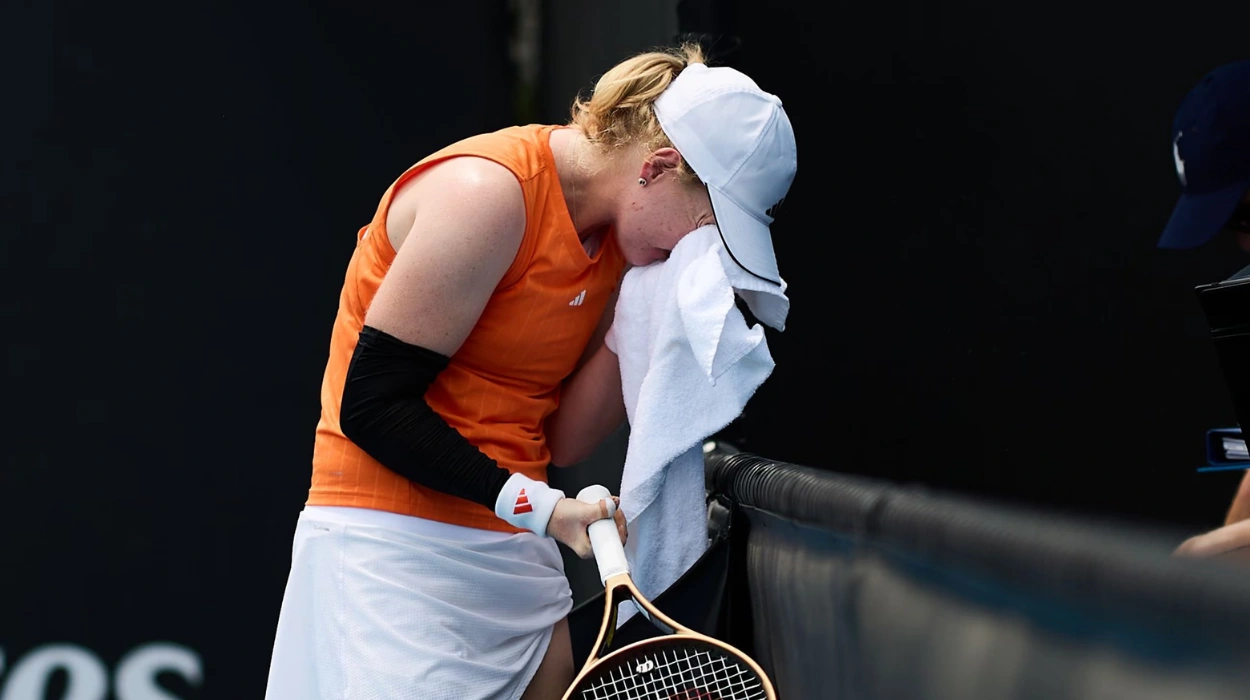
Britain’s Francesca Jones, the world number 69 and British number three, chased her first grand slam main-draw win at her sixth attempt. Competing on court 15, she slipped while pursuing a shot early in the match against 21-year-old Polish qualifier Linda Klimovicova. The fall resulted in a tear in her glute muscle on the same right leg previously troubled by a groin issue in Auckland.
Jones trailed 2-6, 2-3 when she called for medical assistance and ultimately retired. Her sobs echoed around the court as trainers attended to her, a moment captured in detail by courtside reporters. As reported by Tumaini Carayol of The Guardian, “I’ve honestly got no bloody clue what happened after that point in the match,” Jones said, fighting back tears in her press conference.
Eleanor Crooks of The Independent provided further details on the incident: “I went for a slice, and the leg that I had injured, I slipped on it and fell. I felt something pull in my glute. I tried to see if it would settle but obviously aware of then multiple injuries in one leg.” Jones became increasingly emotional, weighing the stakes of points, prize money, and her career-high form against her injury history.
The Lawn Tennis Association quickly acknowledged the retirement on social media. LTA @the_LTA said in X post,
“Unfortunately Francesca Jones had to retire from her @AustralianOpen opener vs Linda Klimovicova We hope to see Francesca back on court very soon #BackTheBrits 🇬🇧 | #AusOpen.”
Unfortunately Francesca Jones had to retire from her @AustralianOpen opener vs Linda Klimovicova
We hope to see Francesca back on court very soon #BackTheBrits 🇬🇧 | #AusOpen pic.twitter.com/HMGEdt688n
— LTA (@the_LTA) January 19, 2026
Tennis journalist Chris Goldsmith highlighted Jones’s promising start to the year. Chris Goldsmith @TheTennisTalker said in X post,
“More injury problems for Fran Jones 🇬🇧 as she is forced to retire 2-6 2-3 down to qualifier Klimovicova 🇵🇱 Started the year so well in Auckland too.”
More injury problems for Fran Jones 🇬🇧 as she is forced to retire 2-6 2-3 down to qualifier Klimovicova 🇵🇱
Started the year so well in Auckland too pic.twitter.com/hBFu6vbI6K
— Chris Goldsmith (@TheTennisTalker) January 19, 2026
Jones, 25, has now retired in three of her five Australian Open main-draw and qualifying appearances. Her condition, Ectrodactyly Ectodermal Dysplasia—a rare genetic syndrome—leaves her with three fingers and a thumb on each hand and seven toes. Despite this, she insists injuries stem from inadequate early physical support rather than the syndrome itself.
“I don’t relate to any of the retirements and things directly to what could be referred to as ‘kid with a syndrome,’”
Tumaini Carayol of The Guardian quoted Jones.
“I don’t think I had a team in place and the expertise that I needed from a younger age. So my age might say 25, but my physical journey, I’m still quite early in. I think that’s where my tennis level is so much higher than my physical journey.”
Entering Melbourne, Jones had notched her first top-20 win over Emma Navarro in Auckland, propelling her to a career-high ranking last week.
“Obviously I’m at a career high,”
both Tumaini Carayol of The Guardian and Eleanor Crooks of The Independent quoted her.
“I’m probably in the main draws of the Masters, and then you are thinking: ‘Should I continue, do I fight because it’s a slam?’ There’s money, there’s points on the line. Equally, with my history, it’s probably not the smartest thing to keep pushing.”
Post-retirement, Jones contemplated next steps.
“It may be a case of don’t overthink it, recover and be ready, but I don’t know if that’s something I can be clear on right now,”
Eleanor Crooks of The Independent reported her saying.
“It kills me that it’s here because, this slam, I absolutely adore. It was my first main draw slam I ever played. It’s now my first direct entry.”
Through frustration, she vowed resilience:
“If I was someone that didn’t know how to pick myself up quickly, I would be fucked,”
per Tumaini Carayol of The Guardian.
“I let it all out, kicked and screamed for an hour, and now I’ve just been sat, speaking to (my team) about where do we go from here.”
Seventh Seed Félix Auger-Aliassime Succumbs to Cramp
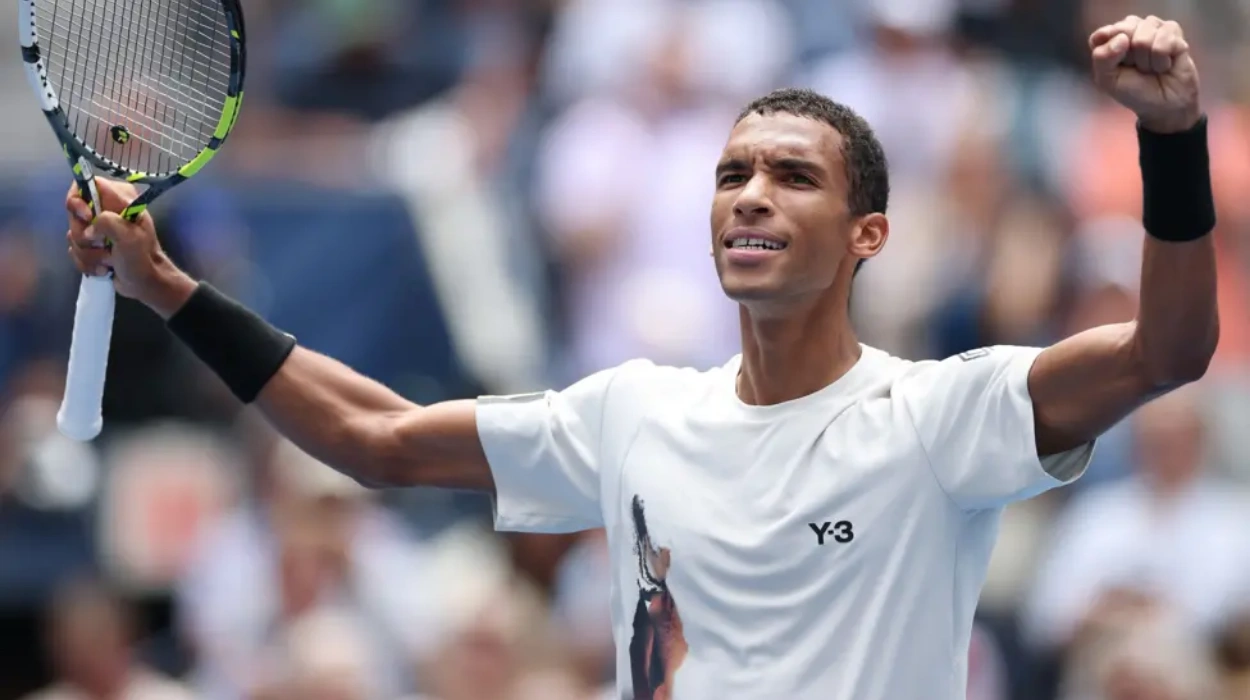
In a major upset, Canada’s Félix Auger-Aliassime, seeded seventh and ranked top five, retired meekly against Portugal’s Nuno Borges. The match stood at 3-6, 6-4, 6-4 on John Cain Arena when cramp forced his exit, as detailed by Tumaini Carayol of The Guardian.
Auger-Aliassime arrived in peak form, fresh from a US Open semi-final and 2022 Australian Open quarter-final. His preparation had seemed flawless, making the withdrawal particularly stinging.
“I just knew it wasn’t heading in the right direction,”
Tumaini Carayol of The Guardian quoted him.
“I don’t want to be just standing there like a punching bag. I want to be on the court winning. I want to be on the court competing with my opponent.”
He struggled to explain the lapse.
“I don’t have all the answers now,”
the Canadian said, per the report.
“I’m trying to be very professional at everything I do, prepare well. I love this sport, and I love to play. So I try to do everything I can in my control to get ready.
Obviously it hurts even more, because if I was self-aware and I was, like, ‘Well, I wasn’t really ready or I wasn’t doing everything,’ then you have to be honest with yourself. But even with being honest with myself, I’m not totally finding the reasons why this is happening. It wasn’t happening in the past, so I’ll have to figure it out.”
Marina Stakusic’s Dramatic Collapse on Court
Fellow Canadian Marina Stakusic, a talented 21-year-old wildcard, endured a harrowing exit against local wildcard Priscilla Hon. Trailing 1-6, 6-4, 5-3, Stakusic cramped severely in both legs and collapsed, Tumaini Carayol of The Guardian reported. Hon displayed sportsmanship by aiding her opponent, who departed in a wheelchair.
This incident compounded the day’s injury theme, though weather played no evident role.
Jacob Fearnley’s Gritty Battle After Heavy Fall
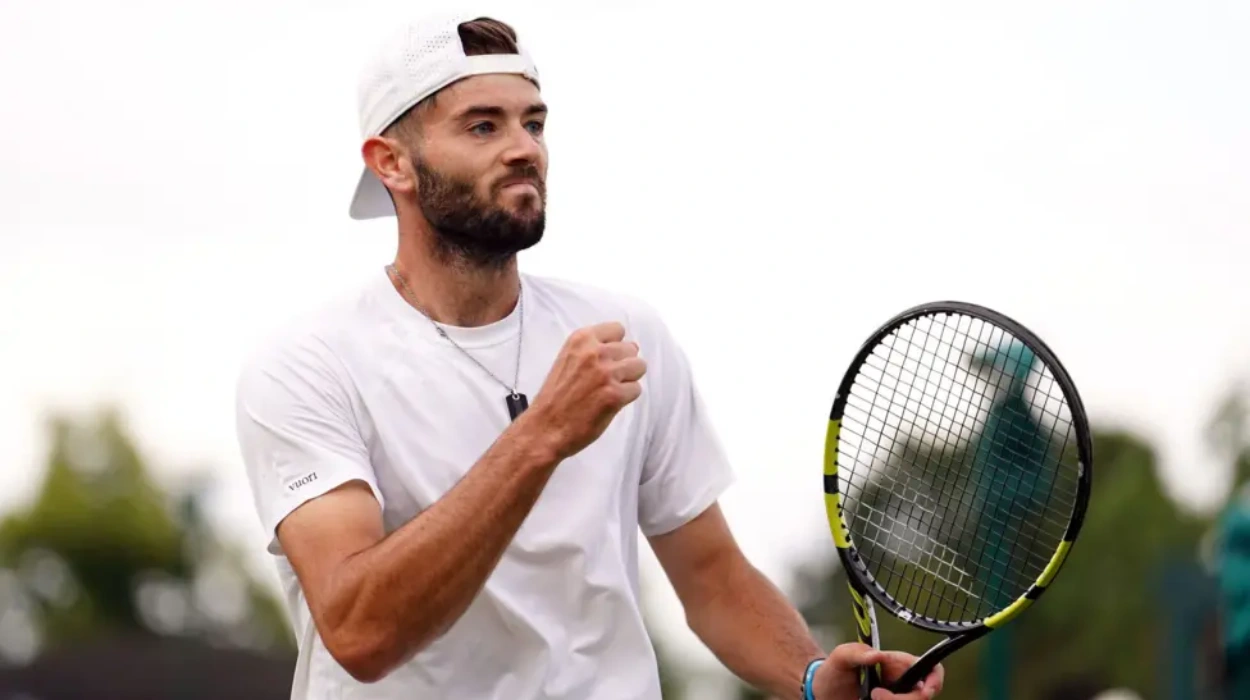
Britain’s Jacob Fearnley, who reached the third round on debut last year, faced Pole Kamil Majchrzak in a four-set marathon ending 7-6 (2), 7-5, 3-6, 7-6 (3). A heavy fall in the fourth set’s fifth game—while breaking serve—twisted his ankle and bruised his hip, per Eleanor Crooks of The Independent.
Fearnley powered through but voiced concerns.
“I slipped, ankle twisted and then hip, ankle, knee went into the floor – hip I think is just a bruise but the ankle’s pretty sore right now,”
she quoted him. “
I’m hoping that it’s nothing (serious).”
The rapid riser from college tennis, once top 50, now nears a ranking dip to top 100.
“I think I just need to be a little bit more confident, back myself a little more, just play better,”
he added.
Broader Context of Australian Open Day Two
These retirements punctuated an otherwise bustling day two, with stars like Iga Swiatek, Novak Djokovic, and Mirra Andreeva in action. The events underscore the relentless physicality of grand slam tennis, even in mild Melbourne summer weather.
No extreme heat policy was triggered, confirming the heat stress scale’s low reading. Organisers continued play without interruption, focusing on player welfare protocols.
Jones’s and Fearnley’s exits drew attention to British hopes, now slimmed early. The LTA’s supportive tweet reflected national backing amid the setbacks.
