Naypyidaw, January 2026, According to parliament news, from a nation once again standing at the center of regional and international attention. Myanmar politics 2026 has emerged as a defining issue for Southeast Asia, reflecting not only the internal dynamics of power but also the broader challenge of reconciling stability, sovereignty, and democratic legitimacy. The country’s latest election, organized under military oversight, has reshaped political institutions while raising fundamental questions about representation, consent, and the future direction of the state.
The election was not simply a procedural event. It was the culmination of years of political upheaval, armed conflict, and deepening mistrust between rulers and ruled. While authorities presented the vote as a step toward constitutional normalcy, critics viewed it as the formalization of military dominance through civilian structures. This tension lies at the heart of Myanmar politics 2026, where competing narratives struggle to define what legitimacy truly means.
Historical Roots of the 2026 Political Moment
To understand Myanmar politics 2026, it is essential to look beyond the immediate election cycle and consider the deeper historical currents shaping the country. Myanmar’s post independence history has been marked by cycles of military rule, brief democratic openings, and renewed authoritarian control. Each phase has left behind institutions designed to preserve power rather than disperse it.
The military has long positioned itself as the guardian of national unity, particularly in a country marked by ethnic diversity and longstanding internal conflicts. This self appointed role has repeatedly justified interventions in civilian governance. The events leading up to 2026 followed a familiar pattern: rising political polarization, claims of instability, and the reassertion of military authority as a corrective force.
Within Myanmar politics 2026, this historical continuity is not incidental. It explains why elections alone have struggled to deliver meaningful change and why political processes remain tightly managed.
The 2026 Election Framework and Legal Environment
The legal architecture governing the 2026 election played a decisive role in shaping outcomes. Electoral laws favored established, military aligned parties while placing significant constraints on new or opposition groups. Candidate eligibility requirements, campaign regulations, and restrictions on political assembly all contributed to an uneven playing field.
Under Myanmar politics 2026, the election framework was presented as neutral and orderly. In practice, however, it limited competition and reduced voter choice. Large segments of the population, particularly in conflict affected areas, were effectively excluded from participation due to security concerns or administrative barriers.
This environment ensured predictability, a quality valued by authorities but questioned by those seeking genuine political pluralism.
Campaigning Under Tight Control
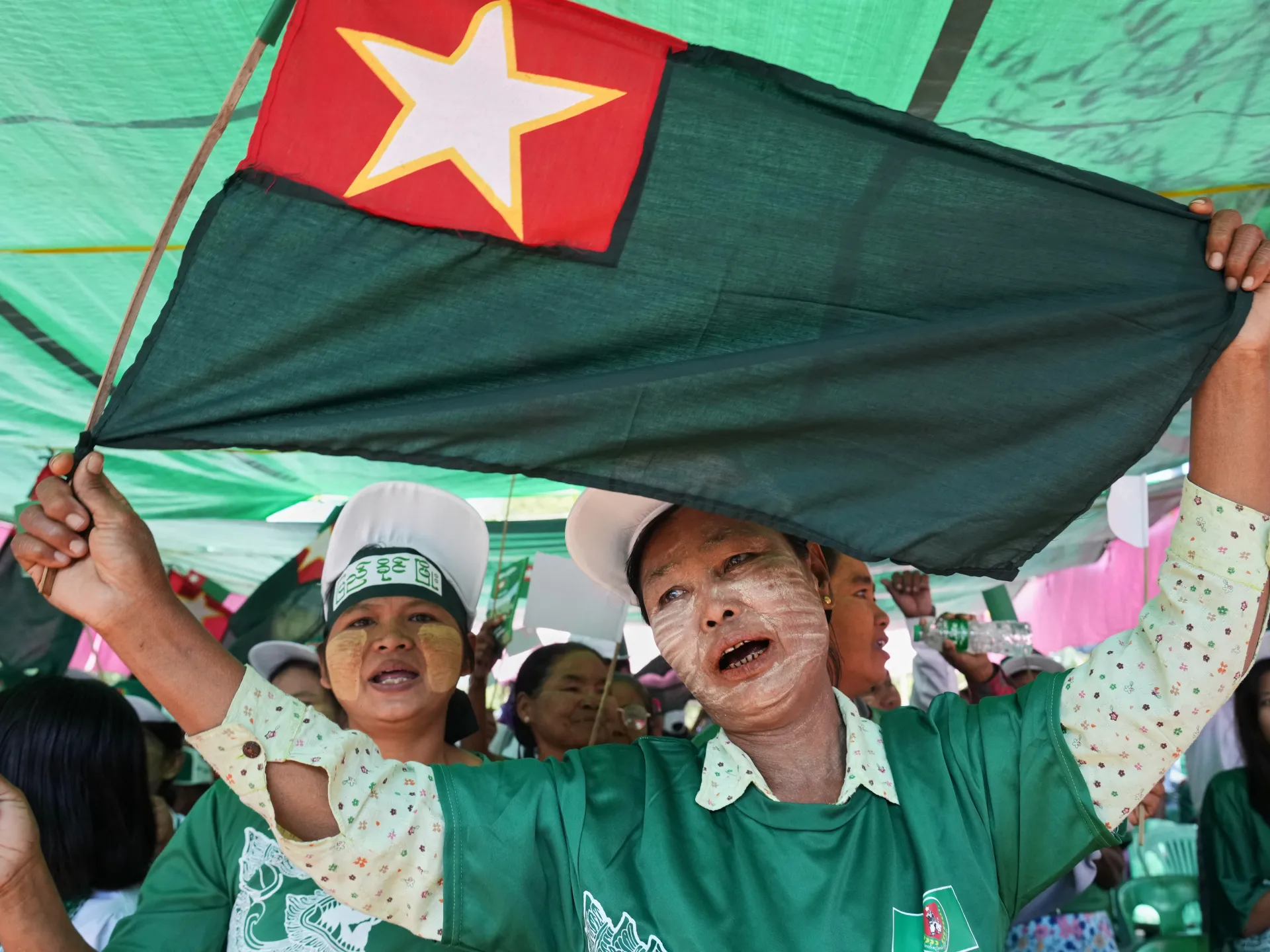
The campaign period offered a clear illustration of how Myanmar politics 2026 operates in practice. Military aligned parties enjoyed access to state media, logistical support, and public venues. Opposition figures, where present at all, faced surveillance, legal risks, and restricted movement.
Public rallies were rare and heavily monitored. Online political discourse was constrained by intermittent internet restrictions and content moderation policies that favored official narratives. As a result, voters encountered a narrow range of viewpoints, reinforcing existing power structures.
The campaign thus functioned less as a contest of ideas and more as a managed demonstration of authority.
Election Day and Its Uneven Geography
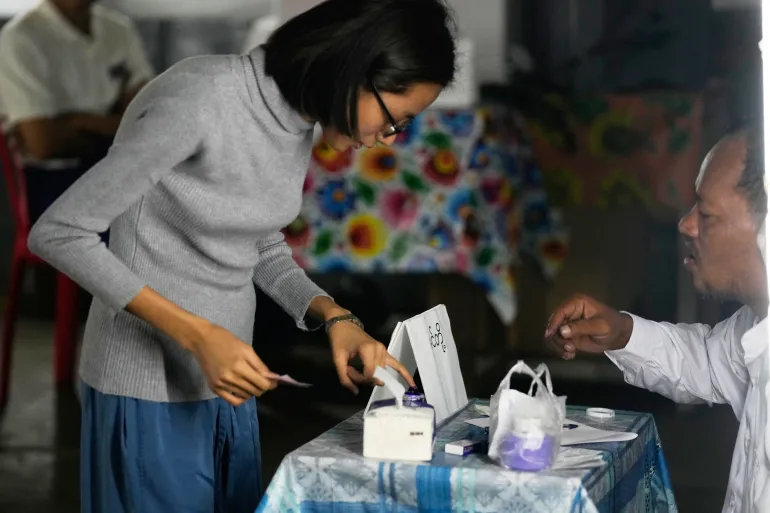
Election day itself unfolded unevenly across the country. In urban centers such as Naypyidaw and Yangon, polling stations operated under heavy security. In contrast, many rural and border regions saw limited or no voting due to ongoing conflict or administrative decisions.
This uneven geography is central to Myanmar politics 2026. It highlights the disconnect between formal political processes and the lived realities of millions of citizens. While official turnout figures emphasized participation, independent estimates suggested widespread disengagement and skepticism.
For many voters, the election felt distant from their immediate concerns of security, livelihood, and access to basic services.
The Military Leadership’s Narrative
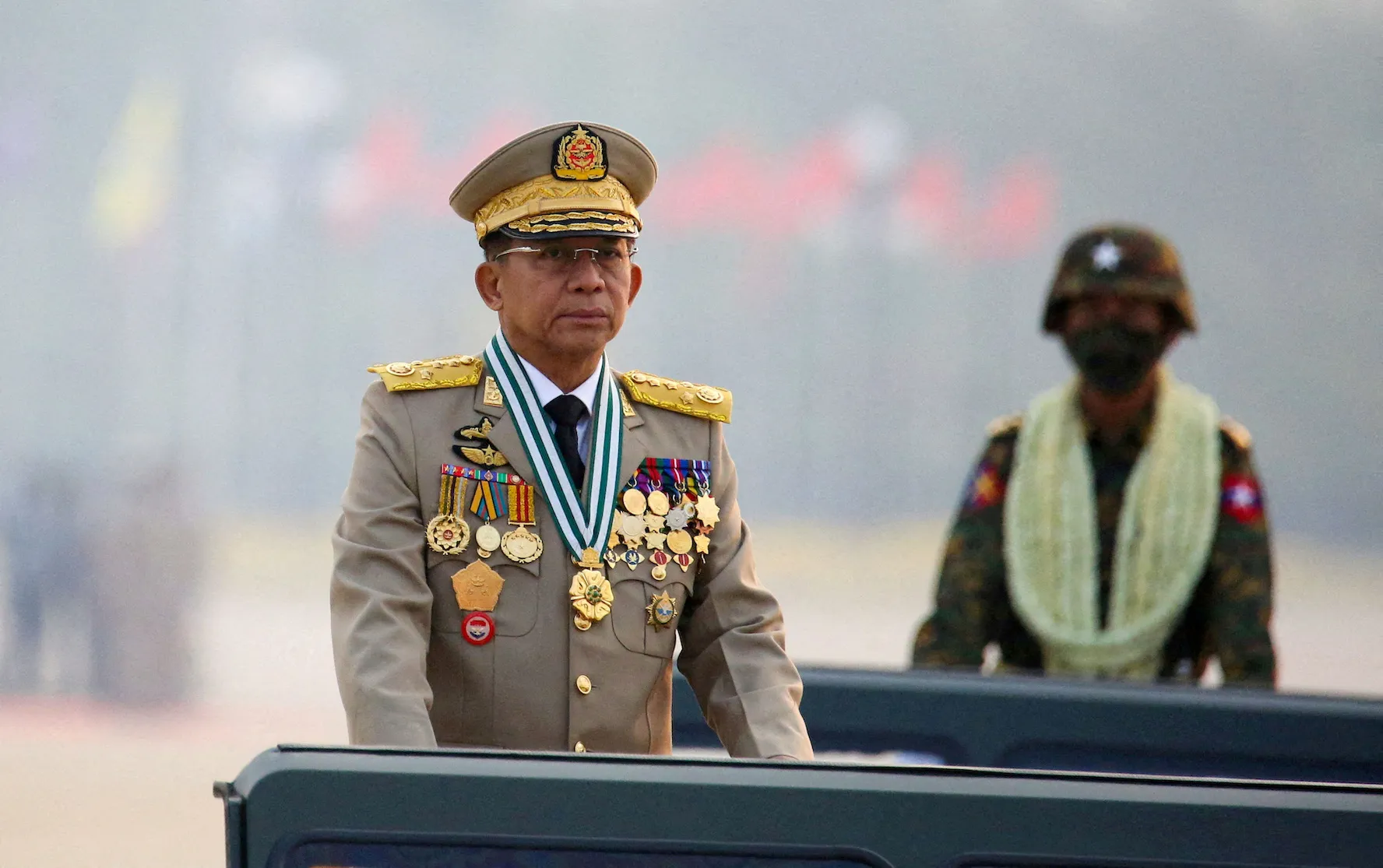
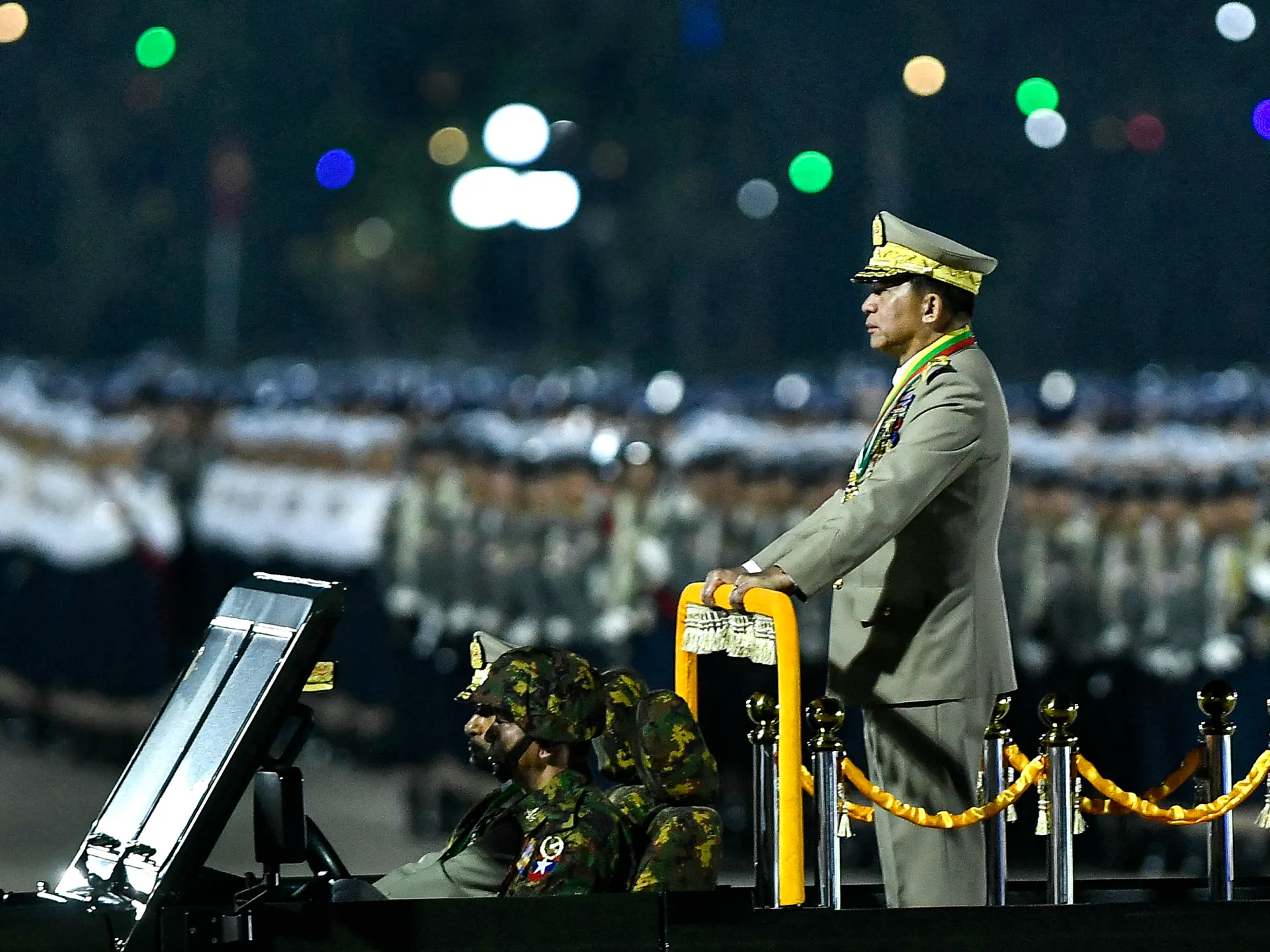
Following the release of preliminary results, the military leadership moved quickly to frame the outcome as a national endorsement. Min Aung Hlaing appeared in state media emphasizing stability, discipline, and sovereignty. He rejected foreign criticism as politically motivated and disconnected from Myanmar’s unique conditions.
One official statement included a single defining remark:
“This election reflects the will of the people and ensures a stable path suited to our national realities.”
Within Myanmar politics 2026, such messaging serves a dual purpose. Domestically, it reinforces the image of order and continuity. Internationally, it seeks to counter accusations of illegitimacy by asserting cultural and political exceptionalism.
Absence of Opposition and Its Consequences
A striking feature of Myanmar politics 2026 is the absence of meaningful opposition participation. Many opposition leaders remain imprisoned or barred from political activity, while others operate from exile with limited influence inside the country.
This absence has profound implications. Without organized opposition, legislative bodies risk becoming extensions of executive authority rather than forums for debate. Policy discussions narrow, and accountability mechanisms weaken.
For citizens, the lack of alternatives undermines confidence in political institutions and deepens political apathy.
Civil Society Under Pressure
Civil society organizations have long played a critical role in documenting abuses, providing humanitarian aid, and fostering dialogue. In Myanmar politics 2026, however, their space has shrunk considerably.
Registration requirements, funding restrictions, and surveillance have limited their operations. Many groups now operate cautiously or have suspended activities altogether. This contraction weakens social resilience and reduces the channels through which grievances can be expressed peacefully.
The erosion of civil society capacity is a silent but significant consequence of the current political trajectory.
Media Landscape and Information Control
Control over information remains a cornerstone of Myanmar politics 2026. State media outlets dominate broadcast space, presenting a unified narrative of stability and progress. Independent journalists face legal risks, intimidation, and restricted access to sources.
Digital platforms, once a space for alternative voices, are subject to monitoring and periodic shutdowns. This environment fosters self censorship and limits public debate.
The result is an information ecosystem where official perspectives overshadow critical analysis, shaping public perception and international understanding alike.
Public Sentiment and Political Fatigue
Among ordinary citizens, Myanmar politics 2026 is often met with resignation rather than enthusiasm. Years of political turmoil have produced widespread fatigue. Many people focus on day to day survival, viewing politics as distant and unresponsive.
In urban areas, low voter turnout reflected skepticism about the election’s ability to deliver tangible change. In rural regions, security concerns overshadowed political participation altogether.
This disengagement poses long term risks, as political systems without public trust struggle to maintain legitimacy.
Economic Dimensions of Political Continuity
The economic implications of Myanmar politics 2026 are significant. Political uncertainty and international sanctions have discouraged foreign investment. Domestic businesses face inflation, supply chain disruptions, and currency instability.
Infrastructure projects have slowed, and unemployment remains high in many sectors. For ordinary households, rising prices and reduced opportunities exacerbate hardship.
Without political reconciliation and renewed international engagement, economic recovery remains constrained.
Ethnic Conflict and the Political Center
Myanmar’s ethnic conflicts remain deeply intertwined with Myanmar politics 2026. Many ethnic minority regions experience the state primarily through security operations rather than political representation.
The election did little to address long standing grievances related to autonomy, resource sharing, and cultural recognition. As a result, armed conflicts persist, undermining claims of national stability.
Any durable political settlement will require addressing these structural issues rather than relying solely on centralized authority.
Regional Responses and ASEAN’s Dilemma
Regional governments face a complex challenge in responding to Myanmar politics 2026. ASEAN’s principle of non interference competes with concerns about instability spilling across borders.
Some member states favor pragmatic engagement, arguing that dialogue is preferable to isolation. Others worry that engagement without reform legitimizes authoritarian practices.
This division reflects broader debates about regional norms and the balance between sovereignty and responsibility.
Western Governments and Diplomatic Pressure
Western governments have largely maintained a critical stance toward Myanmar politics 2026. Calls for inclusive dialogue, the release of political prisoners, and respect for human rights continue.
Sanctions remain in place, targeting military linked entities and individuals. While intended to apply pressure, these measures also contribute to economic hardship, complicating humanitarian conditions.
The effectiveness of external pressure remains a subject of debate among policymakers and analysts.
International Organizations and Humanitarian Concerns
International organizations operating in Myanmar navigate a difficult landscape shaped by Myanmar politics 2026. Access restrictions, bureaucratic hurdles, and security risks limit their ability to deliver aid.
Humanitarian needs remain acute, particularly among displaced populations. Balancing engagement with principles has become increasingly challenging for global institutions.
Their experience underscores the human cost of political stalemate.
Legal Institutions and the Rule of Law
The state of the judiciary is another critical dimension of Myanmar politics 2026. Courts are widely viewed as lacking independence, particularly in politically sensitive cases.
Legal processes are often used to legitimize decisions already made elsewhere. This undermines confidence in the rule of law and discourages citizens from seeking redress through formal channels.
Strengthening judicial independence would be a crucial step toward restoring trust.
Youth and the Lost Promise of Participation
Myanmar’s young population has played a prominent role in past political movements. In Myanmar politics 2026, however, many young people feel excluded and disillusioned.
Restrictions on activism, limited employment opportunities, and emigration have reduced youth engagement. This represents a loss of potential energy and innovation within the political system.
Re engaging youth will be essential for any long term political renewal.
Digital Space and Political Expression
Despite restrictions, digital platforms remain a contested arena within Myanmar politics 2026. Citizens continue to share information and express dissent cautiously.
Authorities recognize the power of digital communication and respond with monitoring and control. This ongoing struggle shapes how political ideas circulate and evolve.
The digital space remains both a risk and an opportunity for future change.
Comparisons With Past Transitions
Observers often compare Myanmar politics 2026 with previous periods of managed transition. Similar patterns emerge: elections used to signal progress, continued military influence, and limited civilian autonomy.
These comparisons highlight the difficulty of breaking entrenched cycles. Without structural reforms, history risks repeating itself.
Learning from past transitions remains essential for charting a different course.
The Question of Legitimacy
At its core, Myanmar politics 2026 revolves around legitimacy. Authority derived from control differs fundamentally from authority derived from consent.
While institutions may function, the absence of broad public trust undermines their foundation. This tension will shape Myanmar’s political trajectory in the years ahead.
Resolving it requires more than procedural compliance; it demands inclusive dialogue and genuine reform.
Future Scenarios and Political Risks
Looking ahead, several scenarios emerge within Myanmar politics 2026. Continued consolidation could deliver short term stability but risks long term unrest. Alternatively, incremental opening could reduce pressure but challenge entrenched interests.
The choices made by political leaders will determine which path prevails. External actors can influence outcomes, but internal dynamics remain decisive.
Uncertainty remains the defining feature of the political landscape.
A Defining Year That Will Shape a Generation
As 2026 unfolds, Myanmar politics 2026 stands as a defining chapter in the nation’s modern history. The election has clarified power structures but left deeper questions unanswered.
For citizens, the challenge is navigating daily life amid political constraints. For leaders, the challenge is bridging the gap between authority and legitimacy.
How this moment is remembered will depend on whether it marks the entrenchment of control or the beginning of a more inclusive future.