

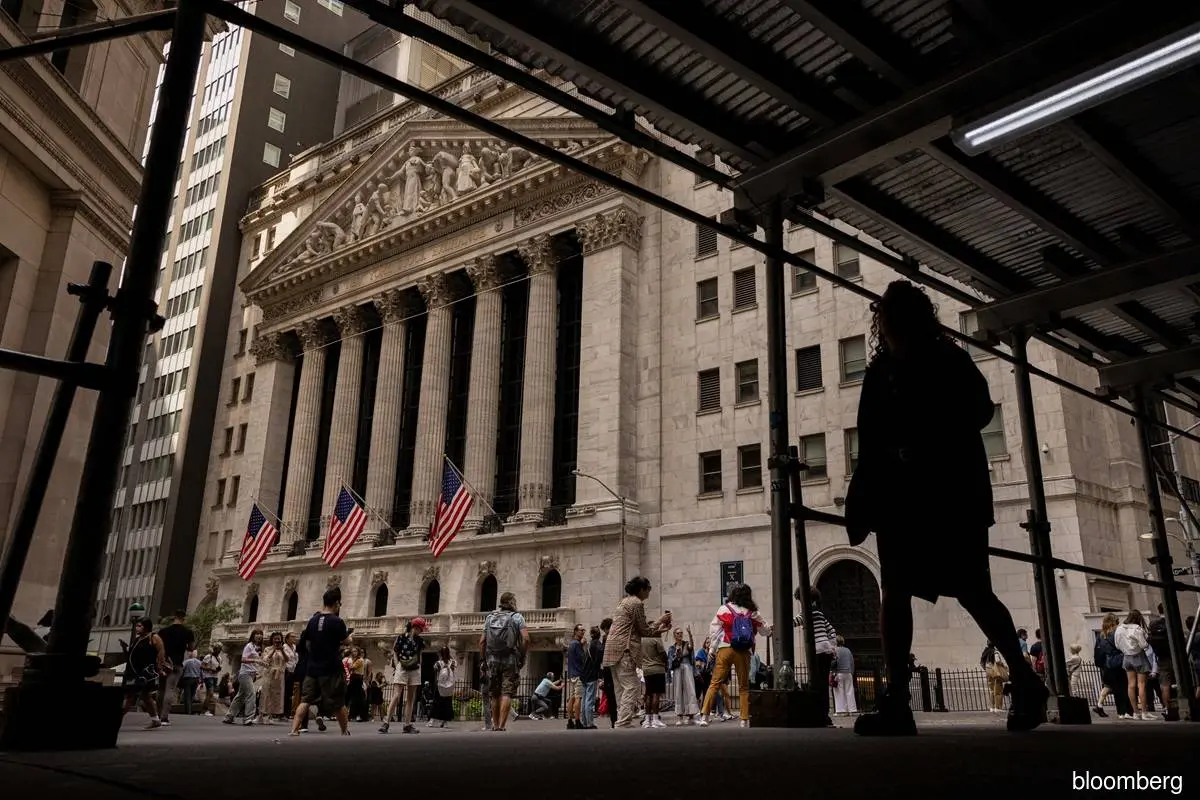
New York, January, 2026 — The US stock market today showed limited movement in early 2026 as investors in New York reacted cautiously to the Federal Reserve’s latest policy guidance, balancing optimism over economic resilience with lingering concerns about inflation and interest rates.
Major indexes reflected a market searching for direction, with gains in technology shares offset by weakness in rate-sensitive sectors, signaling a pause rather than a pivot in investor sentiment.
Market Performance Reflects Cautious Stability
Wall Street’s primary benchmarks ended the session narrowly mixed. The Nasdaq Composite posted marginal gains, supported by select technology leaders, while the S&P 500 closed close to flat. The Dow Jones Industrial Average edged slightly lower as industrial and financial stocks faced selling pressure.
The subdued performance underscored how the US stock market today remains anchored by caution rather than momentum, with investors unwilling to make aggressive bets ahead of clearer economic signals.
Federal Reserve Messaging Shapes Market Tone
The Federal Reserve’s decision to maintain current interest rate levels came as no surprise to investors. Policymakers emphasized a data-dependent approach, highlighting gradual progress on inflation while acknowledging persistent price pressures in certain areas of the economy.
This steady policy stance helped keep volatility contained and contributed to the restrained reaction seen in the US stock market today, as traders found little new information to reprice risk.
Technology Sector Provides Key Support
Technology stocks once again played a stabilizing role. Shares of major technology firms advanced modestly as investors continued to favor companies with strong balance sheets and long-term growth prospects.
Artificial intelligence, cloud infrastructure, and semiconductor stocks drew selective interest, helping lift the Nasdaq and preventing broader declines. This support was a critical factor in keeping the US stock market today from slipping into negative territory.
Sector Rotation Signals Investor Selectivity
Beyond technology, sector performance remained uneven. Energy stocks declined amid fluctuating oil prices, while financial shares struggled under pressure from stable interest rates and narrowing margins.
Healthcare and consumer staples saw modest inflows, reflecting a defensive tilt among investors. This rotation illustrates how the US stock market today is increasingly shaped by selective positioning rather than broad-based rallies.
Inflation Outlook Remains Central Focus
Inflation continues to sit at the center of market attention. While price pressures have eased compared with previous years, policymakers remain cautious about declaring victory.
Bond yields moved slightly higher as investors adjusted expectations for future rate cuts. These dynamics reinforced the measured tone of the US stock market today, where patience appears to outweigh urgency.
Labor Market Strength Supports Confidence
The resilience of the US labor market has helped sustain investor confidence. Employment data continues to show steady job creation, providing a buffer against fears of an economic slowdown.
This underlying strength has limited downside risk and contributed to the stability seen in the US stock market today, even as investors remain alert to signs of cooling demand.
Global Markets and External Influences
International markets offered mixed signals, with European equities trading lower while Asian markets showed modest gains. Currency markets remained relatively stable, and global bond yields reflected similar caution to that seen in the United States.
Geopolitical developments and global growth concerns remain on investors’ radar, but they did not materially disrupt the US stock market today, which remained focused on domestic economic fundamentals.
Corporate Earnings Set the Next Direction
Attention is gradually shifting toward upcoming corporate earnings reports, which are expected to provide deeper insight into how companies are navigating higher borrowing costs and changing consumer behavior.
Strong earnings guidance could reignite momentum, while disappointing results may reinforce the consolidation trend currently visible in the US stock market today.
Wall Street Perspective on Current Conditions
One senior equity strategist said,
“Markets are adjusting to a phase where consistency matters more than acceleration, and investors are positioning accordingly.”
This view reflects a broader consensus that the market is transitioning into a more normalized environment after years of extraordinary stimulus and volatility.
Investor Behavior Shows Long-Term Focus
Retail and institutional investors alike appear focused on long-term fundamentals rather than short-term price swings. Portfolio diversification, dividend stability, and earnings durability are increasingly influencing decision-making.
This behavior aligns with the broader pattern seen in the US stock market today, where strategic patience has replaced speculative enthusiasm.
Policy Expectations and Interest Rate Path
Market expectations for interest rate cuts remain cautious. While investors anticipate eventual easing, most now expect the Federal Reserve to proceed slowly to avoid reigniting inflation.
This outlook has helped anchor equity valuations and contributed to the range-bound trading pattern defining the US stock market today in early 2026.
Volatility Remains Contained
Market volatility indicators remained subdued throughout the session, signaling confidence in near-term stability. Options markets also reflected limited expectations for sharp moves.
The absence of significant volatility highlights how the US stock market today is operating in a controlled environment, even amid ongoing economic adjustments.

Long-Term Market Outlook
Looking ahead, analysts see a market supported by steady growth but constrained by valuation concerns and policy uncertainty. While upside potential remains, gains are expected to be gradual rather than explosive.
This outlook reinforces the view that the US stock market today is entering a phase defined by balance, discipline, and selective opportunity.
Structural Shifts in Market Leadership
Market leadership continues to evolve, with innovation-driven sectors maintaining influence while traditional cyclical industries face headwinds.
These structural shifts are reshaping investment strategies and contributing to the nuanced performance patterns observed across the US stock market today.
Liquidity and Capital Flows
Capital flows into equities have moderated, reflecting a more deliberate allocation process among investors. Fixed income markets have also attracted interest as yields stabilize.
This redistribution of capital supports the consolidation trend visible in the US stock market today, reinforcing a measured approach to risk.
Retail Investor Participation Trends
Retail investor participation remains steady but subdued compared with previous years. Trading activity suggests a preference for long-term holdings over frequent trading.
This evolution further explains the calm tone characterizing the US stock market today, as speculative excesses continue to unwind.
Market Resilience Amid Uncertainty
Despite ongoing uncertainties, the market has shown resilience. Economic fundamentals remain intact, and corporate balance sheets are generally healthy.
This resilience has allowed the US stock market today to absorb challenges without significant disruption, reinforcing confidence among long-term investors.
Final Analysis and Market Takeaway
The current environment reflects a market adapting to a post-stimulus reality. Investors are re-calibrating expectations, focusing on sustainability rather than speed.
As 2026 progresses, the US stock market today stands as a reflection of stability, discipline, and cautious optimism — a market no longer driven by extremes, but by balance and fundamentals.