


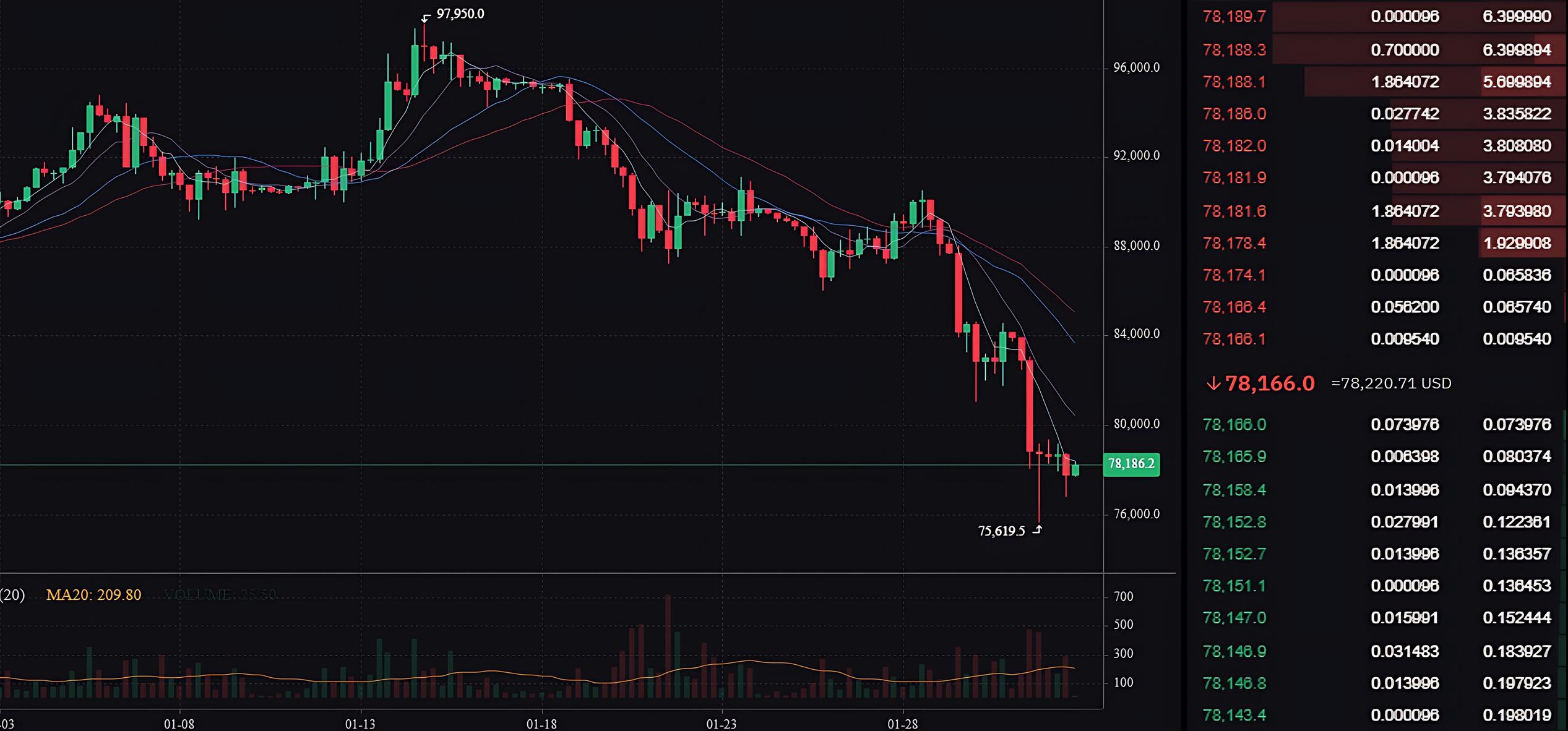
New York, February 7, 2026 — According to Parliament News, that Bitcoin price volatility has emerged as a defining force in global financial markets, reshaping investor strategy and regulatory debate as digital assets face renewed scrutiny. Trading activity across major exchanges reflects heightened uncertainty, with price movements driven less by speculation and more by macroeconomic signals, policy direction, and institutional positioning.
Market analysts say Bitcoin price volatility now mirrors broader financial stress rather than operating as an isolated phenomenon, underscoring the cryptocurrency’s deeper integration into the global economic system.
Global Market Reaction Intensifies
Financial markets worldwide have responded cautiously to recent cryptocurrency movements. Equity indices, currency markets, and commodities have all shown sensitivity to digital asset fluctuations, particularly during periods of sharp movement. Bitcoin price volatility has coincided with reduced risk appetite, prompting investors to reassess exposure to speculative assets.
Major financial hubs reported increased hedging activity as traders sought protection against sudden price swings. Analysts suggest this behavior reflects a structural shift in how crypto assets are perceived within diversified portfolios.
Institutional Investors Reevaluate Exposure
Large asset managers and hedge funds have adjusted their digital asset strategies amid persistent instability. Bitcoin price volatility has complicated portfolio construction, especially for institutions operating under strict risk frameworks.
Some funds have reduced direct exposure, favoring derivatives or blockchain related equities instead. Others have paused new allocations altogether, waiting for clearer signals on regulatory and economic direction.
One Paragraph With Quote
Market sentiment has shifted noticeably in recent months as volatility remains elevated, and according to one senior digital asset analyst in New York,
“Bitcoin price volatility is no longer a short term disruption but a structural feature that investors must plan around rather than ignore.”
Regulatory Landscape Shapes Market Behavior
Policy developments in major economies continue to influence market direction. Regulatory agencies have increased oversight of exchanges, stablecoins, and custody services, contributing to short term uncertainty. Bitcoin price volatility often accelerates following policy announcements, reflecting investor sensitivity to compliance and legal clarity.
Market participants note that while regulation may support long term stability, transitional periods tend to amplify price movement as rules evolve and implementation timelines remain unclear.
Macroeconomic Conditions Drive Volatility
Interest rate policy, inflation data, and global growth forecasts remain key drivers of market sentiment. Bitcoin price volatility has tracked shifts in monetary expectations, particularly as central banks signal prolonged tightening cycles.
Reduced liquidity across financial markets has amplified price reactions, making digital assets more vulnerable to sudden capital outflows. Analysts emphasize that macroeconomic alignment now plays a larger role in crypto valuation than in previous cycles.
Retail Investors Show Increased Caution
Retail participation has declined compared to earlier years, according to exchange data. Bitcoin price volatility has discouraged speculative trading among smaller investors, many of whom experienced losses during rapid market swings.
Trading volumes suggest that retail investors are increasingly favoring longer holding periods or exiting the market entirely until conditions stabilize. This behavior has contributed to thinner liquidity during off peak trading hours.
Market Infrastructure and Technical Factors
Exchange performance, algorithmic trading systems, and liquidity distribution continue to influence price dynamics. Bitcoin price volatility often intensifies during periods of system congestion or uneven order book depth.
Technology driven trading strategies can magnify market moves, particularly when automated responses trigger cascading sell or buy orders. Experts warn that such dynamics increase risk during periods of heightened uncertainty.
A Look Back at Earlier Bitcoin Market Phases
In earlier market cycles, price movement was largely driven by speculative momentum and retail enthusiasm. By contrast, Bitcoin price volatility in the current environment reflects a maturing asset class shaped by institutional participation and macroeconomic integration.
Previous downturns often followed rapid expansion phases, while the current period shows prolonged adjustment tied to global financial conditions. This distinction suggests a fundamental evolution in how digital assets respond to economic stress.
Correlation With Traditional Markets Strengthens
Data indicates a stronger relationship between cryptocurrency prices and traditional financial indicators. Bitcoin price volatility increasingly aligns with equity market declines, bond yield shifts, and currency fluctuations.
This correlation challenges earlier narratives positioning Bitcoin as an independent hedge. Instead, its behavior now resembles that of high risk growth assets during periods of economic uncertainty.
Media Coverage and Public Perception
Global media attention has intensified as digital assets influence broader financial narratives. Bitcoin price volatility has become a recurring topic in economic reporting, shaping public perception and policy discussion.
Analysts say sustained coverage may contribute to more informed investor behavior, but it also reinforces caution among those unfamiliar with crypto market dynamics.
Impact on Blockchain Innovation
Despite market instability, development activity within the blockchain ecosystem continues. Bitcoin price volatility has not slowed infrastructure upgrades, security enhancements, or integration efforts across financial platforms.
Developers argue that innovation cycles often progress independently of market pricing, positioning the sector for long term resilience once stability returns.
Risk Management Becomes Central Strategy
Professional investors emphasize disciplined risk management amid ongoing uncertainty. Bitcoin price volatility requires active monitoring, diversified exposure, and clear exit strategies to mitigate downside risk.
Risk controls once reserved for traditional assets are now standard practice in digital asset trading, reflecting increased market sophistication.
International Policy Coordination Challenges
Differences in regulatory approaches across regions complicate global market stability. Bitcoin price volatility often increases when policy alignment appears fragmented, creating uncertainty for cross border investment.
Experts suggest that coordinated frameworks could reduce abrupt market reactions, though achieving consensus remains a long term challenge.

Outlook for the Remainder of the Year
Analysts expect continued instability through the remainder of the year as markets absorb economic data and policy developments. Bitcoin price volatility is likely to persist until clearer trends emerge in inflation control, interest rates, and regulatory enforcement.
Market participants remain cautious, prioritizing capital preservation over aggressive positioning.
Long Term Market Implications
The current phase may redefine the role of digital assets within global finance. Bitcoin price volatility could ultimately support more accurate price discovery, reflecting real economic conditions rather than speculative excess.
Investors increasingly view this period as a test of market maturity rather than a signal of systemic weakness.
A Market Adjusting to Reality
As global markets adapt to evolving financial conditions, the digital asset sector continues its transition toward structural integration. While uncertainty remains elevated, the ongoing adjustment process may lay the foundation for a more stable and transparent crypto market in the years ahead.