
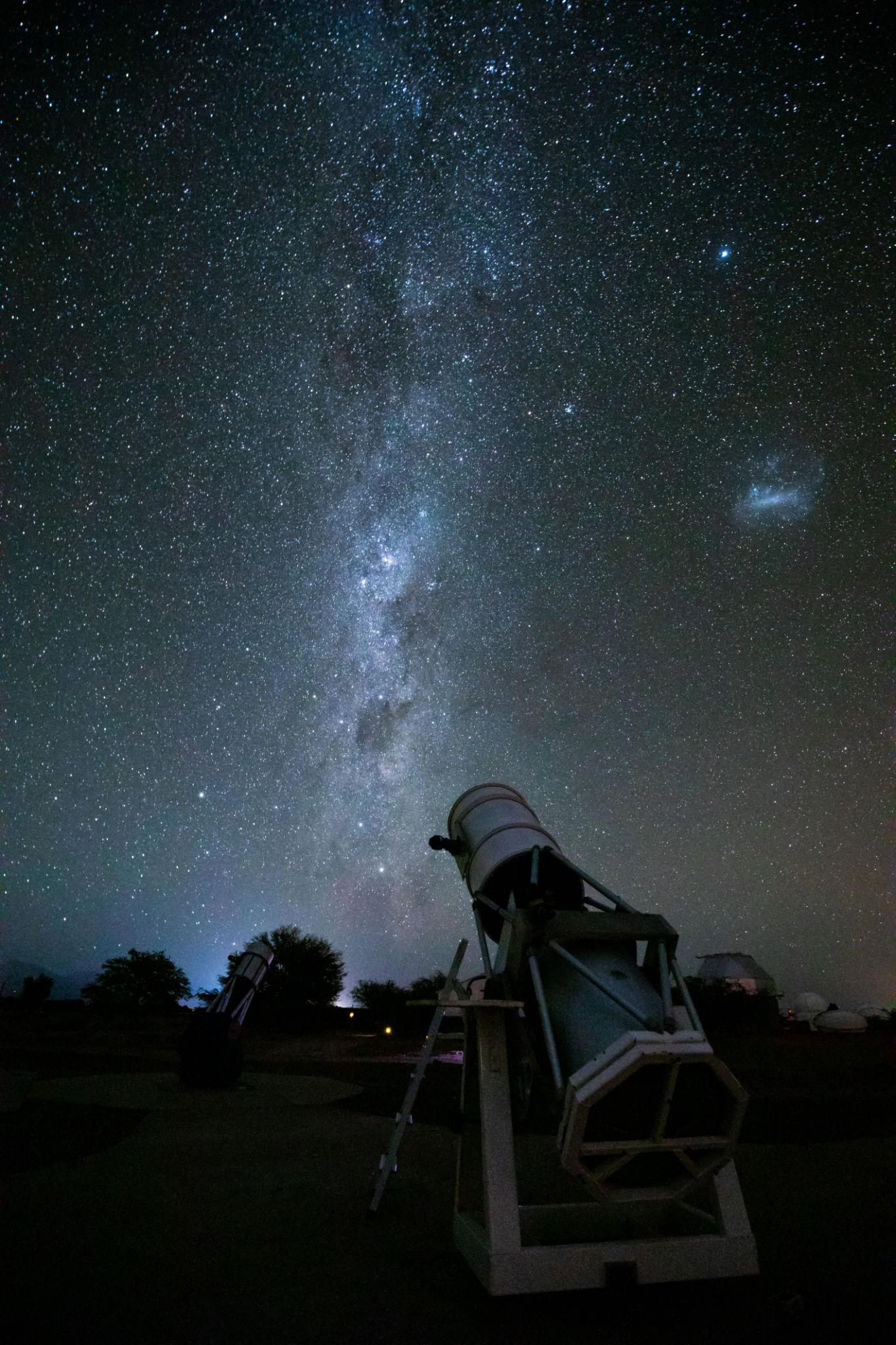
Santiago, Chile — February 14, 2026 — Parliament News — Astronomers have announced a groundbreaking discovery that is prompting renewed global debate over planet formation theory after identifying a distant planetary system whose structure challenges decades of scientific assumptions.
The 2026 Chile observation, verified by multiple observatories, suggests that early planetary evolution may involve far more dynamic movement and structural rearrangement than traditionally believed.
A System That Defies Conventional Models
The newly studied system appears structurally inverted when compared with widely accepted astronomical expectations. Traditionally, rocky terrestrial planets form closer to their host stars, while gas giants develop in colder outer regions. However, observations from northern Chile reveal a massive gas giant positioned near its star, while smaller rocky bodies orbit at greater distances.
This unexpected arrangement directly challenges long-standing interpretations within planet formation theory. Scientists emphasize that while unusual systems have been observed before, the precision and confirmation behind this discovery give it particular weight.
Dr. Elena Martínez, a lead researcher in the international collaboration, stated,
“The data clearly indicate orbital patterns that do not align neatly with classical expectations. It forces us to reconsider aspects of planet formation theory.”
The scientific community has responded cautiously, stressing that refinement, not replacement, is the immediate objective.
Observational Evidence and Confirmation
The findings emerged from high-resolution spectroscopic measurements conducted in the Atacama Desert. Using radial velocity analysis, astronomers detected subtle gravitational influences on the host star, revealing planetary mass and orbital positioning.
Follow-up transit photometry confirmed planetary size and alignment. Independent verification from observatories in Europe and Asia strengthened confidence in the discovery.
Advanced computational modeling further validated the configuration. Researchers ruled out measurement anomalies or instrumental distortions.
Such thorough verification strengthens the argument that planet formation theory may require targeted updates to incorporate large-scale orbital migration scenarios.
Migration as a Central Mechanism
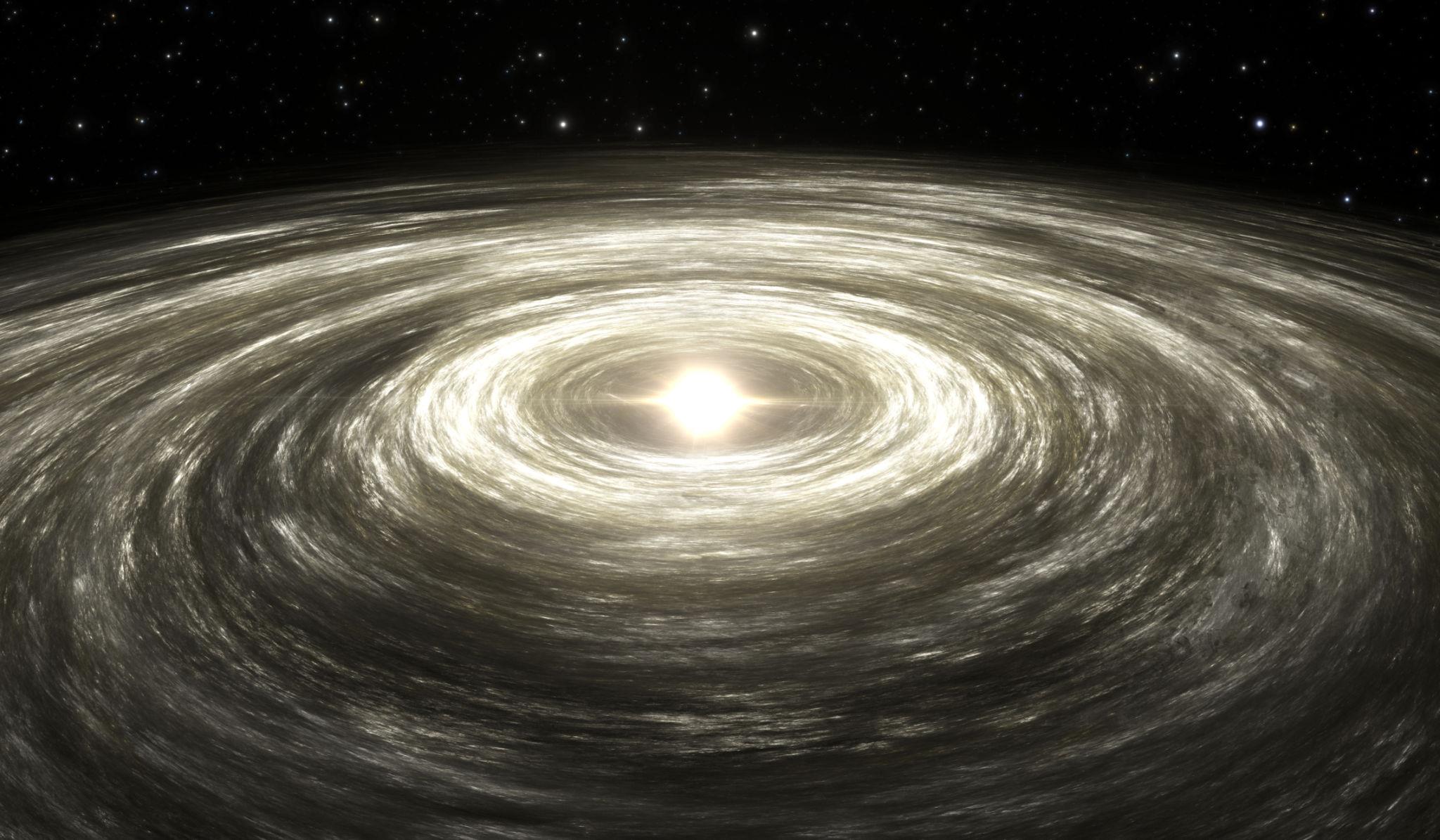
One potential explanation for the inverted arrangement is planetary migration. Gas giants may form in outer regions before gradually spiraling inward due to gravitational interaction with disk material.
If migration is more common than previously assumed, planet formation theory must increasingly emphasize dynamic processes rather than static zones of development.
Astrophysicist Lars Håkansson commented,
“The early life of a planetary system may be far more chaotic than our models initially suggested.”
Simulations show that migrating gas giants can displace smaller bodies, alter habitable zones, and reshape debris distribution patterns.
The Core Accretion Framework Revisited
For decades, core accretion has served as the dominant explanatory model within planet formation theory. In this framework, dust grains collide and gradually form planetesimals. Over millions of years, these bodies accumulate mass until they form planetary cores capable of attracting gas envelopes.
The Chilean discovery does not invalidate core accretion but introduces new complexity. If migration occurs early and extensively, formation sequences may vary widely across systems.
Researchers are now examining whether disk turbulence, magnetic interactions, or gravitational resonance played roles in shaping the observed structure.
Reexamining Archived Exoplanet Data
The 2026 findings have prompted a comprehensive review of existing exoplanet catalogs. Thousands of systems have been documented over the past two decades, and some previously categorized as anomalies may now warrant reconsideration.
Planet formation theory has historically aimed to identify universal rules. However, growing evidence suggests diversity may be the rule rather than the exception.
Dr. Hiro Tanaka of Tokyo’s Space Science Institute stated,
“Each discovery expands our perspective. Our models must reflect the extraordinary diversity we observe.”
This broader analytical effort may lead to classification updates and refined predictive modeling.
Implications for Habitability
Planetary positioning determines temperature zones and radiation exposure. A migrating gas giant could disrupt terrestrial planet formation or eject debris into inner orbits.
Adjustments to planet formation theory may influence how astronomers prioritize star systems in the search for habitable worlds.
Astrobiologists note that chaotic early evolution does not necessarily eliminate the possibility of life. In some cases, migration may even stabilize inner zones by clearing debris.
The Chile discovery therefore has implications not only for theoretical modeling but also for practical search strategies in astrobiology.
Technological Innovation Behind the Breakthrough
Chile’s observatories remain among the most advanced on Earth. Clear atmospheric conditions and cutting-edge instrumentation enabled detection of velocity shifts measured in meters per second.
Artificial intelligence algorithms processed extensive datasets to identify subtle irregularities.
Machine learning has become increasingly valuable in testing assumptions embedded within planet formation theory, accelerating anomaly detection and pattern recognition.
Future observatories, including space-based platforms, are expected to further enhance detection precision.
International Collaboration and Peer Oversight
The discovery reflects cooperation among research institutions across multiple continents. Shared data review ensured rigorous peer evaluation prior to publication.
Scientists emphasize that continued monitoring will determine long-term orbital stability.
The Chile discovery underscores the collaborative nature of modern astrophysics, where transparency and reproducibility remain foundational principles.
From Nebular Hypothesis to Modern Simulation
The roots of planet formation theory trace back to the 18th-century nebular hypothesis, proposed by Immanuel Kant and later refined by Pierre-Simon Laplace. Their concept suggested that planetary systems originate from rotating clouds of gas and dust collapsing under gravity.
Throughout the 20th century, advances in physics and computational modeling refined these early ideas into the core accretion model. The discovery of exoplanets in the 1990s introduced unexpected variations, including “hot Jupiters” orbiting extremely close to their stars.
The 2026 Chile discovery represents another milestone in the evolution of planet formation theory, illustrating how observation continually reshapes theoretical frameworks.

Economic and Educational Influence
Major discoveries often influence funding and research priorities. The Chile findings may encourage expanded investment in next-generation telescopes and simulation technology.
Universities are already incorporating discussion of the 2026 discovery into astrophysics coursework.
Students studying astronomy today witness firsthand how planet formation theory evolves with new data.
A Measured Scientific Response
Despite public excitement, researchers urge restraint. One system does not constitute a universal rule.
Dr. Martínez emphasized,
“Scientific progress comes from refinement. Evidence guides revision.”
Her remarks reflect a balanced consensus: adaptation, not abrupt overhaul.
Future Research Priorities
Long-term observation will assess whether gravitational interactions continue reshaping the system.
Spectroscopic atmospheric analysis may reveal chemical signatures that shed light on formation timing.
As additional systems are identified, planet formation theory will continue to evolve.
The next decade of astronomical research may determine whether the Chile discovery signals a broader structural pattern across the galaxy.
The 2026 Chile Turning Point in Cosmic Understanding
The February 14, 2026 findings signal an important moment in modern astrophysics, drawing global attention from the scientific community and research institutions alike. Experts describe the development as an invitation to refine existing models through careful analysis rather than abrupt revision.
Planet formation theory remains central to explaining how planetary systems emerge and evolve. The Chile discovery demonstrates that scientific frameworks are strengthened when they adapt to credible new evidence.
Astronomy has consistently shown that the universe defies simple explanations. From black holes to distant exoplanets, every breakthrough broadens human understanding and reshapes perspective.
As observational tools become more advanced and data collection grows increasingly precise, scientific interpretation will continue to evolve. The 2026 discovery underscores a lasting principle: the cosmos is dynamic, and our interpretations must remain flexible enough to evolve alongside new discoveries.