


Nuuk, Greenland — February 22, 2026 — According toParliament News, that Greenland’s leadership has formally declined a proposed deployment of a US Navy hospital ship, delivering a carefully worded response that underscores sovereignty, strategic awareness, and confidence in domestic healthcare capacity. The decision comes amid heightened international interest in Arctic affairs and renewed diplomatic engagement between Washington and Nuuk.
While officials expressed appreciation for the offer, they made clear that the current medical infrastructure does not require reinforcement from a US Navy hospital ship. The announcement has drawn global attention, not because of immediate operational consequences, but because of its symbolic and geopolitical resonance in an increasingly competitive Arctic environment.
Sovereignty and Strategic Signaling
Greenland operates as an autonomous territory within the Kingdom of Denmark, exercising control over domestic governance while participating in broader defense arrangements. The decision to decline a US Navy hospital ship reflects Nuuk’s determination to assert local authority in matters affecting its territory.
Political observers note that Arctic nations are particularly attentive to the symbolism associated with military vessels. Even when configured for humanitarian purposes, the arrival of a US Navy hospital ship carries strategic undertones. In a region where global powers are recalibrating priorities, optics matter.
Officials in Nuuk emphasized that the decision was not adversarial. Rather, it was framed as a reaffirmation of self governance and institutional capability. By declining the US Navy hospital ship, Greenland’s leadership sought to balance appreciation for international partnership with a clear statement of independence.
Healthcare Capacity and Domestic Assessment
Greenland’s healthcare system has evolved significantly in recent years. Investments in telemedicine, regional clinics, and coordinated emergency response systems have strengthened resilience across remote communities. Officials stated that after reviewing operational data, they concluded that a US Navy hospital ship was unnecessary under current conditions.
Medical administrators highlighted preparedness planning that includes cooperation with Denmark and neighboring territories. While acknowledging the advanced facilities aboard a US Navy hospital ship, authorities determined that no public health emergency justified its deployment.
The evaluation process, according to sources familiar with internal discussions, centered on measurable need rather than political calculation. This distinction is important in understanding the tone of the decision.
Arctic Geopolitics and Expanding Global Focus
The Arctic has emerged as a strategic focal point due to climate change, new maritime routes, and untapped natural resources. As ice patterns shift, shipping lanes are becoming more navigable, drawing commercial and military interest from major powers.
In this context, any deployment of a US Navy hospital ship would inevitably be interpreted within a broader geopolitical narrative. Security analysts caution that even humanitarian initiatives can influence perceptions of military positioning.
Greenland’s leaders appear mindful of these sensitivities. By declining the US Navy hospital ship, they signaled an intent to maintain a stable balance between cooperation and autonomy. The move reflects a broader regional trend toward emphasizing local governance amid expanding global attention.

Diplomatic Channels Remain Open
Despite the rejection, diplomatic relations between Greenland and the United States remain intact. The two maintain longstanding defense cooperation agreements, including established military installations.
Observers emphasize that declining a US Navy hospital ship does not equate to diminishing partnership. Instead, it illustrates the importance of consultation and alignment before implementing initiatives that involve military assets.
Officials reiterated that future cooperation in research, infrastructure, and climate resilience remains welcome. The message was calibrated to avoid escalation while reinforcing Greenland’s decision making authority.
Economic and Strategic Implications
From an economic standpoint, the decision carries limited immediate consequences. However, symbolism can influence investor perception and strategic forecasting. Analysts suggest that measured responses from Arctic governments contribute to long term stability.
Energy and shipping industries monitor Arctic developments closely. Stability in governance reassures commercial actors navigating evolving routes and regulatory frameworks.
Security planners likewise view the episode as a case study in modern diplomacy. The handling of the proposed US Navy hospital ship demonstrates how humanitarian gestures intersect with strategic geography.
Public Sentiment and National Identity
Within Greenland, public reaction has centered on national pride and institutional confidence. Many residents perceive the decision as an affirmation of local capability.
Community leaders have emphasized that declining the US Navy hospital ship was a reflection of responsible governance rather than resistance to international assistance. The narrative focuses on strength, preparedness, and self reliance.
Political analysts argue that such moments reinforce domestic cohesion. By articulating clear reasoning, leadership strengthens trust in public institutions.
One Statement That Defined the Moment
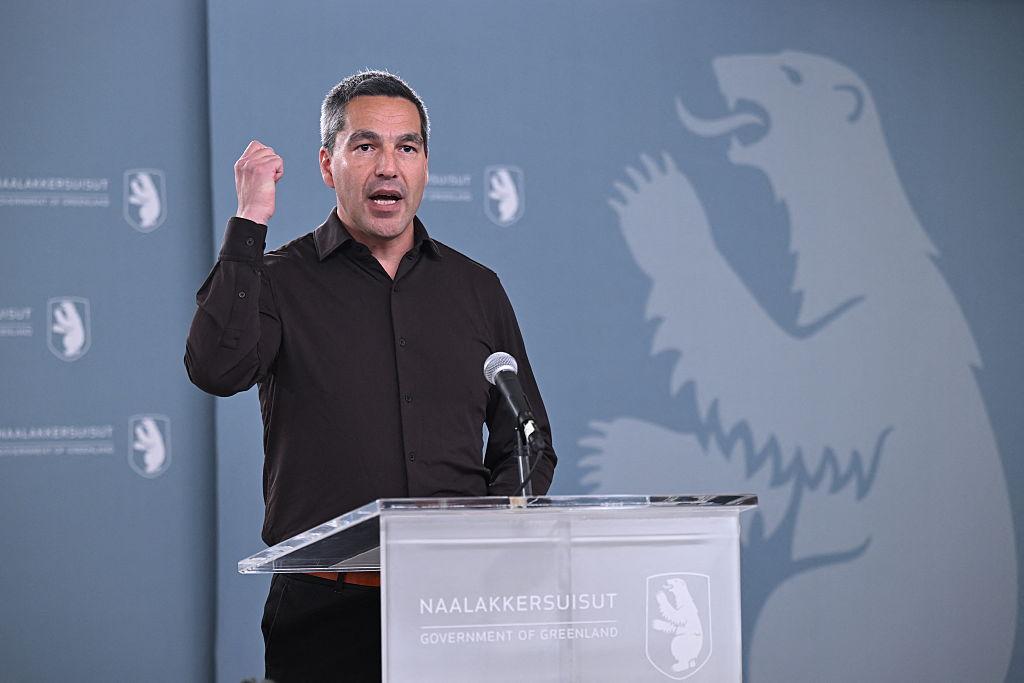
During the official announcement, Greenland’s prime minister addressed the matter directly:
“We value our partnerships, but our healthcare system is stable and we will continue to manage our responsibilities independently.”
The concise statement encapsulated the reasoning behind declining the US Navy hospital ship, balancing gratitude with determination.
International Reaction and Measured Responses
Global reaction has been largely restrained. Allied governments understand that sovereign authorities determine whether assistance is necessary. No immediate diplomatic friction has emerged.
Experts in international relations suggest that the episode reinforces a broader lesson: effective diplomacy requires listening as much as offering. Proposals involving assets such as a US Navy hospital ship must align with local assessments.
The measured tone on all sides has prevented the situation from escalating into controversy. Instead, it stands as a procedural disagreement handled with professionalism.

Historic Comparison
Previous instances of hospital ship deployments illustrate how context shapes reception. In the aftermath of natural disasters and pandemics, naval medical vessels have been welcomed as lifesaving resources. However, history also shows that in regions marked by strategic competition, the presence of military vessels, even humanitarian ones, can generate political debate.
Compared to those earlier cases, the current scenario in Greenland demonstrates a heightened sensitivity to sovereignty and symbolism. The deliberations surrounding the proposed US Navy hospital ship reflect lessons learned from past deployments where optics influenced diplomatic dynamics as much as operational need.
Arctic Governance in Transition
The Arctic is transitioning from peripheral frontier to central strategic arena. Infrastructure projects, mineral exploration, and climate adaptation initiatives are accelerating.
Greenland’s assertive stance signals a broader shift in how Arctic communities engage with global powers. The decision to decline a US Navy hospital ship aligns with a pattern of prioritizing local consultation and strategic clarity.
Experts anticipate that Arctic diplomacy will increasingly revolve around cooperative frameworks grounded in transparency and mutual respect.
Long Term Outlook for 2026 and Beyond
As 2026 progresses, the episode may be remembered less for operational impact and more for symbolic resonance. Greenland’s decision highlights the evolution of self governance in a strategically sensitive region.
Future proposals involving military or humanitarian assets will likely involve deeper consultation and clearer communication. The experience underscores that partnership thrives when grounded in respect for sovereignty.
Diplomacy in the Arctic will continue to evolve alongside environmental and economic transformation. The careful handling of the proposed US Navy hospital ship demonstrates that stability often depends on restraint as much as initiative.
Beyond Assistance A Defining Test of Arctic Autonomy
Ultimately, the decision reflects Greenland’s broader trajectory toward confident self determination. The Arctic’s growing global significance ensures continued attention from major powers, yet local voices increasingly define the terms of engagement.
By articulating its position clearly and calmly, Greenland has reinforced a principle that shapes modern diplomacy: sovereignty and partnership are not mutually exclusive, but they require balance. In that balance lies the future stability of the High North.