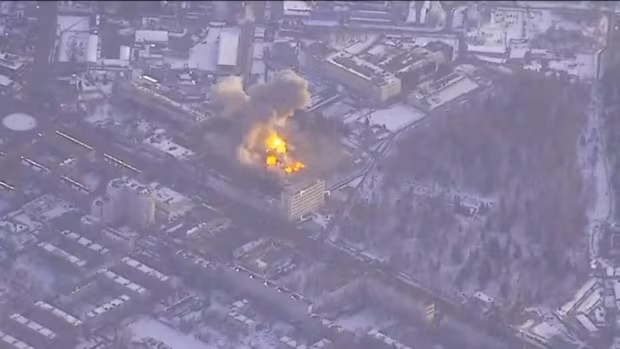
Headline: Russia Alleges UK Role in Deadly Ukraine Missile Attack
In a significant escalation of rhetoric, Russian authorities have accused the United Kingdom of assisting Ukraine in a missile strike that resulted in the deaths of six individuals in the eastern Ukrainian city of Kramatorsk on Tuesday, October 10, 2023. The accusation comes amid ongoing tensions in the region, as both Western and Russian-aligned forces continue to engage in conflict following the invasion of Ukraine. Moscow’s claims highlight a deepening rift between Russia and its Western adversaries, raising concerns about broader geopolitical implications.
Background of the Conflict
The war in Ukraine, which began in February 2022, has seen various international actors involved, with the UK being one of the staunchest supporters of Ukraine through military aid and intelligence sharing. The conflict has not only devastated Ukrainian cities and infrastructure but has also precipitated dire humanitarian crises, drawing global condemnation of Russia’s military actions.
Kramatorsk, located in the Donetsk region, has been a focal point in the ongoing war. Over the past few months, the city has suffered numerous missile strikes, leading to civilian casualties and destruction of property. As fighting continues, the Ukrainian military has attempted to bolster its defenses with assistance from Western nations, including the UK, which has provided advanced weaponry and training.
Russia’s Accusations
In a statement delivered by Russian Defense Minister Sergei Shoigu, the Kremlin asserted that British intelligence contributed to the planning and execution of the missile strike that targeted Kramatorsk. Shoigu claimed that NATO’s support for Ukraine essentially makes allied countries complicit in the conflict, thereby heightening the stakes not just for the involved nations but for the global community at large.
"Our intelligence has confirmed that the UK played a direct role in this latest act of aggression," Shoigu said during a press conference. "This reckless behavior from Britain will not go unanswered. As we engage our forces, the ramifications of this involvement will extend beyond the battlefield."
The Russian ministry further went on to promise a robust response to what they described as "terrorist actions enabled by a foreign power." This rhetoric paints a picture of an escalating tit-for-tat scenario that could have serious repercussions for diplomatic relations and ongoing negotiations for peace.
UK Response
British officials, however, have vehemently denied the allegations. The UK government has maintained its support for Ukraine as a sovereign nation defending its territory. A spokesperson for the British Ministry of Defense called the accusations "baseless and preposterous," asserting that the UK merely provides Ukraine with the tools necessary for its self-defense against unprovoked aggression.
"We stand firmly with the people of Ukraine and their right to defend themselves against Russian hostilities," the spokesperson stated. "These continued threats and accusations from Russia serve only to distract from the ongoing humanitarian crisis and war crimes their forces are committing in Ukraine."
International Implications
Russia’s accusations against the UK have implications that extend well beyond the borders of Ukraine. Analysts suggest that the situation could strain diplomatic ties between Russia and Western nations even further, complicating any potential peace talks and increasing the chances of further military escalation.
In recent months, numerous Western nations have ramped up their military assistance to Ukraine, including the provision of sophisticated missile systems and intelligence support. Russia’s claims could also lead to broader calls for accountability and caution among those supporting Ukraine, particularly if accusations of complicity in civilian casualties gain traction.
Humanitarian Consequences
The impact on civilians has been dire. The missile strike in Kramatorsk has compounded the humanitarian crisis that is already affecting millions in Ukraine. Reports indicate that hospitals are overwhelmed, and the civilian death toll continues to rise as attacks on urban centers become more frequent.
Humanitarian organizations working in Ukraine have reiterated the urgent need for assistance, highlighting the challenges faced by those displaced by warfare. "Our teams report significant loss of life and destruction," a spokesperson from a prominent NGO noted. "The situation is dire, and we call on all nations involved to prioritize the safety and well-being of civilians."
Ongoing Military Dynamics
As the accusations fly, the military dynamics on the ground are evolving. Ukraine continues to launch counter-offensives against Russian positions, while Russia’s military operations are reportedly intensifying. Both sides appear unwilling to back down, setting the stage for continued hostilities.
Military analysts indicate that Russia may increase its use of missile strikes in urban areas as a show of force, further raising the alarm for potential civilian casualties. This tactic may aim to assert dominance and sow fear among the Ukrainian populace while demonstrating Moscow’s capabilities on the international stage.
Looking Ahead
As the conflict in Ukraine drags on, the accusations from Russia regarding the UK’s involvement in missile strikes will likely continue to amplify tensions, making future negotiations increasingly precarious. The risk of escalation remains high, with potential ramifications that could reverberate globally.
In the coming weeks, international observers will be closely monitoring not only the military developments on the ground but also the political dialogue surrounding the conflict. The need for a ceasefire and diplomatic resolution is becoming more pressing, as both the human toll and geopolitical stakes continue to rise.
In summary, as Moscow accuses Britain of complicity in a missile strike that resulted in civilian casualties, the ongoing war in Ukraine serves as a reminder of the complexities and ramifications of international conflicts in the modern era. With both sides entrenched in their positions, the pathway to peace becomes obscured, leaving many to contemplate the future of the region and its inhabitants.