Headline: Sudan Drone Strikes School: 17 Lives Lost in Tragedy
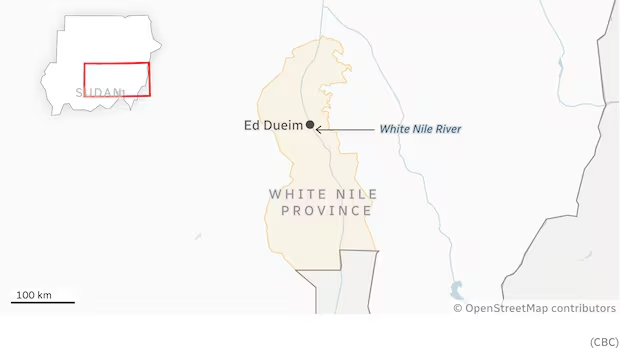
In a devastating incident on October 4, 2023, at least 17 people were killed when drone strikes targeted a school in Sudan’s southern region. The attack occurred in the town of El Geneina during ongoing conflicts that have plagued the nation for months, drawing widespread condemnation from international leaders and humanitarian organizations alike. Authorities believe the strike was aimed at a nearby military outpost but tragically hit the civilian educational institution instead, raising urgent concerns over the safety of non-combatants amidst escalating violence.
Escalating Conflict in Sudan
The situation in Sudan has become increasingly dire as armed conflicts have erupted in various regions following the power vacuum left by the ousting of former President Omar al-Bashir in 2019. The country has struggled with political instability and armed clashes between rival factions, leading to a humanitarian crisis that has driven millions from their homes. This latest drone strike highlights the alarming trend of civilian infrastructure being targeted, raising questions about the legal and ethical implications of such military actions in populated areas.
Eyewitness Accounts
Eyewitnesses in El Geneina reported hearing multiple explosions and described scenes of chaos as families and students attempted to flee the area. “It was horrifying. We could see smoke rising from the school, and people were running everywhere,” one local resident recounted. Many children were among the casualties, prompting an outpouring of grief and anger from the community, which has seen enough suffering due to the ongoing strife.
International Outrage
The strikes have triggered international outrage, with organizations like the United Nations and Amnesty International calling for an immediate investigation into the incident. “Attacking schools is a blatant violation of international law,” stated a representative from Amnesty International. “We call for accountability and emphasize the critical need to protect innocent civilians in conflict zones.” The international community has increasingly focused on Sudan’s humanitarian needs, urging the warring factions to prioritize peace talks rather than military action.
Humanitarian Impact
The drone strike is part of a larger pattern of violence affecting access to education and safety for children in Sudan. According to UNICEF, more than 9 million children in Sudan are in urgent need of humanitarian assistance, and incidents like this exacerbate an already critical situation. Many schools have been forced to close in conflict zones, depriving children of their right to education. The psychological scars from witnessing violence can have long-term effects on their development.
Calls for Ceasefire
As the death toll continues to rise, various humanitarian organizations are calling for an urgent ceasefire to facilitate the delivery of aid and safety for civilians. “We must halt the violence so that aid workers can reach the most vulnerable populations who are directly impacted by these conflicts,” said a spokesperson for the International Committee of the Red Cross (ICRC). Unimpeded access to humanitarian assistance is necessary to address urgent needs, including food, water, and medical supplies.
Political Reactions
Sudanese officials have faced intense pressure both domestically and internationally to take immediate action to protect civilians. Despite ongoing negotiations, the political landscape remains fragmented, making meaningful progress towards peace difficult. The government has vowed to investigate the incident, but skepticism remains among observers who fear that little will change without substantial international pressure.
Historical Context
The instability in Sudan is not a new phenomenon. For decades, the country has grappled with conflict, particularly in regions like Darfur and South Kordofan. Past genocides and human rights abuses have left deep scars, with communities often caught in the crossfire between government forces and armed rebel groups. The drone strike underscores a growing trend where modern military tactics are increasingly being used in civilian-populated areas, a strategy that poses severe risks to non-combatants.
Further Complications
The situation is further complicated by the involvement of foreign actors, as various nations have interests in Sudan’s resources and political landscape. Allegations of foreign backing for opposing factions have led to calls for a more robust international response to stabilize the region. Still, for many civilians, the conflict feels distant, overshadowed by the immediate threat of violence and insecurity in their daily lives.
The Way Forward
Amid the turmoil, local and international organizations are working to provide some semblance of normalcy for children affected by the violence. Efforts are underway to establish safe spaces for education and mental health support, although these initiatives face significant hurdles due to the chaotic security situation. “We believe that education is crucial for peace,” emphasized a representative from Save the Children. “We need to find ways to protect our children and give them hope for a better future.”
Conclusion
The tragic drone strike on a school in El Geneina serves as a sobering reminder of the toll that conflict continues to exact on innocent lives. As the world watches, the call for accountability, protection of civilians, and urgent humanitarian assistance grows louder. Without immediate action and concerted international efforts, the cycle of violence in Sudan threatens to continue, leaving more innocent lives shattered in its wake. The international community must unite to advocate for peace, uphold human rights, and ensure that the needs of the most vulnerable are prioritized in this deeply affected region.