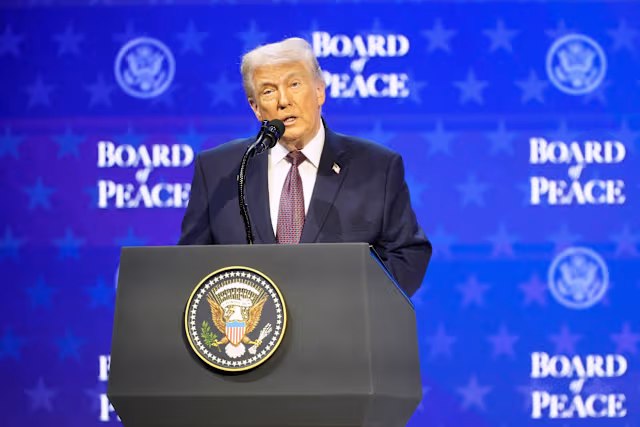
Kuwait / Washington, March 30, 2026 (Parliament Politics Magazine) US Iran tensions escalation has reached a critical turning point as a deadly attack on a Kuwait power and desalination facility coincides with former U.S. President Donald Trump’s controversial remarks about potentially taking control of Iran’s oil resources.
The convergence of military strikes and strategic rhetoric is amplifying fears of a broader Middle East conflict, with global energy markets and diplomatic channels under increasing strain.
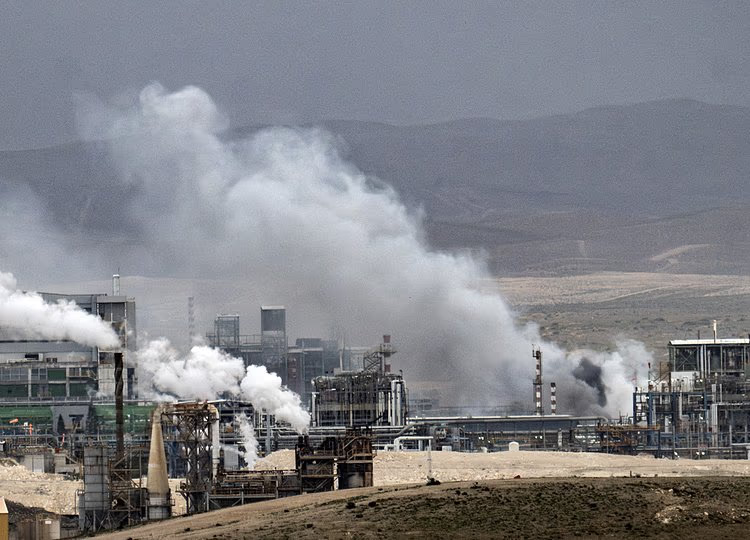
Recent reports confirm that an Iranian-linked strike damaged a key Kuwaiti facility and killed at least one worker, highlighting the growing risks to civilian infrastructure across the Gulf.
Kuwait Power and Desalination Site Hit
The attack on Kuwait’s critical infrastructure has intensified regional alarm. The targeted facility plays a vital role in supplying electricity and potable water, making it indispensable for both civilian life and economic stability.
Authorities confirmed “significant material damage” to the site, while emergency teams were rapidly deployed to maintain operations and prevent widespread disruption.
This incident is part of a broader pattern of retaliatory strikes across the region as the conflict continues to expand.
“Attacks on essential infrastructure risk triggering humanitarian consequences far beyond the battlefield,”
a regional analyst warned.
The strike reflects how US Iran tensions escalation is no longer confined to military targets but is now impacting critical civilian systems.
Trump’s Oil Comments Add Strategic Pressure
Adding to the crisis, Trump publicly suggested that the United States could “take the oil” in Iran, including potentially targeting key export hubs such as Kharg Island.
This statement has sparked intense global debate, with critics warning that such rhetoric could inflame tensions and push the region closer to direct confrontation.
Supporters, however, argue that controlling energy resources could shift the balance of power in favor of the United States and its allies.
The US Iran tensions escalation narrative is now increasingly tied to energy dominance, a factor that has historically shaped conflicts in the region.
Energy Markets Surge Amid Uncertainty
Global oil markets reacted immediately to the dual developments of the Kuwait attack and Trump’s remarks.
Oil prices surged above $116 per barrel, reflecting fears of supply disruption and instability across key shipping routes.
The Strait of Hormuz, a critical global oil chokepoint, remains under threat, with disruptions already affecting a significant portion of global energy flows.
Market analysts emphasize that even the perception of risk is enough to trigger volatility.
“Energy markets are pricing in fear, not just facts,”
one analyst noted.
Expanding Military Presence Across the Gulf
Military activity across the Middle East has intensified significantly. The United States has deployed thousands of additional troops, while regional allies have increased defensive readiness.
Reports indicate that the conflict, now entering its second month, has expanded across multiple fronts, including Iran, Kuwait, Lebanon, and maritime zones.
The US Iran tensions escalation is also drawing in additional actors, including Iran-backed groups, further complicating the situation.
Humanitarian Risks Grow as Conflict Widens
The attack on Kuwait underscores the humanitarian risks associated with the ongoing conflict.
Desalination plants are essential in Gulf countries, where freshwater resources are scarce. Any sustained disruption could have immediate consequences for millions of residents.
Human rights observers warn that continued escalation could lead to:
- Water shortages
- Power outages
- Civilian displacement
- Economic instability
The shift toward targeting infrastructure marks a dangerous phase in the conflict.
Diplomatic Efforts Struggle to Contain Crisis
Despite rising tensions, diplomatic efforts are ongoing. Multiple countries are attempting to broker ceasefire agreements and reduce hostilities.
However, mixed signals—such as simultaneous military escalation and negotiation efforts—are complicating the path toward resolution.
Iran has accused the United States of preparing for a ground invasion while publicly advocating for talks, further deepening mistrust.
The US Iran tensions escalation continues to challenge traditional diplomatic frameworks.
Historical Context of Energy-Driven Conflicts
Control over oil has long been a central factor in Middle Eastern geopolitics.
From past wars to modern conflicts, energy resources have shaped alliances, strategies, and outcomes. The current situation reflects this historical pattern, where oil is both a strategic asset and a potential trigger for conflict.
The renewed focus on Iran’s oil resources signals a return to energy-driven geopolitical strategies.
What Happens Next?
Analysts outline several potential scenarios:
- Further strikes on energy infrastructure
- Expansion of military operations
- Increased involvement from global powers
- Continued volatility in oil and financial markets
Each scenario carries significant implications for global stability.
The coming weeks will be critical in determining whether diplomatic efforts can prevent further escalation or whether the situation evolves into a broader conflict.
Crisis Deepens Across the Middle East
The convergence of military action and political rhetoric has pushed US Iran tensions escalation to a dangerous level.
The Kuwait infrastructure attack highlights the vulnerability of essential systems, while Trump’s comments on Iran’s oil introduce a new strategic dimension to the conflict.
With oil prices rising, military forces mobilizing, and humanitarian risks increasing, the situation remains highly volatile.
Global leaders now face mounting pressure to de-escalate tensions before the crisis expands further.