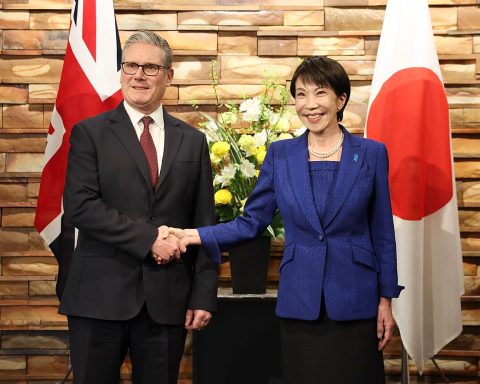

LONDON, June 14 (Parliament Politics Magazine) – Prime Minister Keir Starmer has officially signaled a major shift in British foreign policy, confirming his support for the United States’ diplomatic efforts to finalize a peace agreement with Iran.
The announcement follows a high-level phone conversation between the Prime Minister and President Donald Trump, marking a distinct change from months of British efforts to distance itself from Washington’s military strategy in the region.
Diplomatic Realignment
The British government confirmed that Prime Minister Starmer and President Trump discussed the progress of negotiations aimed at ending the ongoing conflict. According to an official statement from Downing Street, the Prime Minister welcomed the recent developments and expressed the United Kingdom’s full readiness to support the implementation of any final agreement alongside international partners. This move concludes a period during which London had notably refrained from participating in US-led offensive strikes or supporting the naval blockade of the Strait of Hormuz.
The change in tone reflects a broader attempt to synchronize international efforts to stabilize the Middle East. Prime Minister Starmer stressed the necessity for any agreement to deliver a durable and lasting peace, moving away from previous positions that prioritized a hands-off approach. The Downing Street statement highlighted the importance of this shift, as the UK seeks to ensure that the transition from conflict to diplomatic resolution is handled in coordination with its primary transatlantic ally.
Restoring Global Navigation
A primary driver behind this renewed alignment is the urgent need to stabilize the global economy. During their call, both leaders prioritized the immediate reopening of the Strait of Hormuz to maritime traffic. The disruption of this vital trade artery has been a significant factor in rising global inflationary pressures, a concern that both London and Washington are eager to address.
The economic fallout from the conflict has impacted energy markets and supply chains worldwide, creating a shared incentive for a swift resolution. By backing the US push to secure freedom of navigation, the British government aims to alleviate these strains and restore stability to global shipping routes. This focus on the maritime trade route serves as the cornerstone of the diplomatic effort, as both nations look to move past the hostilities that have characterized the last several months.
Terms of the Peace Framework
The proposed resolution, widely referred to in diplomatic circles as the Islamabad Memorandum of Understanding, is currently in its final stages of negotiation. While President Trump initially expressed hopes for a formal signing on June 14, 2026, Iranian officials have indicated that lingering technical discussions may delay the finalization by a few days. The framework is designed to end hostilities across all fronts, including engagements in Lebanon, and sets the stage for a comprehensive regional security arrangement.
The memorandum includes a structured approach to addressing core concerns, such as Iran’s nuclear program and the lifting of economic sanctions. Under the proposed terms, the initial phase focuses on a total cessation of military conflict and the unblocking of the Strait of Hormuz. A subsequent phase, projected to span a 60-day window, will involve detailed technical negotiations regarding the management of Iran’s nuclear material in exchange for phased sanctions relief and the release of frozen assets.
“We will work with our international partners to seize this moment and achieve a long-term diplomatic settlement,” Prime Minister Starmer stated, underscoring the urgency of the current diplomatic window.
Central to these negotiations is the unique diplomatic infrastructure provided by Pakistan. Because the United States and Iran have lacked formal diplomatic relations since 1980, Pakistan has historically acted as Iran’s “Protecting Power” in Washington. This arrangement allows the two nations to communicate securely through an Iranian Interests Section embedded within the Pakistani Embassy. This long-standing, albeit rarely highlighted, diplomatic channel has proved essential in facilitating the current peace discussions, allowing for indirect and now increasingly direct engagement between Washington and Tehran throughout the 2026 crisis.