
Our 16-year-olds are to be given the vote. This is at a time when our politics has never been so febrile and unpredictable. There is therefore a burning question as to whether our young people are equipped with the knowledge that they need to use their vote in an informed way, or even to want to use their vote at all.
The good news is that citizenship education is already part of the National Curriculum at key stages 3 and 4. This says pupils ‘should’ be taught about democratic government, the key elements of the UK constitution, human rights, financial matters like budgeting, savings and pensions, and a free press etc.
The bad news is that many pupils are either not being taught these things at all or there is insufficient attention given to their importance. A recent study by London Metropolitan University of 14-and-15-year-olds in 120 schools found that more than a quarter had ‘no real idea’ of what the political parties stand for or how our electoral system works, and Professor Becky Francis’s review of the National Curriculum indicated a less than 5% take-up of Citizenship Studies at GCSE.
All this shows that little has changed from when the House of Lords Liaison Committee found in 2022 that the teaching of citizenship had been badly neglected and there was a lack of trained teachers.
The teaching of citizenship is therefore not working and yet it needs to work, more than ever in the volatile times we live in. There is evidence from recent surveys that our young people feel deeply disconnected with the political establishment and some are even disillusioned with democracy itself, feeling that politicians largely ignore their needs. Perhaps this explains why only 37% of 18–24-year-olds voted in the last General Election. They feel their vote won’t change anything, and who can blame them when we learn that politicians have allowed up to a million of 16-24-year-olds to be out of education, employment or training (‘NEETs’).
In order to help change this there needs to be a fresh injection of focus on, and resources put into, citizenship education. As Becky Francis has recommended, and the Government have accepted, it needs to be part of the curriculum at key stages 1 and 2 as well as key stages 3 and 4.
In addition, there should be more teachers trained in citizenship issues who can teach the subject in an impartial and engaging way in every school. As David Blunkett graphically put it in a previous debate on citizenship education, ‘…we must get rid of the Catch 22 which is that if you do not teach children citizenship, they will not go forward through the GCSE, and if they don’t do that there will be less government support to train more teachers – and round we go’ (Hansard 18th October 2024, Clmn 332).
In order for our democracy to be enhanced by giving the vote to 16-year-olds, they need to be informed about, and thereby enthused by, the legal and political issues which dominate our headlines from day-to-day. Only then will they want to participate and become influencers themselves in whatever capacity.
And perhaps more importantly, unless children in schools learn about the values at the heart of of British citizenship, how on earth are they to live alongside their neighbours with different ideas, cultures, religions and beliefs? It is about passing on a sense of identity of who we are as a nation, encouraging all ages to be responsible members of society, in line with a curriculum which, in the inspiring words of the Education Act 2002, ‘promotes the spiritual, moral and physical development of pupils’.
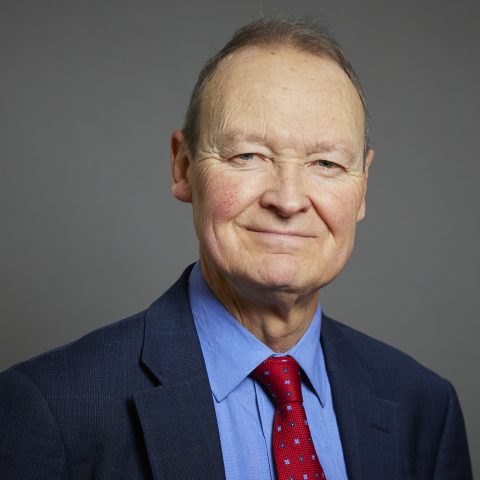
It is for all these reasons that I have taken up the mantle of the late Lord Harries of Pentregarth, who tried unsuccessfully on several occasions to elevate the importance of fundamental British values in our education system. My Private Member’s Bill seeks to shine a spotlight on the urgency of giving our young people the information they themselves have said they desperately need about political and constitutional issues.
It would mandate citizenship education from primary school onwards, including a wide range of subjects, including financial and media literacy. The latter are fundamental to enable young people to assess what managing money is all about, and how to distinguish truth from falsehood in the torrent of daily news, including social media.
It would require a teacher trained in citizenship in every school. We know the Government have committed to recruit an additional 6,500 teachers from the money received from the imposition of VAT on private schools, in connection with which the Minister of State at the Department of Education, Baroness Smith of Malvern said that the Government will ‘ensure that teachers are equipped to deliver what we believe to be important in schools…citizenship is certainly one of those areas’ (Hansard 18th October 2024, Clmn 354).
In conclusion, as a former Government lawyer for 34 years, I know only too well the fate of most Private Member’s Bills. But I hope the Government will recognise that this is a PMB which is highly topical, commands much cross-party support and accords with stated Government policy thereby saving the legislative time the Government would themselves need to achieve the same thing.
Has citizenship education ever been so important?
7 mins read
Latest from UK Parliament
The reintroduction of the Terminally Ill Adults (End of Life) Bill has sparked a profound and
In the year 2000, just over 2% of young people (14-24) across the UK presented to

When people think about higher education, they often picture leafy campuses, freshers’ weeks and teenagers heading

18 years ago, I was diagnosed with breast cancer. My diagnosis was delayed after I was

A landmark study, part of a PHD, exposes a “systemic underestimation” of the importance of marriage