
Last week I led a Westminster Hall debate on community hospitals, in response to widespread concern over dwindling services at Cirencester Hospital.
Last year, according to the Royal College of Emergency Medicine, around 15,860 patients died in NHS A&E departments in England while waiting for care that could have saved them – roughly 1,300 people every month, nearly ten times the figure recorded in 2015.
In rural areas, the situation is worse still. Ambulances take longer to arrive, the journey to A&E is longer, and if the local community hospital has had its services wound down, there may be no safety net to catch someone before a crisis becomes a catastrophe.
Local hospitals hold a special place in the hearts and history of communities. A constituent described a cardiac arrest at Cirencester handled with “absolute skill and excellence” by a team of senior staff working together to stabilise the patient before transfer.
A former GP who began practising in Cirencester in 1986 told me about a child who waited 20 hours in Cheltenham for an appendix operation that could previously have been done in Cirencester – picture a family in an hospital corridor at 2am, scared and far from home, because the local service had gone.
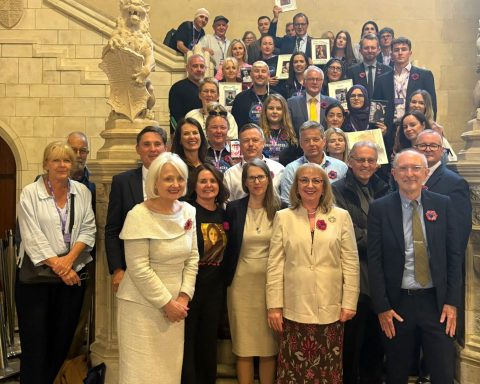
Within weeks of launching our Cirencester Hospital petition, well over 3,000 people had signed it. Last week we handed it in at Downing Street.
The Government knows care needs to move closer to communities. The NHS 10-year plan commits to 250 Neighbourhood Health Centres across England. A further £237 million has just been announced to expand Community Diagnostic Centres. The ambition is right. But we already have medical facilities embedded in communities, built over generations, trusted by the people who use them. They are called community hospitals. Why are we spending money building new ones while quietly running down what we already have?
Part of the answer lies in the “centres of excellence” model. NHS Gloucestershire has argued that concentrating specialist teams on fewer sites reduces delays and last-minute cancellations caused by resources being spread across multiple sites. There is logic to that for genuinely complex procedures. No one is arguing that a community hospital in Cirencester should be doing brain surgery.
But the argument is being applied far too broadly. NHS England’s own high-volume, low-complexity surgical programme focuses on routine procedures – cataract surgeries, hip replacements, hernia repairs – which made up 50 to 60 per cent of waiting list activity.
These are exactly what a well-resourced community hospital can and should deliver. The choice between centres of excellence and community care is a false one. We need both: specialist centres for complex cases, and local hospitals for the routine, the urgent and the everyday. What we have instead, in too many places, is the language of excellence being used to justify managed decline.
At Cirencester, services have been eroded one by one: first A&E, then acute wards, paediatrics, maternity and blood services. In 2025, the day surgery unit was paused as part of a centres of excellence trial. Given recent history, it’s not surprising that constituents are deeply sceptical that this trial closure will ever be reversed. Without transparent criteria for deciding on reinstatement vs permanent closure, we fear that the logic will be: “you’ve managed without the unit for six months, so you can carry on managing without.” Colleagues across the House told almost identical stories: services suspended as trials, reassurances given, closures becoming permanent.
A Nuffield Trust report from September 2025 is clear: the ambition to shift care from hospital to community is not new. Successive Governments have promised it and most have fallen short. More than 1.1 million people are currently waiting for community care in England, and rural areas pay the highest price when the gap between ambition and delivery opens up.
My constituents are not asking for world-beating medicine on their doorstep. They just want a system that works – that can see an elderly patient with chest pain, keep a new mother and her baby close to home, or carry out a routine operation without a 25-mile journey on rural roads.
The NHS was founded on the promise that good healthcare would be available to everyone, wherever they live. That promise must be kept.
Why community hospitals must be at the heart of neighbourhood health

5 mins read


Latest from UK Parliament
I recently had the privilege of opening a Westminster Hall debate responding to a petition calling

Across Cheshire, one issue has united residents, farmers, landowners and rural communities: the proposed Peak Cluster

The issue of the condition of roads across Mansfield is raised with me frequently. Since becoming

Labour have started to tackle the toll of abuse against customer-facing workers, but we must do more
It is no secret that many young people’s first jobs are in the customer service industry.

High streets are more than places to shop. They are the beating heart of our towns