
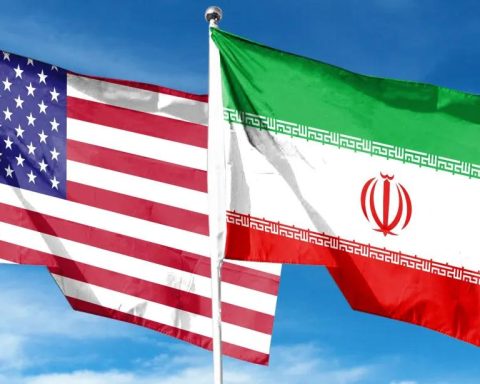
The first round of high-level negotiations aimed at securing a permanent end to the conflict between the United States and Iran concluded early on Monday, June 22, 2026, at the secluded Bürgenstock resort in Switzerland.
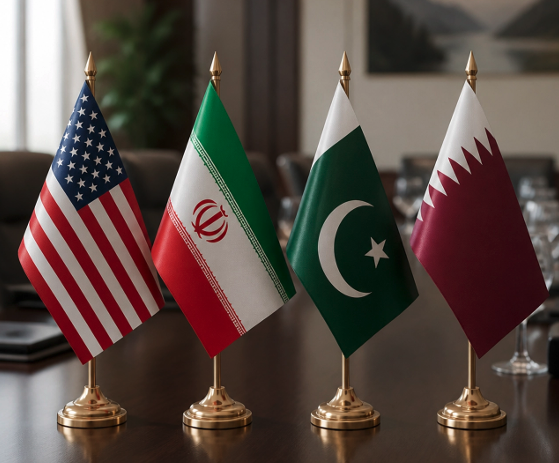
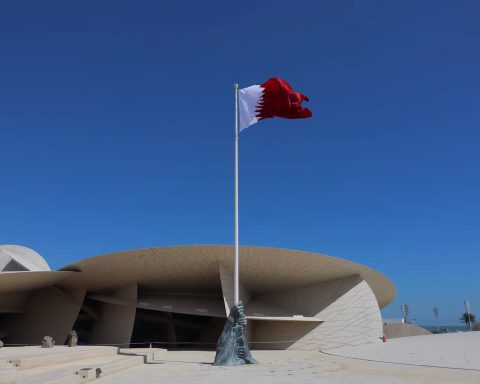
Amidst a backdrop of intense regional volatility and significant global economic stakes, the diplomatic proceedings were marked by the pivotal intervention of Pakistan and Qatar, who have emerged as the primary architects of a new 60-day roadmap for peace.
As Hezbollah and Israel continue to exchange fire in Lebanon, the talks at Lake Lucerne represent the most substantive attempt to date to flesh out the details of the memorandum of understanding signed last week by US President Donald Trump and Iranian President Masoud Pezeshkian.
Led by US Vice President JD Vance and a senior Iranian delegation featuring Foreign Minister Abbas Araghchi and parliamentary speaker Mohammad Bagher Qalibaf, the summit successfully established a framework for de-escalation despite an initially fraught atmosphere.
The breakthrough was formalised in a joint statement issued by Pakistan’s Prime Minister Shehbaz Sharif and Qatar’s Prime Minister Sheikh Mohammed bin Abdulrahman bin Jassim al-Thani, who were joined in the mediation efforts by Pakistan’s army chief, Field Marshal Asim Munir.
According to numerous reports, “Mediators Pakistan and Qatar said the parties had agreed to a roadmap towards a final deal on ending their war in 60 days, despite a tense start as Tehran again shut the strait and US President Donald Trump threatened to resume attacks on Iran.”
This timeline is central to the implementation of the peace process, with the High Level Committee set up by Tehran and Washington having now “agreed upon a road map towards reaching a final deal within 60 days, laying the foundation for the immediate commencement of further technical talks.”
The negotiations faced an immediate crisis when President Trump issued a stark warning via social media, stating that “Iran must immediately stop their highly paid PROXIES in Lebanon from causing trouble. If they don’t, we’ll hit Iran very hard again, just like we did last week, only harder!!!”
These comments, which included a threat to “take over Iran, in comments relayed by a Fox correspondent,” led to a temporary walkout by the Iranian delegation. Iranian negotiator Mohammad Bagher Qalibaf responded sharply on X, noting that “They would do better to be careful about their statements. Our armed forces are prepared to respond to them in a different manner. They may keep talking, it is we who act.”
Despite the sabre-rattling, the diplomatic channel remained functional. Arab News reported that “Mediators apparently prevailed over the two parties to continue with the talks,” ensuring that the delegations remained at the venue to trade messages through the Pakistani and Qatari intermediaries.
A central pillar of the agreement reached at Bürgenstock is the management of regional flashpoints, particularly the on going conflict in Lebanon. Al Jazeera reported that the US and Iran “agreed on the creation of a de-confliction cell, between the parties, the Lebanese Republic and facilitated by the Mediators, to ensure the adherence of the termination of military operations in Lebanon.”
This mechanism aims to provide a reliable monitoring system for a ceasefire that has remained elusive. Iranian Foreign Minister Abbas Araghchi later acknowledged the progress on social media, stating that “Tireless Pakistani and Qatari mediation has delivered major progress to end Lebanon War.”
Simultaneously, the parties addressed the critical maritime security of the Strait of Hormuz. A new “communication line” was established to “avoid incidents and miscommunication with the aim of safe passage for commercial vessels,” providing a necessary guarantee for global energy markets after recent blockades.
The economic impact of these diplomatic strides was felt immediately in the global markets. Oil prices fell as the first round concluded, with Brent crude dropping $1.68, or 2.09 per cent, to $78.89 per barrel.
A US diplomat involved in the talks observed: “The Iranians never left and are still here meeting and negotiating deep into the night. We’ve talked about the Strait, Lebanon, nuclear issues, and details of implementing the MOU, among other topics.”
As the delegations move into a week of technical-level discussions, the role of the mediators remains paramount.
The joint Pakistan-Qatar statement emphasised that “The mediating parties will continue to do their utmost to ensure that the negotiations continue to be conducted in a constructive atmosphere with the aim of reaching a final deal.”
Vice President JD Vance, reflecting on the arduous nature of the process, noted that “these things are always a little bit messy,” yet he maintained an optimistic tone regarding the long-term potential of the summit. As the talks began, Vance asked the gathered officials, “The question before us now is how much more can we accomplish together? Can we turn over a new leaf?” With the 60-day roadmap now established, the international community watches to see if the painstaking and expert diplomacy of Pakistan and Qatar can deliver a lasting regional peace, which the whole world desperately wants and needs.
Pakistan and Qatar steer US and Iran toward major peace deal

6 mins read
Latest from World
LONDON, United Kingdom, June 22 (Parliament Politics Magazine) – Keir Starmer resignation has become one of the
LONDON, United Kingdom, June 22 (Parliament Politics Magazine) – Wes Streeting statement has become one of the
LONDON, United Kingdom, June 21 (Parliament Politics Magazine) – UK Brexit news is once again dominating political
LONDON, June 21 (Parliament Politics Magazine) – High-level technical talks concerning a US and Iran peace
BÜRGENSTOCK, Switzerland, June 21 (Parliament Politics Magazine) – High-level diplomatic delegations from the United States and