
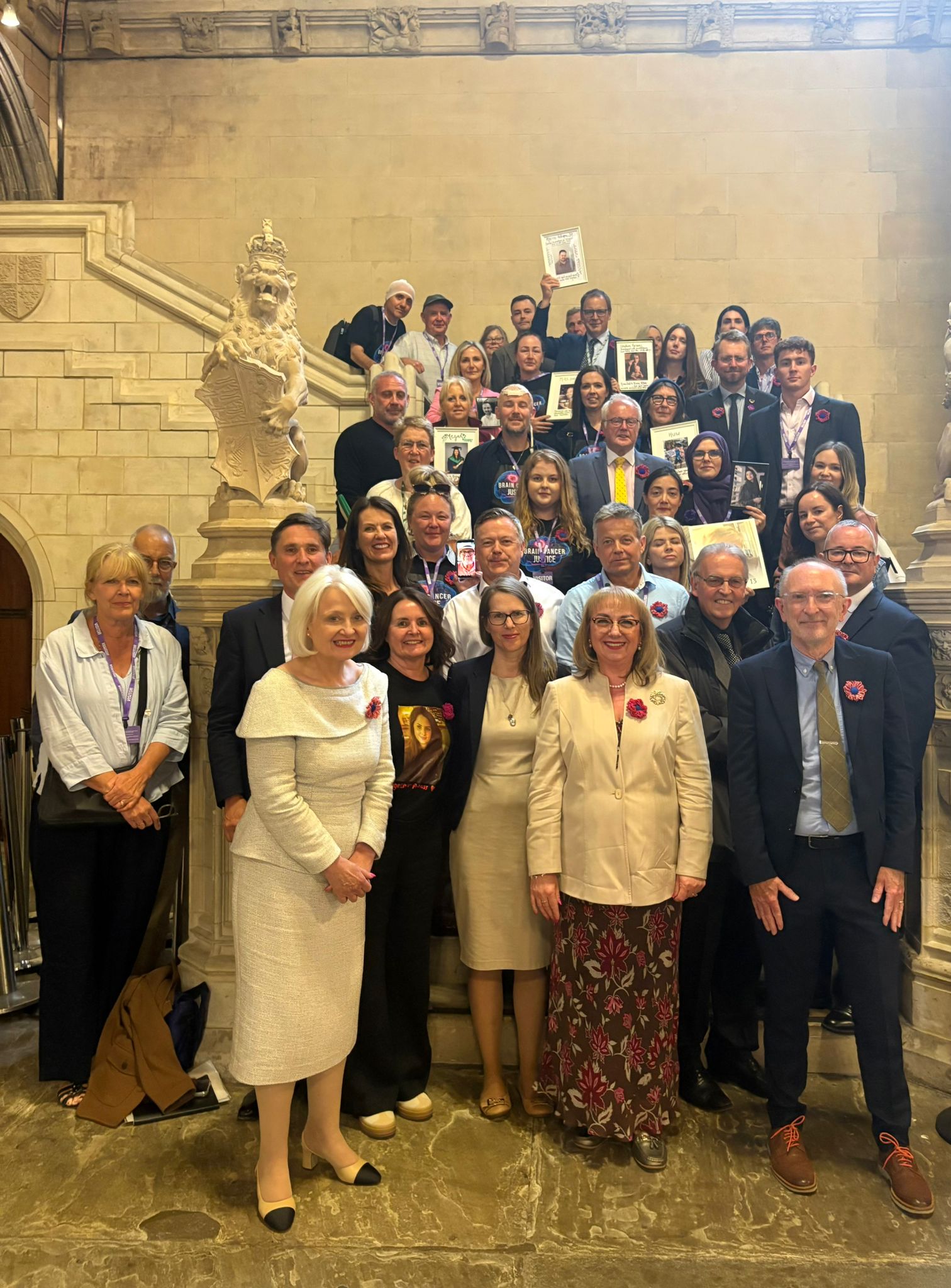
I recently had the privilege of opening a Westminster Hall debate responding to a petition calling for greater investment in brain cancer research. The petition was created by Brain Cancer Justice – not a traditional charity, but a group of patients and families united by a determination to confront one of the UK’s most neglected cancers.
Leading this campaign are Sarah Bainbridge and Georgie Maynard. They each have lived experience of this disease and are calling for urgent action: increased funding to accelerate discoveries and clinical trials; improved access to whole-genome sequencing; and the protection of the right of patients to try innovative treatment options.
The scale of the crisis is clear. According to The Brain Tumour Charity, brain tumours receive just 3.2% of national cancer research funding. The consequences are devastating. Around 13,000 people in the UK are diagnosed each year, yet the five-year survival rate is only 12.9%. That equates 5,400 lives lost annually, or 15 people a day.
The economic impact is also severe. New diagnosis in 2025 alone created an estimated £18.7 billion burden to the UK, driven by low survival, long-term disability, reduced earnings, care needs, and premature deaths.
Behind each statistic is a family, navigating every available treatment with great uncertainty, all too often turning to crowdfunding to travel overseas in search of care. Many of the Brain Cancer Justice campaigners I met with described this exact experience. Their frustration was unmistakable.
Successive Governments have promised action but failed to deliver it. In 2018, two years after the last major petition on this issue was debated, the Government pledged £40 million for research. By 2024, only £15 million had actually been spent.
The Government has recently announced welcome initiatives, including those in the Rare Cancers Act 2026, the National Cancer Plan, and the Brain Tumour Research Consortium – supported by £13.7 million to unite 48 hospitals, universities, cancer centres, and charities in partnership with patients.
But much of this simply disperses the remainder of the existing funding pledged back in 2018. In reality, no new funding has been committed.
Meanwhile, the crisis deepens. Workforce shortages limit access to care, and system failures prevent the limited funding that does exist from reaching patients in a meaningful way.
Whole-genome sequencing is still not routinely available at diagnosis. Access to clinical trials remains severely restricted. Clinicians continue to raise concerns about the collection, storage, and use of tumour tissue, despite its essential role in research and innovation.
New funding commitments are essential to address these problems. Investment would enable more clinical trials, better patient recruitment, and improved access to innovation. Between 2023 and 2024, the Government funded just 26% of brain tumour research, compared with 74% funded by charities. That imbalance is unsustainable. Government must increase its contribution and ring-fence funding specifically for brain cancer research.
But funding alone will not solve the scale of the crisis. The wider research and innovation environment must be reformed. Stronger collaboration between institutions is needed to overcome the translational barriers that prevent early discoveries from progressing.
Improving patient awareness is also vital. Many patients do not realise they must consent for their tumours to be used in advanced diagnostics and research. Every eligible patient should have proactive conversations with their clinical team about research opportunities. Participation is essential to attracting investment.
We must also strengthen protections for patients who wish to pursue innovative treatment when standard care has been exhausted. This could include legally enshrining a ‘right to try’, as Brain Cancer Justice advocates.
All of this depends on one further requirement: strong national leadership. At present, no single body within Government, NHS England, or the wider health system holds clear responsibility for brain cancer outcomes. When responsibility is spread everywhere, accountability exists nowhere. Patients deserve to know who is responsible for delivering change.
Reflecting on last Monday’s debate, it is clear there is appetite for action in Parliament. Thirty-five Members from across parties attended (even though it was a 1-line whip) and the contributions were powerful. The recognition is there. What must now follow is delivery.
Through decisive action, we can turn terminal into treatable.
We must turn terminal into treatable for brain tumour patients

5 mins read

Latest from UK Parliament

Last week I led a Westminster Hall debate on community hospitals, in response to widespread concern

Across Cheshire, one issue has united residents, farmers, landowners and rural communities: the proposed Peak Cluster

The issue of the condition of roads across Mansfield is raised with me frequently. Since becoming

Labour have started to tackle the toll of abuse against customer-facing workers, but we must do more
It is no secret that many young people’s first jobs are in the customer service industry.

High streets are more than places to shop. They are the beating heart of our towns