
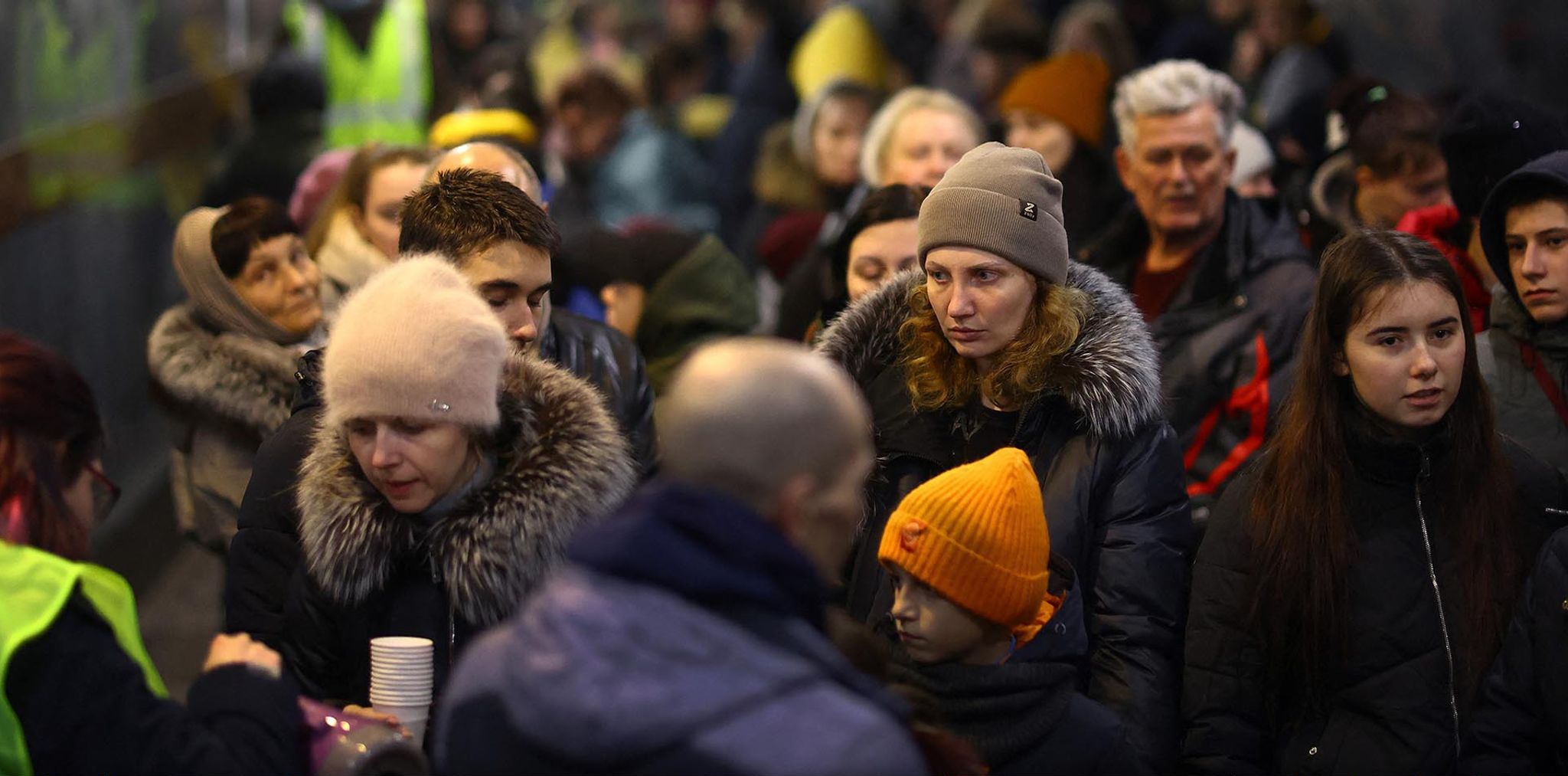
Displacement does not begin when someone crosses a border; it begins when home is no longer safe.
Before people become refugees, asylum seekers or internally displaced persons, they first experience something much more fundamental: the loss of home itself. Conflict, disaster, persecution, violence and climate shocks strip people of the safety, stability, dignity and community that home provides. Yet too often, global conversations on displacement begin at the point of movement, rather than at the point of loss.
This distinction matters hugely because it shapes how we respond. If displacement is only ever seen as migration or border management, solutions will only ever focus on movement. However, if displacement is understood as the loss of home, it becomes clear that we are also dealing with a housing crisis at its core.
Habitat for Humanity’s Global Housing Continuum framework helps us see this more clearly. It illustrates that housing is not a single end state, but a spectrum of conditions and pathways. Typically, people move between homelessness, emergency shelter, transitional arrangements, informal housing and, ultimately, towards safer, more stable and adequate homes. But displacement disrupts this continuum, often pushing people backwards along it for years, sometimes even generations.
This is exactly why housing must sit at the centre of how we understand displacement, not at the margins of it.
When your home is no longer safe, the impacts are felt far beyond physical shelter. Home is more than four walls and a roof; it is where we feel safe, where we keep our memories, raise our families, connect with our communities and plan for the future. When that sanctuary and foundation is lost, the effects ripple through every part of life.
Despite this, the global response to displacement is still largely structured around short-term emergency shelter. Humanitarian assistance is essential and lifesaving, but it is not enough on its own because increasingly, displacement is protracted. People remain in temporary or inadequate conditions for years, unable to move forward because the systems around them are not designed to support a pathway out of crisis. As a result, they are forced into deeper inequality, unable to build a foundation on which to rebuild their life.
Housing is not only a humanitarian issue, it is also a development challenge, and although it sits at the intersection of both, policy and financing systems continue to treat them separately. While humanitarian responses focus on immediate shelter, development actors often view housing as something for the future. Meanwhile, for displaced people, there is no such strict separation – the only thing that is constant is the absence of access to safe, stable housing. Without this very basic human right being met, children’s education is disrupted, health outcomes deteriorate, livelihoods remain fragile and protection risks increase. What begins as a crisis event becomes a long-term condition of instability.
There are, however, signs of change, with this year’s World Urban Forum and the FCDO’s Global Partnerships Conference highlighting housing as a vital issue. Both events recognised that no single actor can address these challenges alone, and that cross sector partnerships will be instrumental in addressing the multifaceted issues those who are displaced face. While this is a positive shift, an important question remains: do these partnerships reflect how vulnerability is actually experienced on the ground?
This question matters because for most displaced people, vulnerability is not divided into sectors but rather experienced through the condition of their home and their ability to secure safety, stability and dignity.
The UK’s upcoming G20 and G7 Presidencies present a rare, critical opportunity to reframe how displacement is understood within global policy. These moments can help elevate housing as a central pillar of climate, humanitarian and development agendas, break down the silos and encourage integrated approaches that makes maximum impact on the ground for communities.
If displacement begins with the loss of home, then recovery must begin with rebuilding it – not treating it as far-off goal. It is the foundation on which recovery, resilience and inclusion depend, and so on this World Refugee Day, we must broaden the conversation to include housing and shelter. Alongside protection, humanitarian assistance and migration policy, we need to place housing at the centre of how we understand and respond to displacement, because without it, our response will remain incomplete.
World Refugee Day: Why Displacement Begins with the Loss of a Home
5 mins read
Latest from Opinion

Eight years ago Pret A Manger signed up to something called the Better Chicken Commitment. The

Boris Johnson says falling birth rates are not a disaster. It is an attractive argument. Calm,
How coercion, secrecy and abortion can be used to conceal exploitation The crimes of Jeffrey Epstein

I have always considered myself one of the good ones. In the quiet, ongoing battle against

On the 24th October 2023 we lost our 17 year old son Mac, he took his