
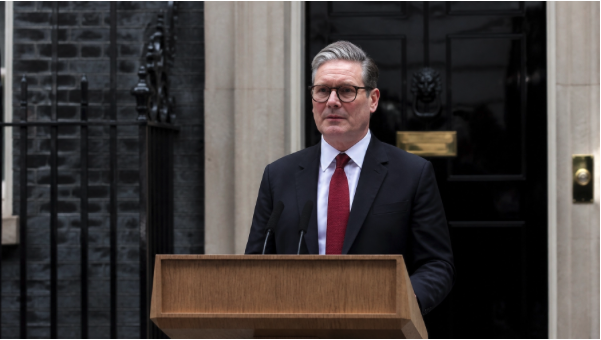
In a moment of profound political significance, a teary Sir Keir Starmer stood before the cameras outside 10 Downing Street this morning to announce his resignation as Prime Minister and leader of the Labour Party.
The statement, delivered with a somber tone, marks the conclusion of a premiership that lasted just under two years, a period defined by immense initial hope and a thumping majority, but ended in humiliation, division and failure.
Having spent the preceding weekend at Chequers reflecting on his future with his family, Starmer returned to the capital to deliver the news that many in Westminster had begun to view as inevitable.
Standing on the steps where he first promised a decade of national renewal, he reflected on the weight of his office, stating that “every decision I have taken has been about putting the country I love first.”
The resignation follows a period of intense pressure within the Labour ranks, accelerated significantly by the events of the previous week. It comes just days after Andy Burnham’s landslide victory in the Makerfield by-election, a result that seemed to galvanise opposition to Sir Keir trying to cling on.
Sir Keir addressed the internal discord directly, acknowledging the shifting tides of support among his own MPs. “The question my party is asking now is whether I am best placed to lead us into the next general election,” he told the assembled press. “I have heard the answer of my parliamentary party to that question, and I accept that answer with good grace.”
This departure highlights a period of extraordinary volatility in British governance. As noted in The Guardian’s opening analysis of the day’s events: “Tomorrow is the 10th anniversary of the referendum to leave the EU… After Cameron was forced out by the result of his own referendum, another three Tory PMs were forced out by their own MPs (Theresa May, Boris Johnson and Liz Truss) and another was forced out by the electorate (Rishi Sunak). Keir Starmer has been PM for less than two years, but he is about to become the sixth PM forced out within a decade, being replaced almost certainly by Andy Burnham.”
This rapid turnover of heads of government is becoming a very worrying feature of the post-Brexit landscape, raising questions about the stability of the UK’s executive branch.
Nick Eardley, the BBC’s Political Correspondent, observed the irony of the situation, noting that “there is no doubt the victory he oversaw at the general election was a massive achievement. That’s why it’s so remarkable that two years on, the PM is on the way out.”
Starmer took office in July 2024 following a landslide general election victory that ended fourteen years of Conservative rule. His departure now stands in stark contrast to that moment of triumph.
Reflecting on his arrival at Downing Street, the outgoing Prime Minister said, “Walking up this street two years ago was the proudest moment of my life, a new Labour government, the first in 14 years, a page in our country’s history turned after years of disappointment and despair, the chance to change the lives of millions of people for the better, that’s what I came into politics for.”
He also sought to remind his critics of the state of the party he took over in 2020, asserting that “six years ago, I inherited a Labour Party that was politically, financially, and morally bankrupt.”
With Sir Keir gone, the focus of the political world has already shifted to the succession.
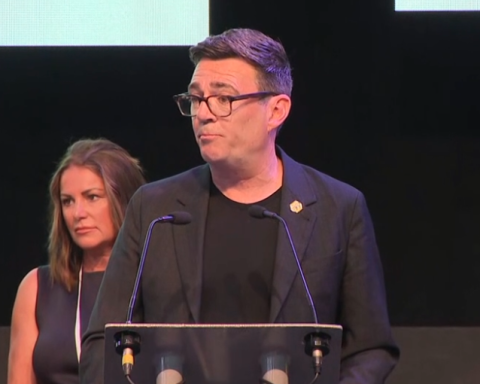
Andy Burnham is due in Westminster today to be sworn in as the new MP for Makerfield, a homecoming that many expect will lead directly to the premiership.
Many inside the Labour Party anticipate Burnham would be the only candidate in a potential leadership contest. If he becomes leader without a contest, in what is frequently described as a “coronation,” he could take over before Parliament returns from its summer recess, in time for the Labour Party conference.
Supporters of the Mayor of Greater Manchester turned MP had been increasingly vocal about the need for a change in direction. Anna Dixon, a Labour MP and Burnham supporter, remarked: “I think it’s clear now that the PM recognises it’s time to go, I think he’s seen the writing on the wall.” Earlier in the weekend, as rumours of the resignation intensified, Education Minister Jacqui Smith had confirmed that the Prime Minister was taking time to consider his position, stating: “He is reflecting on that, he’s thinking about how to respond to it.”
As the Sun sets on the Starmer administration, the challenges facing the incoming leader remain formidable. Economic pressures, the need to increase defence spending, reform of the welfare budget, international instability and a cost-of-living crisis are not going away.
For now, the focus remains on the handover of power and the rapid rise of Andy Burnham, whose return to the green benches of the Commons today signals the beginning of a new, and perhaps equally turbulent, chapter in British political history.
PM resigns after two turbulent years

6 mins read
Latest from UK News
LONDON, June 22 (Parliament Politics Magazine) – British Prime Minister Keir Starmer announced on Monday, that
LONDON, June 22 (Parliament Politics Magazine) – Prime Minister Sir Keir Starmer officially announced his resignation
LONDON, June 19 (Parliament Politics Magazine) – Two men born in Ukraine were jailed on Friday
The political landscape of the UK was fundamentally reshaped in the early hours of this morning,
LONDON, June 18 (Parliament Politics Magazine) – The British government announced on Thursday that it is