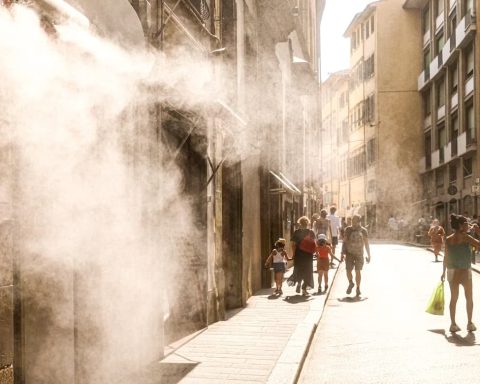
PARIS, June 23 (Parliament Politics Magazine) – An intense heatwave currently gripping Western Europe, which has resulted in more than 40 deaths in France alone, is being sustained by a persistent weather phenomenon known as an omega block.
This atmospheric pattern creates a stagnant environment that traps high temperatures over the region for extended periods.
Mechanics of the Omega Block
An omega block derives its name from its resemblance to the Greek letter Ω. The structure consists of a central bulge of warm, stable high pressure that is wedged between two cooler, low-pressure systems. Under typical atmospheric conditions, the high-altitude jet stream functions as a conveyor belt, moving weather systems steadily from west to east.
During an omega block, however, this flow experiences a dramatic buckle, shifting far to the north and south. The two flanking low-pressure systems effectively pin the central high-pressure area in place. Because the steering winds become significantly weaker, the system cannot move forward, causing hot, still air to accumulate over the same region for durations that can range from three days to several weeks.
How the Heat Intensifies
The trapped high-pressure core functions similarly to an atmospheric heat dome. Within this area, air continuously sinks, which compresses the atmosphere and increases temperatures while simultaneously preventing the formation of clouds. These clear, sunny skies allow solar radiation to relentlessly heat the ground, exacerbating the conditions on the surface.
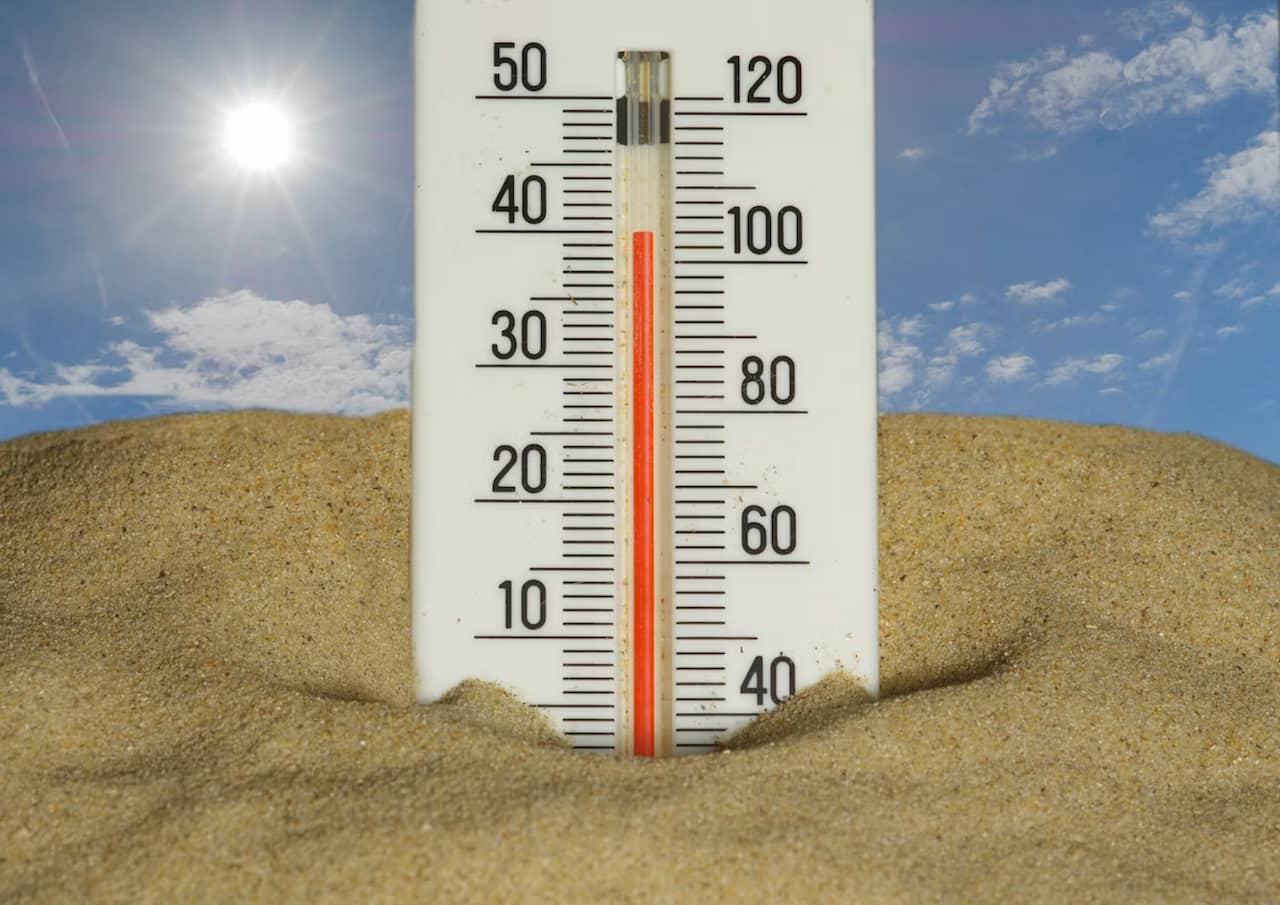
Regions situated directly under this high-pressure ridge, including parts of France and Spain, have seen temperatures soar beyond 40 degrees Celsius. Furthermore, researchers at Imperial College London noted that the current orientation of this specific system is actively drawing scorching air northward from the Sahara Desert in North Africa, which further amplifies the extreme temperatures across the continent.
“Europe is now experiencing heatwaves that are 2 to 4 degrees hotter than they would have been without human-caused warming,” said Clair Barnes, a research associate in extreme weather and climate at Imperial College London.
The Role of Climate Change
While atmospheric blocks are natural phenomena, scientists emphasize that human-caused climate change is actively intensifying their effects. Greenhouse gas emissions from burning coal, oil, and gas have raised global baseline temperatures by approximately 1.3 degrees Celsius since the pre-industrial era. This elevated baseline means that when an omega block stalls over a region, the resulting peak temperatures are significantly higher than they would have been in the past.
While the central part of the omega block suffers from extreme heat, the surrounding low-pressure flanks often experience contrasting weather, such as torrential rain and flooding. The phenomenon also has broader implications; for instance, the intense heat can thin the air, occasionally forcing airlines to restrict passenger numbers or ground flights because the reduced air density lowers aircraft lift. Ongoing research continues to examine whether the warming of the Arctic, which reduces the temperature contrast between the pole and the equator, is contributing to a more frequent occurrence of these stubborn weather patterns.