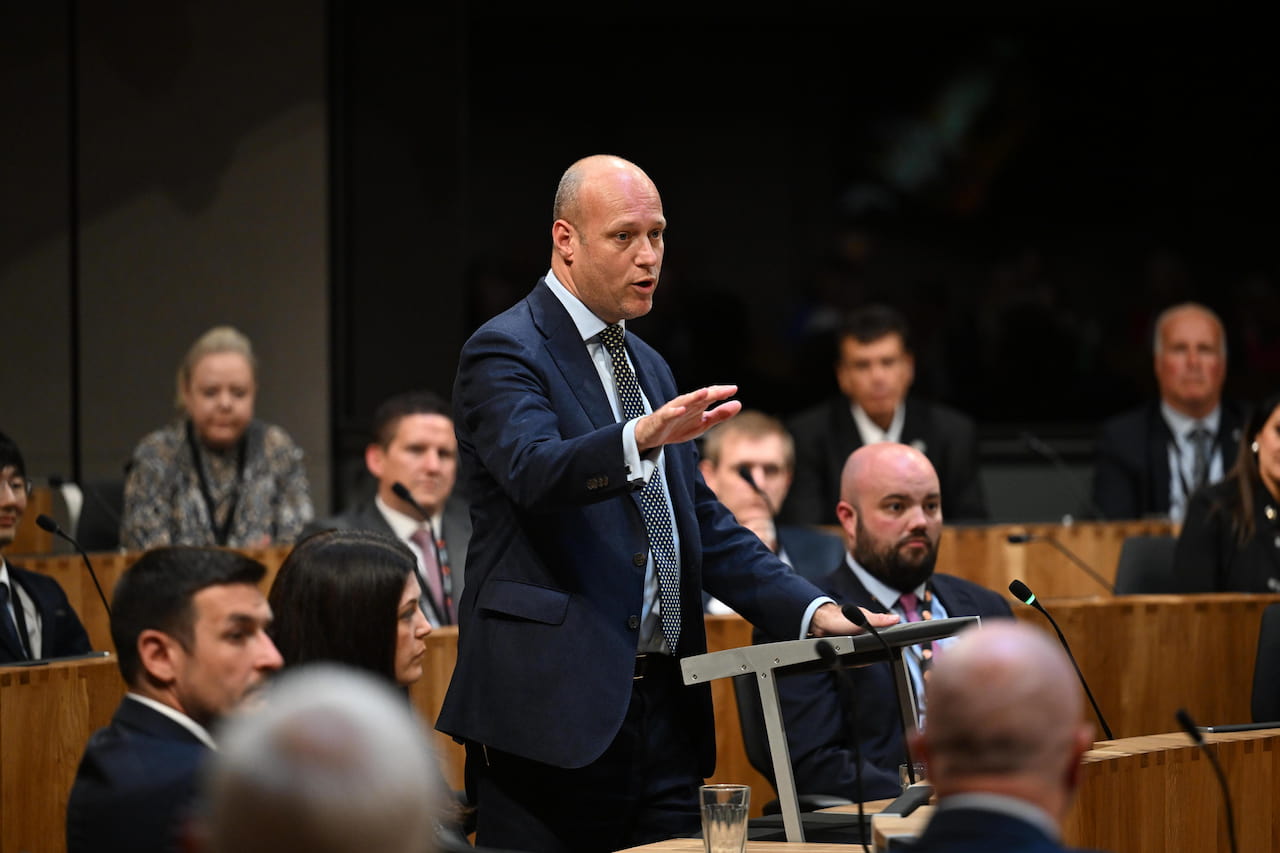
CARDIFF, June 28 (Parliament Politics Magazine) – The political atmosphere in Cardiff has shifted dramatically following the May 2026 Senedd elections, which ended 100 years of Labour party dominance. Plaid Cymru now leads a minority government, while Reform UK has stepped into the role of official opposition. With more than a third of the seats in the newly expanded chamber, Reform UK has caused significant friction, leading to tears, walkouts, and instances where members voted against their own party.
New Tensions in the Chamber
The newly configured chamber is experiencing distinct friction as Reform UK establishes its presence. Multiple Members of the Senedd have accused the party of hunting for social media clips rather than engaging in constructive policy debate. Members from Plaid Cymru and other parties have expressed deep concern regarding what they describe as inflammatory and dangerous rhetoric entering parliamentary discussions.
One incident involved Joe Martins, a Reform MS for Caerdydd Penarth, who drew gasps during first minister’s questions by differentiating between Ukrainian and Sudanese refugees. He suggested that only the latter group commits violent crimes and questioned what Rhun ap Iorwerth would do to avoid what he termed the next inevitable attack. Labour MS Shav Taj struggled to hold back tears during her response, citing her own parents’ immigration experience.
“To conflate the issue of immigration with the Nation of Sanctuary and some of the vile stuff we’ve just been hearing is actually really shocking,” Taj said.
The party’s early legislative efforts have produced mixed results, complicated by the inexperience of its members. In a debate concerning Plaid Cymru’s childcare plans, one-third of Reform MSs voted in favor of an amendment noting that Reform UK had no commitments on childcare in its Welsh manifesto. Political observers suggested this indicated that many members either misunderstood the motion or voted incorrectly by mistake.
Reform UK leadership maintains they operate entirely within Senedd rules to deliver evidence-based arguments for unrepresented voters. Dan Thomas, the Reform UK Wales leader, defended the group’s performance.
“Reform Wales operate within the rules of the Senedd and are focused on making reasoned, evidence-based arguments on behalf of the people we represent,” Thomas said.

Broader Political Implications
The party’s behavior in Cardiff carries wider implications for its national ambitions. Political analysts note that Nigel Farage understands the party must project discipline and gravitas in Wales. If the Senedd contingent descends into permanent chaos, it could damage Reform UK’s credibility as a serious governing alternative on a UK-wide level.
Laura McAllister, a professor of public policy at Cardiff University, emphasized that the party must prove it can function effectively. She noted that while people are prepared to consider Reform as a populist insurgent party, having the keys to government is a different challenge.
Reform will be chairing five of 13 Senedd committees, including the climate change, environment, sustainability and rural affairs committee. Some parliamentary sources have expressed concern regarding these assignments, given the party’s historical opposition to net zero and vocal climate change skepticism.
Despite the tension, the group did achieve an early legislative success. A Reform motion calling for a new statutory lobbying register passed quickly with broad cross-party support. However, the party is expected to face significant backlash regarding an upcoming debate targeting the nation of sanctuary program, which primarily supports Ukrainian refugees.