
The unveiling of the Government’s long-delayed Defence Investment Plan (DIP) on Tuesday, 30 June 2026, was intended to be a cornerstone of Sir Keir Starmer’s final weeks in office.
Billed as a comprehensive blueprint to reverse what the Prime Minister described as the “corrosive hollowing out” of the British armed forces, the details have raised more questions than it answered. Within hours of the announcement, the narrative of a revitalised military was overshadowed by the revelation of a significant cash shortfall.
While the Sir Keir pledged a £15 billion increase in spending over the next four years, significantly less than the service chief had asked for, the small print of the Treasury’s accompanying statement revealed that only £10.3 billion of that sum has been identified. This leaves a funding gap of approximately £4.7 billion, or nearly £5 billion, to be found by his likely successor, Andy Burnham, in his first Budget this autumn.
The revelation sent shockwaves through Westminster, particularly as it emerged that Mr Burnham, the former Mayor of Greater Manchester and the frontrunner to take over the premiership, was not informed about the specific funding gap in advance. Although he had been briefed on the broad outline of the DIP, it is understood that he was blindsided by the scale of the unallocated costs.
Th £5bn was immediately characterised by former Conservative defence secretary Sir Liam Fox as a “poisoned chalice.” Speaking to Times Radio, Sir Liam remarked, “Well, when Keir Starmer talks about his legacy, certainly politically his legacy is to give a poisoned chalice to his successor. Because not only is he £13 billion adrift from what the government said it needed for defence, but it’s actually £5 billion short of what the Prime Minister promised today.”
The lack of detail within the plan was also criticised by Tan Dhesi, the Labour chair of the defence select committee, who said the 80-page document had “significantly less detail” than previous documents and it was disappointing that there was no clear timeline for reaching 3 per cent, let alone the pathway to 3.5 per cent. He said: “This risks leaving parliament, and indeed industry, without a clear line of sight on future capability, timelines and funding.”
The financial mechanics of the plan were detailed in a written statement to Parliament by the Chancellor, Rachel Reeves, who has previously given her support for Mr Burnham as the next leader.
The statement confirmed that while two-thirds of the promised £15 billion is accounted for, the remaining £4.7 billion will be “confirmed at Budget 2026, in a fair and balanced way.” This delay in identifying the necessary funds means that the next administration will have to choose between raising taxes, cutting spending in other departments, or increasing national borrowing to meet the military commitments set out by the departing Prime Minister.
Internal friction within the Ministry of Defence (MoD) had already been made public earlier last month when John Healey resigned as defence secretary. He suggested that the final settlement of 2.7 per cent of GDP by 2028 is insufficient given the current global threat level and warned that “European security is at stake”. He urged the government to establish a “clear, credible funding plan” to reach the 3 per cent Nato spending target.
The current Defence Secretary, Dan Jarvis, who has been tasked with defending the plan amidst growing criticism, conceded to the House of Commons that the current uplift is merely a starting point, saying “We will need to do more”.
Mr Jarvis also faced difficult questions regarding the transparency of the transition to Mr Burnham’s leadership. While he insisted that he had discussed the investment plan with Mr Burnham, he would not confirm whether the incoming Prime Minister had been told specifically that he would be required to find nearly £5 billion in his first few months in office.
Defence Minister Luke Pollard provided a further glimpse into the chaotic nature of the announcement, revealing to Sky News that he himself only saw the full financial breakdown on Tuesday, the day of publication. Mr Pollard insisted it was “not unusual” for details to be finalised at a subsequent budget, yet he did not deny that Mr Burnham’s team had been kept in the dark regarding the specific shortfall until the Treasury’s statement was made public.
The Institute for Fiscal Studies (IFS) delivered a damming verdict on the DIP. Max Warner, a Senior Research Economist at IFS, commented:“Today, the government published the long-awaited Defence Investment Plan (DIP). As part of delivering the plan, it announced an average of £3.8 billion extra funding per year over the next four years (totalling £15 billion). This will mean that planned NATO-qualifying spending will be at 2.6% of GDP in 2026–27, rising to 2.7% in 2027–28 and 2028–29, about 0.1% of GDP higher than previous plans. The government also set out, for the first time, plans for total defence spending in 2029–30, which will also be 2.7% of GDP.
“Notably, the government has not set out how it will pay for around a third of this increase – an average of £1.2 billion each year – leaving this decision to be made at the Budget later this year. This means there will be further impacts on other areas of spending, tax or borrowing on top of those set out in today’s announcements – implying one key early decision for the next Prime Minister.
“Around half of the increase – an average of £1.7 billion each year – will be paid for through cuts to other departments’ capital (investment) budgets. 1% cuts will be made across most non-defence departments, with larger cuts to transport and energy projects.
“How the final part of the increase – £0.9 billion per year – will be funded is less clear, with the government describing it as being met by ‘asset sales and Treasury support’. Part of this appears to be a reprioritisation within the Ministry of Defence, while part seems to be a transfer of responsibilities for covering ‘international objectives and procurement’ from the Ministry of Defence to the Treasury, leaving more money for other spending by the Ministry of Defence. Of course, if these new Treasury responsibilities require any spending, this will need to be paid for from somewhere else, potentially squeezing other budgets further.
“Zooming out, the UK is currently committed to spending 3.5% of GDP on defence by 2035, alongside NATO allies. Defence spending was 2.2% of GDP in 2023–24, and today’s plans imply it will reach 2.7% next year and remain there until 2029–30. While the announced increases today are quite small, the overall increase in defence spending since this government came to office remains substantial – but even so, only gets us just over a third of the way to 3.5%.
“Defence spending will likely remain one of the biggest fiscal pressures facing the UK in the medium term. If the UK is to get to 3.5% of GDP spent on defence in 2035, this will mean finding around an additional £25 billion each year by 2035 in today’s terms relative to the newly announced plans. Given the clear difficulties of finding less than a sixth of this per year as part of the DIP process, this will be one key challenge facing the next Prime Minister, along with deciding how a substantial share of today’s top-ups will be funded.”
The funding plan is further complicated by an assumption that the MoD will achieve £10.7 billion in “defence efficiencies” by 2030. However, the DIP provides minimal detail on how these vast savings will be extracted from an already stretched department.
Senior Labour figures have privately expressed concern that these efficiency targets are overly optimistic and may mask deeper cuts to frontline capability. To “free up” money for the immediate priorities of military readiness, the government has already announced delays to improvements in military housing and the expansion of the cadet force. This comes despite widespread condemnation of the “shocking” state of housing for service personnel. Luke Pollard admitted that “a small amount of the money in the defence housing budget has been moved into the next parliament,” a decision he defended as a “tough decision” necessary to prioritise force readiness.
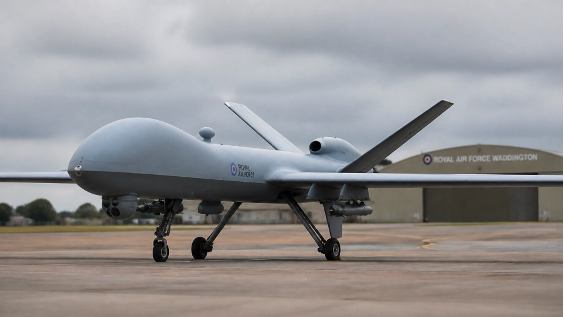
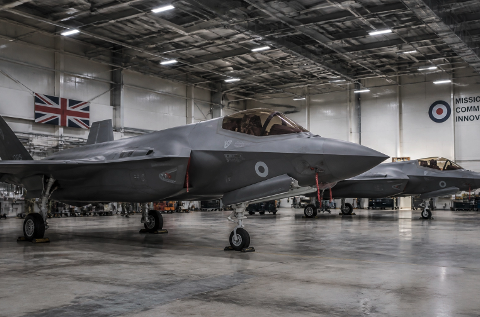
The strategic components of the DIP include a £5 billion investment in drone technology and the development of autonomous fighter jets, alongside the introduction of six new “budget warships” to replace ageing destroyers.
However, to fund these advancements, the government is retiring several existing assets. Two Type 23 frigates and more than 30 Wildcat helicopters are slated for retirement, and the Skynet 6 satellite system has been scrapped in favour of extending the life of its predecessor, Skynet 5.
Starmer’s defence plan hospital pass leaves Burnham with £5bn black hole to fill

12 mins read
Latest from Number 10
Andy Burnham will use a landmark address in Manchester later this morning to outline a radical
The Labour leadership battle took a decisive turn this morning as Darren Jones, the Chancellor of
In a moment of profound political significance, a teary Sir Keir Starmer stood before the cameras
The stability of the Labour government has been dealt a severe blow following the dramatic resignation
The release of the second tranche of the “Mandelson files” yesterday has sent ripples through Westminster,