
The release of the second tranche of the “Mandelson files” yesterday has sent ripples through Westminster, exposing a government described by its own informal advisers as “beleaguered and bereft.”
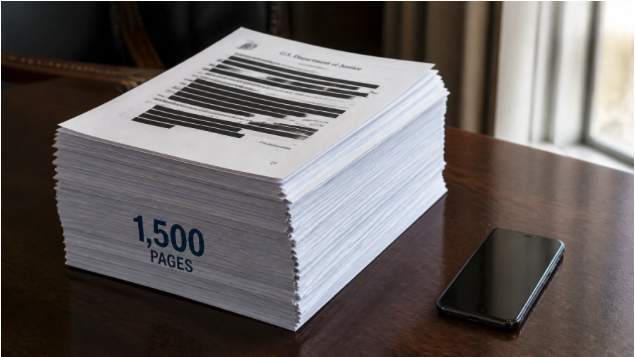
Consisting of 1,500 pages of documents and thousands of previously private WhatsApp messages, the release, which has cost the British taxpayer over £1 million to compile, offers a searing look into the internal rifts and personal animosities currently defining the Labour administration.
The documents, released following a significant parliamentary vote, centre on the appointment and eventual sacking of Peter Mandelson as the UK’s ambassador to the United States.
While the dossier was intended to provide transparency, it has been met with immediate criticism for its extensive redactions. Shadow Chancellor of the Duchy of Lancaster, Alex Burghart, noted that the papers are riddled with “acres of white space” and a “constellation of asterisks,” suggesting that a considerable volume of critical information remains hidden from public view.
At the heart of the disclosure is the withering assessment provided by Lord Mandelson himself regarding the state of Downing Street. In communications sent in late July, the peer described Number 10 as “beleaguered and bereft,” arguing that the operation requires a “complete revamp and infusion of purpose and confidence to get anywhere”.
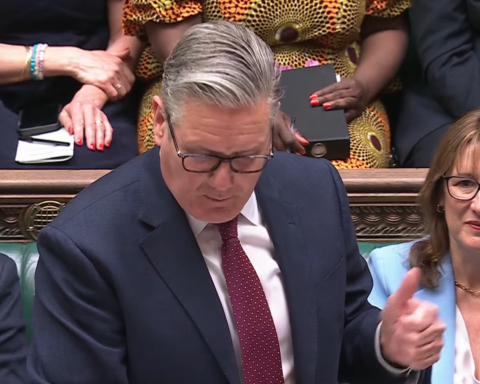
Mandelson’s critique was not reserved for the machinery of government alone; it extended directly to the Prime Minister. He claimed that Sir Keir Starmer “lacks verve,” a sentiment he applied to the frontbench more broadly, stating that the “Cabinet lacks verve as does the Cabinet as a whole”. These remarks come at a sensitive time for the Prime Minister, as around 100 of his own MPs have called on him to go and he wrestles with complex challenges facing the country, such as getting the economy growing, high youth unemployment, finding more money for defence to the impact of the US-Iran conflict.
Perhaps most damagingly, Mandelson asserted that the Prime Minister’s own team appears disconnected from his vision. “They don’t work as a team, they are not led and none of them really know what Keir thinks or wants”, the peer wrote. He added a particularly sharp barb: “In fact most of them don’t think Keir knows what he wants”.
The files also shed light on deep-seated ideological divisions over fiscal policy. Pat McFadden, now the Work and Pensions Secretary, emerged in the documents as a frustrated figure dealing with the Parliamentary Labour Party (PLP).
In messages exchanged in May 2025, McFadden lamented the priorities of his colleagues, stating: “Every meeting I have is ‘who can we tax in order to pay benefits to others’. They’re asking the wrong questions”.
This admission has been seized upon by political opponents. Reform UK and the Conservative Party have used the quote to frame Labour as the “welfare party,” with Kemi Badenoch arguing that the messages prove Labour MPs view taxes as “their money to spend” rather than the result of the public’s hard work.
The tension reflects a broader struggle within the Labour Party over Government decisions related to benefit cuts and taxation, particularly following a rebellion that forced the Prime Minister to U-turn on cuts to disability payments and the winter fuel allowance.
The Mandelson files reveal a culture of internal sniping that targets high-profile members of the Cabinet. Mandelson was recorded describing Deputy Prime Minister Angela Rayner as an “instrument of destabilisation,” alleging that former Prime Minister Gordon Brown was “deliberately trying to undermine Starmer” in an effort to boost Rayner’s standing.
Wes Streeting, the Health Secretary, also fell under Mandelson’s gaze. The peer described Streeting as “hysterical” over his stance on Gaza and suggested the minister was undergoing an “early mid-life crisis,” further labelling his public interventions as “pathetic” lifting the lid on personal rivalries within the top of the Labour Party.
In terms of political strategy, Mandelson’s advice to the government was notably unconventional. Following local election losses and the rise of Reform UK, he urged ministers to break out of the “Whitehall system and mould”. He advised them to behave in a more “Trumpian risk taking and dare devil way” to counter the populist threat, suggesting that “business as usual” would not be enough to sustain the Prime Minister’s authority.
Despite the volume of the release, the process has been marred by Mandelson’s refusal to hand over his personal phone. Government ministers admitted they had no power to “compel” him to surrender his private WhatsApp messages, leaving a significant gap in the record of his communications before, during and after his tenure as ambassador.
The “acres of white space” resulting from redactions have sparked accusations of a cover-up. Cabinet Office minister Darren Jones confirmed that some material was withheld at the request of the Metropolitan Police, who are currently investigating allegations of misconduct in public office, claims that Lord Mandelson has denied.
Furthermore, other ministers, including Nick Thomas-Symonds, reported that their messages could not be fully disclosed because their phones had been stolen or lost, a coincidence that has raised eyebrows on the opposition benches, or that messages had been automatically deleted due to the disappearing message function on WhatsApp.
As the government continues to manage the fallout, the Mandelson files serve as a stark reminder, if one was needed, of the fragile nature of the Prime Minister’s political authority, and if Andy Burnham wins the Makerfield by-election, he is likely to face a challenge to his leadership within weeks.
The Mandelson Papers also raise significant questions about how Government decisions are being taken. So many policy decisions seem to be decided on WhatsApp with little transparency and no public record. What did Lord Mandelson, a well-known lobbyist, discuss with Ministers, Labour Party officials, and other people he met with? There are no record of these discussions or requests he might have made. Did his reach extend to other non-Government policy and laws, after all he asked to meet with several newly elected MPs and his connections extend to many former Blairite politicians now in the House of Lords, such as Lord Falconer.
Tranche 2 of the explosive Mandelson Files leave many questions unanswered

8 mins read
Latest from Number 10
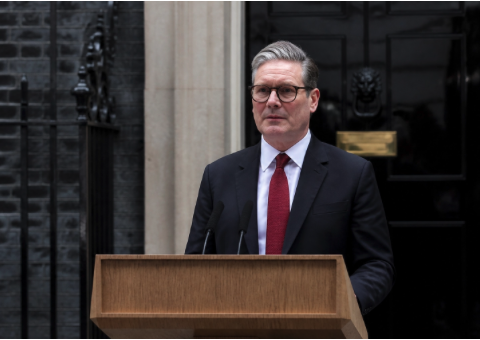
In a moment of profound political significance, a teary Sir Keir Starmer stood before the cameras

The stability of the Labour government has been dealt a severe blow following the dramatic resignation
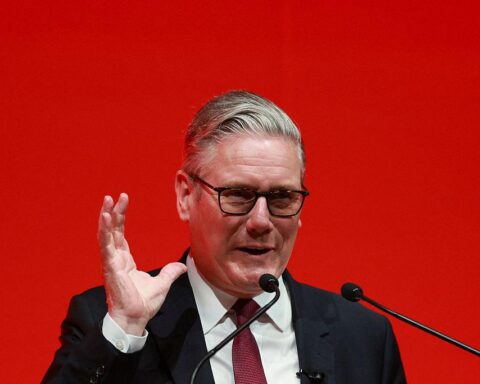
The atmosphere in Westminster this morning continues to be febrile. Following a set of local election
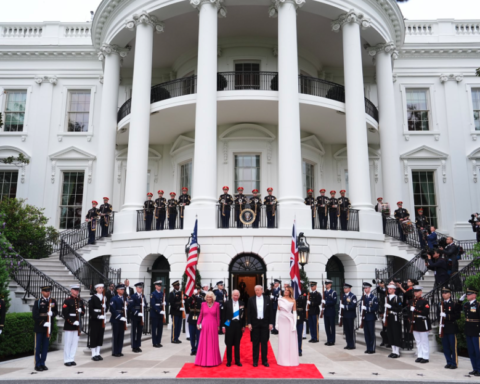
In the high-stakes theatre of international diplomacy, Prime Minister Keir Starmer has been playing a losing
The division bell that rang through the corridors of the Palace of Westminster yesterday afternoon carried