
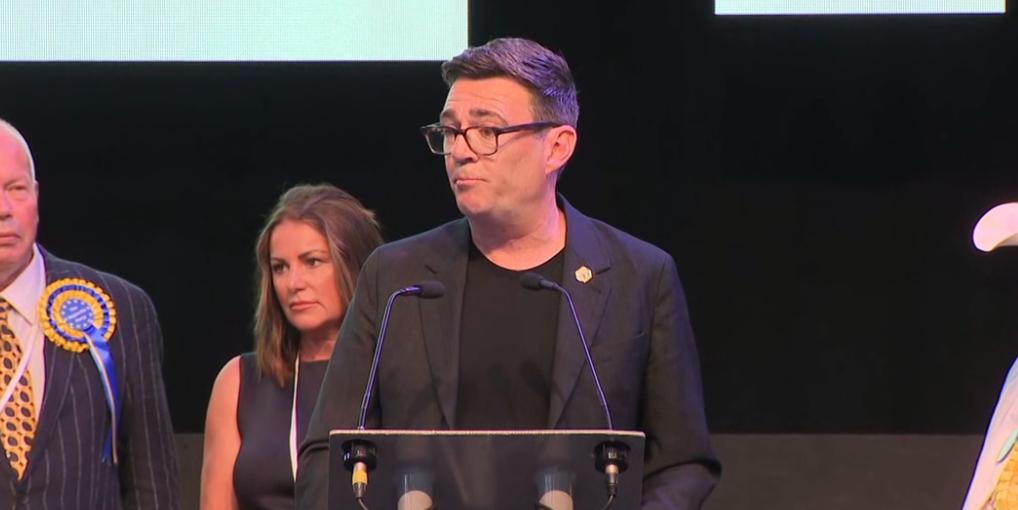
Andy Burnham will use a landmark address in Manchester later this morning to outline a radical vision for the future of the United Kingdom.
Speaking to an audience of community leaders, policy experts, and MPs, the Member of Parliament for Makerfield and former Greater Manchester Mayor will call for the “biggest transfer of power out of Whitehall in modern times,” framing his proposals as the necessary “circuit-breaker it needs” to fix a political system he described as fundamentally broken.
At the heart of the speech he will unveil a “No 10 North” proposal, a dedicated unit of the Prime Ministerial office to be based in Manchester. The move is designed not merely as a symbolic gesture to the regions but as a functional headquarters to coordinate economic policy and drive a “devolution-first” approach across the machinery of government.
Mr Burnham will argue that the concentration of decision-making within the “Westminster bubble” has historically stifled regional potential, necessitating a permanent institutional presence outside the capital to ensure that the voices of the North, the Midlands, and the devolved nations are hard-wired into the daily operations of government.
He will lay out his pitch to his Labour Party colleagues and the electorate as a “10-year mission to raise living standards,” a long-term strategic commitment aimed at reversing years of stagnant growth and widening regional inequality.
Central to this mission is the pledge to deliver “good growth in every postcode,” a slogan that allies suggest represents a move away from aggregate national GDP figures toward a more granular, community-focused economic metric.
My Burnham hopes that by focusing on the prosperity of individual postcodes, the proposal seeks to ensure that infrastructure investment and job creation are not limited to major metropolitan hubs but are distributed more equitably across the country.
Critics have already suggested that the policy sounds an awful lot like “levelling up” the flagship policy of Boris Johnson, which sought to boost forgotten communities around the country.
Conservative Party Chairman Kevin Hollinrake dismissed the proposals as “the politics of distraction,” suggesting that Burnham’s “big idea is to shuffle power between politicians” rather than addressing core issues like welfare reform or tax cuts. Hollinrake argued that the creation of new administrative layers like “No 10 North” would result in “more devolution, more committees, more process” without delivering tangible benefits to the taxpayer.
A Reform UK spokesman echoed these sentiments, labeling the speech as “all talk, no action” and suggesting that the proposals amounted to “a lot of words for no actual concrete changes.”
The party claimed that Burnham was merely repeating the perceived failings of the current administration by focusing on institutional restructuring rather than radical policy shifts.
Within the Labour Party, the speech will be seen as a definitive statement of intent as Burnham prepares for a potential move into the highest office. Senior figures have largely coalesced around his leadership bid, with only Al Carns not fully ruling himself out of trying to challenge the Makerfield MP, whose popularity among Labour MPs all but guarantees that Mr Burnham will replace Sir Keir Starmer as Labour leader and Prime Minister.
Meanwhile, Steve Reed, the Secretary of State for Environment, Food and Rural Affairs, sought to dampen down any talk about an early trip to the polls, stating firmly that “the public do not want a general election” at this time.
Westminster watchers will be closely following any details about who Mr Burnham is likely to appoint to his Cabinet’s key positions, with frenzied speculation about the key position of Chancellor of the Exchequer. Numerous names have been touted, with Ed Miliband and Wes Streeting appearing to be the favourites for the role, but offering potentially very different visions for the job.
Mr Miliband, seen as being significantly more left-wing, would likely support increasing taxes, nationalisation and more regulation, while Mr Streeting seen as being on the right of the Labour Party, is seen as more cautious and would be better received by business and the bond markets.
Attempting to head off these rumours, Mr Burnham appears to have committed himself to following the broad fiscal rules established by the Sir Keir Starmer and Rachel Reeves – that the government’s day-to-day spending must be matched by tax revenues, meaning the state is only borrowing to invest in long-term infrastructure – even as he seeks to “lift Britain back up” through radical devolution.
One thing is certain, Andy Burnham has not only set the agenda for his own leadership bid but has challenged the very foundations of the UK’s centralised governing model. Whether this “circuit-breaker” can successfully re-wire the relationship between Westminster and the rest of the country remains the central question of this burgeoning political era. Previous governments have talked about it, but none have delivered it at a scale now being put forward by the man vying to be Britain’s next Prime Minister.
The return of “Localism” – Burnham sets out pitch to Labour and the electorate

6 mins read
Latest from Number 10
The Labour leadership battle took a decisive turn this morning as Darren Jones, the Chancellor of
In a moment of profound political significance, a teary Sir Keir Starmer stood before the cameras

The stability of the Labour government has been dealt a severe blow following the dramatic resignation
The release of the second tranche of the “Mandelson files” yesterday has sent ripples through Westminster,
The atmosphere in Westminster this morning continues to be febrile. Following a set of local election