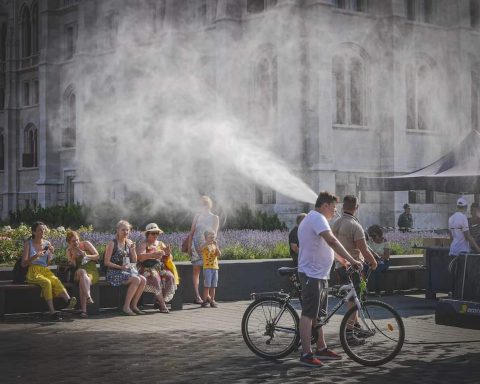

PARIS, June 28 (Parliament Politics Magazine) – A record-breaking European heatwave has resulted in approximately 1,000 excess deaths in France, according to public health agency Santé Publique France. Authorities have issued stern warnings that the mortality rate is expected to climb as data continues to be gathered from private residences and care facilities across the nation.
Scientists have formally classified this extreme weather event, which began on June 20, as the most severe heatwave ever recorded in European history. The World Health Organization estimates that 150 million people are currently enduring these extreme conditions across the continent.
Infrastructure and Utility Strain
The intense atmospheric pressure system has caused widespread disruption to essential services and utility grids throughout Europe. In Hungary, rising water temperatures in the Danube River forced the Paks Nuclear Power Plant to scale back its electrical output.
Transportation networks have also faced significant challenges during the crisis. Western Germany reduced major rail line services, and officials in the city of Leipzig suspended tram operations to protect equipment and passengers. Additionally, severe electrical storms following the peak temperatures left 36,000 French households without power.
The agricultural sector faces long-term threats as well. In Italy, the Po River has dropped to critical levels, allowing saltwater from the Adriatic Sea to push 18 kilometers inland. This intrusion jeopardizes vital river delta crops and local ecosystems.
Record Breaking Temperatures
Thermometers across major European territories have neared or exceeded 40°C. Germany recorded a provisional all-time high of 41.3°C in Saarbrücken, while the United Kingdom set a new provisional national June record of 37.1°C in Suffolk.
Public health concerns led to the widespread cancellation of major events. Organizers postponed or cancelled gatherings, including Paris Pride and the Defqon.1 music festival in the Netherlands, to minimize the risk of heat exhaustion among attendees.

The Urban Heat Island Effect
Metropolitan areas are experiencing the crisis with particular severity due to the urban heat island effect. Because cities are densely packed with asphalt, concrete, and dark surfaces, they trap thermal energy throughout the day.
These urban environments are currently recording nighttime temperatures up to 10°C hotter than surrounding rural areas. This consistent lack of cooling prevents the human body from recovering, which experts suggest is a primary driver for the rising death toll in cities.
Health Warnings
Climatologists from the World Weather Attribution group noted that the heatwave would have been virtually impossible without human-caused global warming. The extreme conditions have made soaring nighttime temperatures significantly more likely than they were just two decades ago.
Health Minister Stephanie Rist warned that the dangerous health impacts associated with this extreme event often continue to peak well after ambient temperatures begin to drop. She noted the danger remains present as the weather system shifts into Central Europe and the Balkan states.
“Right now 150 million people are living under extreme heat, hundreds have died, schools are shut, grids are buckling,” said World Health Organization Director-General Tedros Adhanom Ghebreyesus.
As emergency services continue to monitor the situation, authorities remain on high alert for further fatalities. Drownings have also surged as citizens seek relief in open waters, with search operations currently underway in Italy for missing individuals.