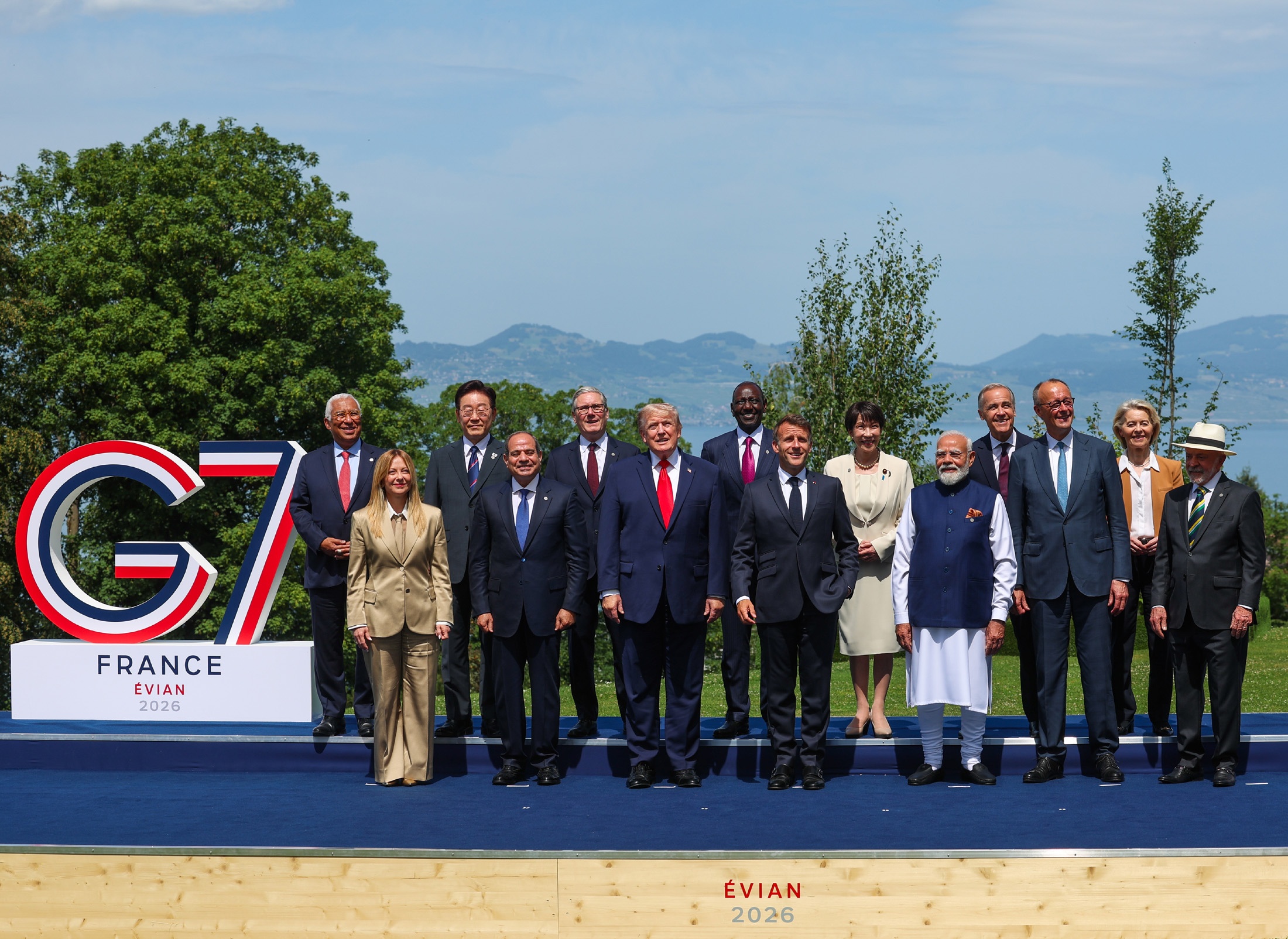
EVIAN-LES-BAINS, June 17 (Parliament Politics Magazine) – G7 leaders confirmed their unified commitment to support Ukraine, emphasizing the preservation of its territorial integrity. The joint statement released at the conclusion of the summit in the French lakeside resort underscores a collective agreement to increase sanctions on Russia.
This diplomatic alignment arrives as Kyiv seeks to strengthen its leverage ahead of potential peace negotiations with Moscow.
The unity displayed in the final joint statement was considered notable by observers, as the administration of United States President Donald Trump has historically been difficult to align on the specific mechanics of ending the conflict. The summit followed a meeting between Trump, Ukrainian President Volodymyr Zelenskiy, and other G7 heads of state. Following this session, Zelenskiy expressed optimism regarding the prospect of a peace deal, with further discussions between the two leaders anticipated.
This strengthened position for Ukraine has been bolstered by recent military successes, specifically effective drone incursions that have significantly weakened Russia’s operational capabilities on the frontline. The G7 leaders also noted their readiness to contribute to the implementation of the preliminary peace deal between the United States and Iran, which was signed shortly before the start of the summit.
Strengthening Energy Supply Chains
In addition to the measures focused on the conflict, G7 leaders addressed global energy security. The group committed to diversifying energy supply routes to reduce dependence on the Strait of Hormuz and promised to increase overall energy stocks. This move is part of a broader attempt to stabilize global markets in the wake of ongoing geopolitical volatility.
A central theme of France’s presidency during this summit was the management of critical minerals and the correction of global economic imbalances. France is actively pushing partners to adopt a collective stance on critical minerals, aiming to reduce Western reliance on Chinese supply chains. Diplomats suggested that these measures could include subsidies, market standards, and guaranteed purchases to shield investors from potential dumping and counter-measures.
The urgency of this shift is linked to disruptions from the previous year, when Beijing imposed export curbs on permanent magnets made from rare earths. This episode highlighted the extreme reliance of Western energy, defense, and technology sectors on Chinese exports.
“We are negotiating texts that are significant on critical minerals and, as a consequence, on economic sovereignty,” a French presidency official said ahead of the summit.
Addressing Global Economic Imbalances
Discussions also turned toward rebalancing global trade and addressing predatory competition, particularly from China. The French assessment of the current global situation suggests that China produces excessive goods, the United States consumes too much, and European nations invest too little. These imbalances have caused growing alarm across Europe regarding China’s record trade surplus and its rapid movement up the value chain.
Analysts have described the current situation as a potential “second China shock,” following the country’s dominance of low-value industries during the 2000s. President Emmanuel Macron attempted to engage Beijing in a final effort at cooperation prior to the summit. However, China continues to reject European Union claims of unfair subsidies and has repeatedly vowed to implement strong countermeasures against any new trade restrictions or tech sovereignty rules proposed by the EU.
The European Union is preparing to address these issues independently, with leaders scheduled to debate the use of trade defense measures at a summit in Brussels. The move comes as the EU recorded its largest-ever trade deficit with China last year, exceeding 360 billion euros.
The G7 leaders also dedicated time to discuss the rapid development of artificial intelligence, specifically focusing on the liability of bots and the challenge of distinguishing between true and false information. The session included input from industry leaders, with expectations that representatives from major AI development firms would provide insights on the risks and regulatory requirements for these emerging technologies. These discussions are intended to set the foundation for international standards in AI safety and transparency as the technology continues to integrate into global infrastructure and communication systems.