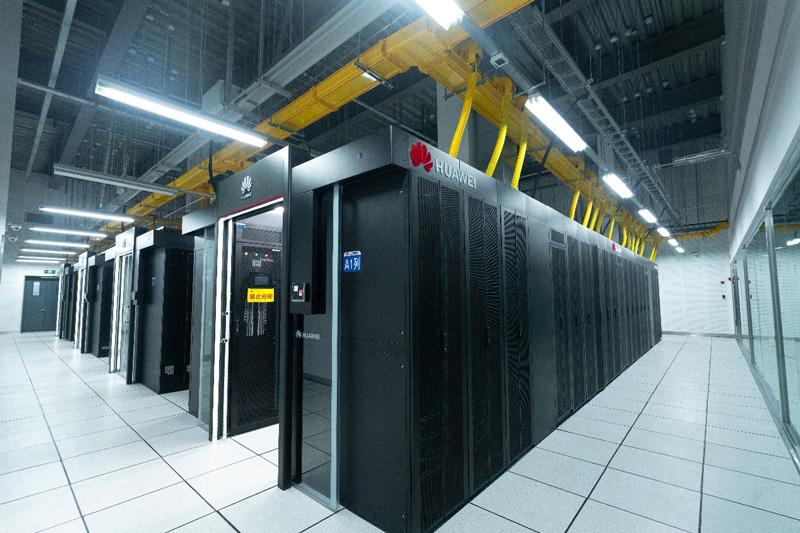
Global AI chip rivalry intensifies as Chinese tech firms rush to secure Huawei chips after DeepSeek V4 launch.
Supply shortages and geopolitical pressures reshape AI infrastructure investment across China.
Semiconductor competition becomes central to global technology leadership in 2026.
Beijing, April 29, 2026 (Parliament Politics Magazine) Global AI chip rivalry is accelerating sharply after the DeepSeek V4 release, triggering a nationwide surge in demand for Huawei AI chips and intensifying competition among China’s largest technology firms. The rapid shift underscores how artificial intelligence development is now directly tied to access to high-performance semiconductors, with supply constraints becoming a defining factor in 2026.
DeepSeek V4 Launch Drives Immediate Demand Surge
The unveiling of DeepSeek V4 by DeepSeek has triggered an immediate reaction across China’s technology sector. Companies are rapidly upgrading systems to integrate the model’s enhanced capabilities in automation, reasoning, and enterprise deployment.
Industry sources indicate that procurement teams moved quickly to secure compatible hardware, signaling that the pace of AI adoption is accelerating faster than anticipated. The global AI chip rivalry is now being shaped by how quickly companies can align infrastructure with next-generation AI models.
“The demand spike was immediate and widespread,”
said a Beijing-based analyst.
Huawei AI Chips Become Strategic Priority
At the center of the current supply race is Huawei. Its Ascend AI chips have become essential for firms seeking domestic alternatives to restricted Western processors.
With ongoing geopolitical constraints limiting access to advanced foreign technology, Huawei’s role has expanded significantly. Companies across sectors—including finance, logistics, and cloud computing—are prioritizing access to its chips.
The global AI chip rivalry is increasingly defined by supply availability rather than just technological capability.
China’s AI Chip Demand Surge (2026)
- AI chip demand increase post DeepSeek V4: +35% to +50% (industry estimates)
- Huawei Ascend chip allocation requests: Heavily oversubscribed
- AI data center expansion projects: Dozens announced nationwide
- Domestic chip reliance among Chinese AI firms: Projected above 70% in 2026
- Global semiconductor AI segment growth: Strong double-digit expansion expected
This structured data highlights how the global AI chip rivalry is producing measurable impacts across the industry.

Chinese Tech Firms Enter Procurement Battle
China’s leading technology companies are now engaged in an intense procurement race. Sources familiar with negotiations indicate that firms are:
- Securing long-term chip supply agreements
- Offering higher pricing for priority allocation
- Establishing direct relationships with manufacturers
This shift reflects how access to hardware is becoming a decisive factor in AI leadership.
“The companies that secure chips today will define AI leadership tomorrow,”
said a senior executive.
The global AI chip rivalry is influencing capital allocation and strategic planning at the highest levels.
Rapid Expansion of AI Infrastructure
To support new AI capabilities, companies are investing heavily in infrastructure. This includes expanding data centers and increasing computing capacity to handle large-scale AI workloads.
Key developments include:
- Construction of hyperscale AI facilities
- Upgrades to existing computing systems
- Increased investment in high-performance clusters
The global AI chip rivalry is directly driving this infrastructure expansion, as companies prepare for sustained demand growth.
Geopolitical Pressures Reshape the Semiconductor Landscape
The broader geopolitical environment continues to play a major role in shaping the semiconductor market. Export restrictions from Western countries have limited access to advanced chips, accelerating China’s push for domestic alternatives.
This shift has elevated the importance of companies like Huawei and intensified competition across the sector. The global AI chip rivalry is now closely linked to national economic strategy and technological independence.
Market Impact Across Technology and Investment Sectors
The ripple effects of this development are being felt across financial markets and technology sectors. Analysts point to both opportunities and risks:
Opportunities
- Growth in domestic semiconductor production
- Increased AI adoption across industries
- Stronger investment in research and development
Challenges
- Supply shortages affecting deployment timelines
- Rising costs of AI infrastructure
- Potential delays in scaling advanced models
The global AI chip rivalry is influencing both corporate strategy and investor sentiment worldwide.
Historical Context: Evolution of the AI Chip Race
The AI chip race has evolved significantly over the past decade. Initially dominated by Western companies, the market has become increasingly competitive as countries invest in domestic capabilities.
China’s efforts to build a self-sufficient semiconductor ecosystem have accelerated in response to external restrictions. Today, the global AI chip rivalry reflects a mature and highly strategic competition shaped by both innovation and policy decisions.
Future Outlook: Supply Chains Under Pressure
Looking ahead, industry experts expect continued pressure on semiconductor supply chains. Companies are likely to focus on:
- Expanding domestic chip manufacturing capacity
- Strengthening partnerships between AI developers and hardware providers
- Optimizing AI models to reduce hardware dependency
The global AI chip rivalry will remain a defining factor in the technology sector for years to come.
“This is not a temporary surge—it’s a long-term transformation,”
said a technology strategist.

Key Takeaways: Global AI Chip Rivalry Intensifies in 2026
The DeepSeek V4 launch has triggered a rapid surge in demand for Huawei AI chips, placing China’s technology firms in a competitive race for limited supply.
Geopolitical constraints and domestic innovation are reshaping the semiconductor landscape, making hardware access a critical factor in AI development.
The evolving global AI chip rivalry is now central to the future of artificial intelligence, influencing markets, infrastructure, and global competition.