

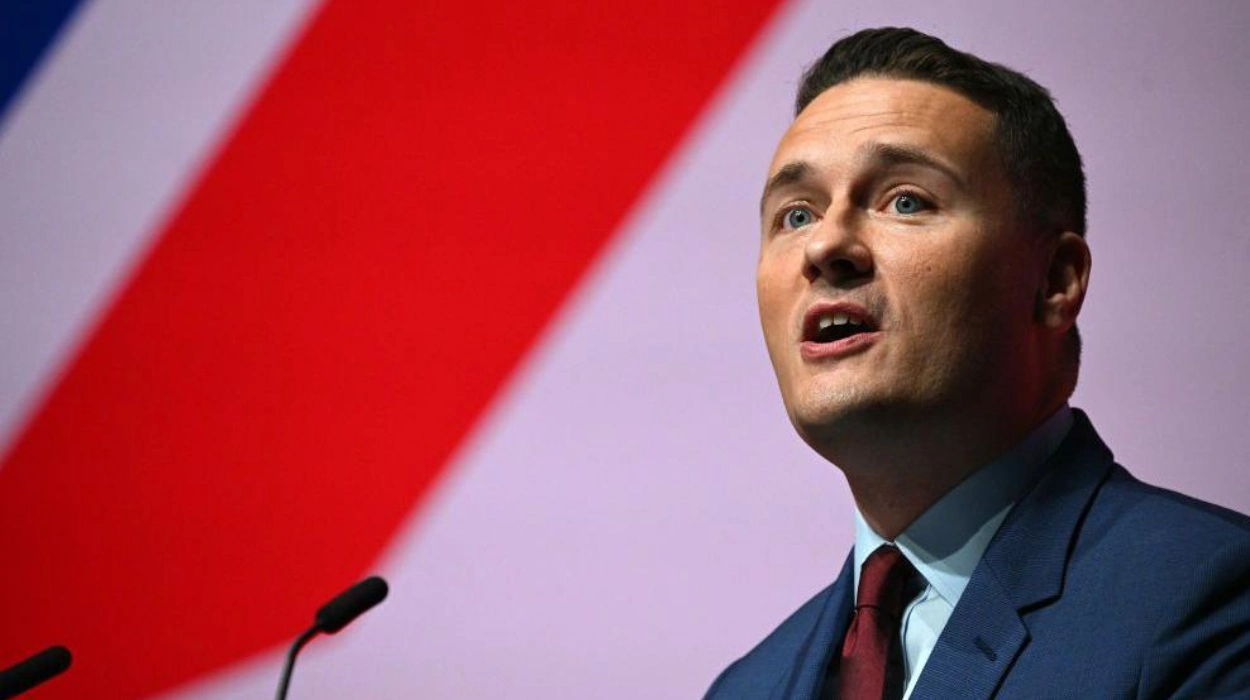
UK (Parliament Politics Magzine) – Health Secretary Wes Streeting faces backlash for chaotic NHS reforms despite some improvements in hospital performance and staff retention.
As reported by The Guardian, a report from the Institute for Government accused Wes Streeting of a “chaotic and incoherent” approach to NHS reform, making it unlikely the government will meet its targets.
The thinktank report praised the health secretary for positive steps in his first year, including improved hospital performance and stronger staff retention.
What did the Institute for Government report say about Wes Streeting’s NHS reforms?
The IfG report criticized Wes Streeting for mishandling the abolition of NHS England and failing to prevent the loss of senior GPs.
The findings could damage health secretary’s Wes standing after a turbulent week, during which he denied claims from Prime Minister Sir Keir Starmer’s allies about a potential leadership bid.
The thinktank’s report showed that, despite promises of ambitious NHS reforms, performance has stagnated or declined in many areas over the past year.
The report slams Mr Streeting’s move to scrap NHS England, calling it “a case study in how not to make complex policy decisions and announcements.”
The health secretary was recently rejected by the Treasury in his bid for over £1bn to fund redundancies resulting from abolishing NHS England.
The findings show Mr Streeting is sending mixed signals, pushing for community care while proposing “integrated health organisations” that could favor more funding for hospitals.
The thinktank report criticized the health secretary for providing few details on implementing his reforms, apart from relying on new tools like voice capture for GP note-taking.
It revealed that NHS productivity remains weak, with fewer than 10% of areas increasing elective procedures beyond their newly hired staff.
The report warned,
“The government will struggle to meet its flagship target that 92% of patients should wait no longer than 18 weeks from referral to starting consultant-led treatment of non-urgent health conditions. And it has little chance of meeting national waiting time targets for A&E and cancer treatment.”
Stuart Hoddinott, the IfG’s associate director and the author of the report, stated,
“There have been some positive steps: performance is trending slowly upwards in hospitals, there’s been a genuinely large increase in GPs and the rate at which hospital staff are leaving their jobs is the lowest on record outside the pandemic.”
He said,
“But that has been undermined by a chaotic and incoherent approach to reforming the service. The announcement of NHS England’s abolition was abysmally handled and management cuts in integrated care boards have been a needless distraction.”
Mr Hoddinott added,
“Worse than that, nothing the government has done will address the ongoing exodus of GP partners, and it has taken decisions that may actively harm the adult social care sector. The further decay of general practice and social care would be a disastrous legacy for Streeting and the government.”
Government sources said political success depends on NHS improvements, with Chancellor Rachel Reeves placing it among this month’s top three budget priorities.
Mr Streeting, widely seen as a potential successor to the prime minister, faces scrutiny over his handling of NHS management.
How did Wes Streeting respond to leadership plot claims?
Wes Streeting rejected claims he plotted to unseat the prime minister, urging action against officials behind damaging briefings.
He slammed “self-defeating” attacks from Downing Street, calling them a sign of a toxic culture inside Number 10.
The health secretary criticized senior aides behind secret briefings, saying their actions undermine the prime minister’s leadership style.
He said the attacks on him proved that,
“Lucy Powell was right about the culture of No 10 and I would just like to commend the briefer on at least picking on one of the men instead of the women in the cabinet.”
Mr Streeting stated,
“I can tell you without having even spoken to the prime minister what he thinks of briefing, what his reaction will be to the front pages and the broadcast bulletins overnight and the words I’m sure he would use are not suitable for a family show.”
When questioned whether the prime minister should remove those responsible, he replied,
“Yes, but he’s got to find them first and I wouldn’t expect him to spend loads of time on this.”
Earlier this week in North Wales, the prime minister affirmed full confidence in chief of staff Morgan McSweeney after assurances no ministers were briefed against from Number 10.
Sir Keir Starmer said,
“First let me be clear that any briefing against ministers is completely unacceptable. That is not a new position for me, it is a position I have adopted ever since I became Prime Minister. I have made it very clear to my team.”
He stated,
“I have been talking to my team today. I have been assured that no briefing against ministers was done from No 10 but I have made it clear that I find it absolutely unacceptable.”
The prime minister added,
“I have been assured it didn’t come from Downing Street but I have been equally clear that whether it is this case or any other, I intend to deal with it.”
What is the government’s NHS 10-year plan?
The NHS 10 Year Plan aims to transform the health service through three major shifts. It seeks to move care from hospitals to local communities.
The plan focuses on adopting digital technology to improve access and efficiency, while placing greater emphasis on preventing illness rather than just treating it.
It also includes establishing neighborhood health centres for local care access, expanding digital services like the NHS App.
